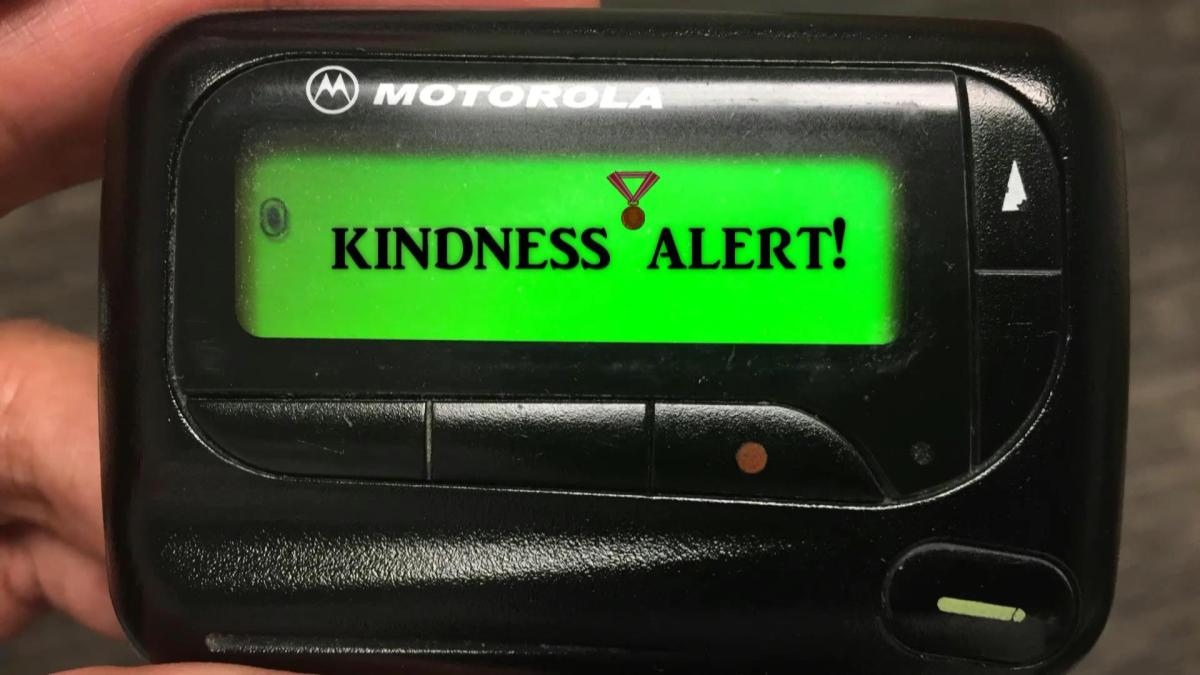
Today is the first day of Martin Luther King, Jr. Human Rights Week and I’m giving a shout-out for acts of kindness as well as the Loving-Kindness meditation. A neighbor with a snowblower helped clear our driveway a couple of weeks ago. A couple of days ago he did the same for his next-door neighbor. I’m going to go out on a limb and speculate the city snowplow driver was kind enough to avoid plugging the driveways on our street. No kidding, we watched the snowplow use what was obviously a different plowing technique which left our driveways relatively clear of snow.
The Loving-Kindness meditation is a mindfulness practice that Dr. King would probably have supported. It’s a way to send love to yourself and others, including those with whom you might be in conflict—even your enemies. King might say, “Now is the time” for something like that.
I’m reestablishing my mindfulness and exercise practice after a several month lapse. I first took the Mindfulness-Based Stress Reduction (MBSR) course several years ago through The University of Iowa Hospitals and Clinics. It made a difference in how I approached problem-solving and conflict. I was on autopilot most of the time and wrote a blog post about my experience before and after my mindfulness training experience, “How I left the walking dead for the walking dead meditation.”
Part of that program included instruction on the Loving-Kindness meditation. I’m still a beginner at mindfulness, although my approach to life is still ironically more like the expert’s in Shunryu Suzuki’s quote:
“In the beginner’s mind, there are many possibilities, in the expert’s mind there are few.”–Shunryu Suzuki
I need to keep working on being more open to different ideas, interpretations, and ways of getting things done—approaching challenges with a beginner’s mind.
One recent challenge is hanging pictures. Sena and I hung a picture yesterday. I wanted to measure everything and she wanted to estimate. She had misgivings about my measurements but went along with it. After the picture was hung, even I had to admit it was not in the right spot. Funny thing, after a short while, she admitted that the misplacement was not that far off and that she was getting used to it. If you’ve ever hung pictures, you know I’m leaving out a lot of the back-and-forth negotiation about how we finally arrived at that middle ground. It involved loving kindness on both sides.
I know I promised to observe National Nothing Day, but I learned something new today about Dr. Martin Luther King, Jr, and I figured I’d write a little something. Actually, I was not idle. So much for Nothing Day.
Dr. King liked jazz music, especially bebop. Dr. King said this about jazz: “When life offers no order and meaning, the musician creates an order and meaning from the sounds of the earth which flow through his instrument.”
Sena and I like smooth jazz, which doesn’t highlight improvisation as much as bebop—and that’s about all I know about jazz. I’m really more of a blues, rock and roll, and classical fan. I’m not really much of an improviser, I guess. I rely on recipes and frozen pizzas when I fix meals, which thank goodness is infrequent. Sena doesn’t use recipes and changes things up a lot, not just in the kitchen.
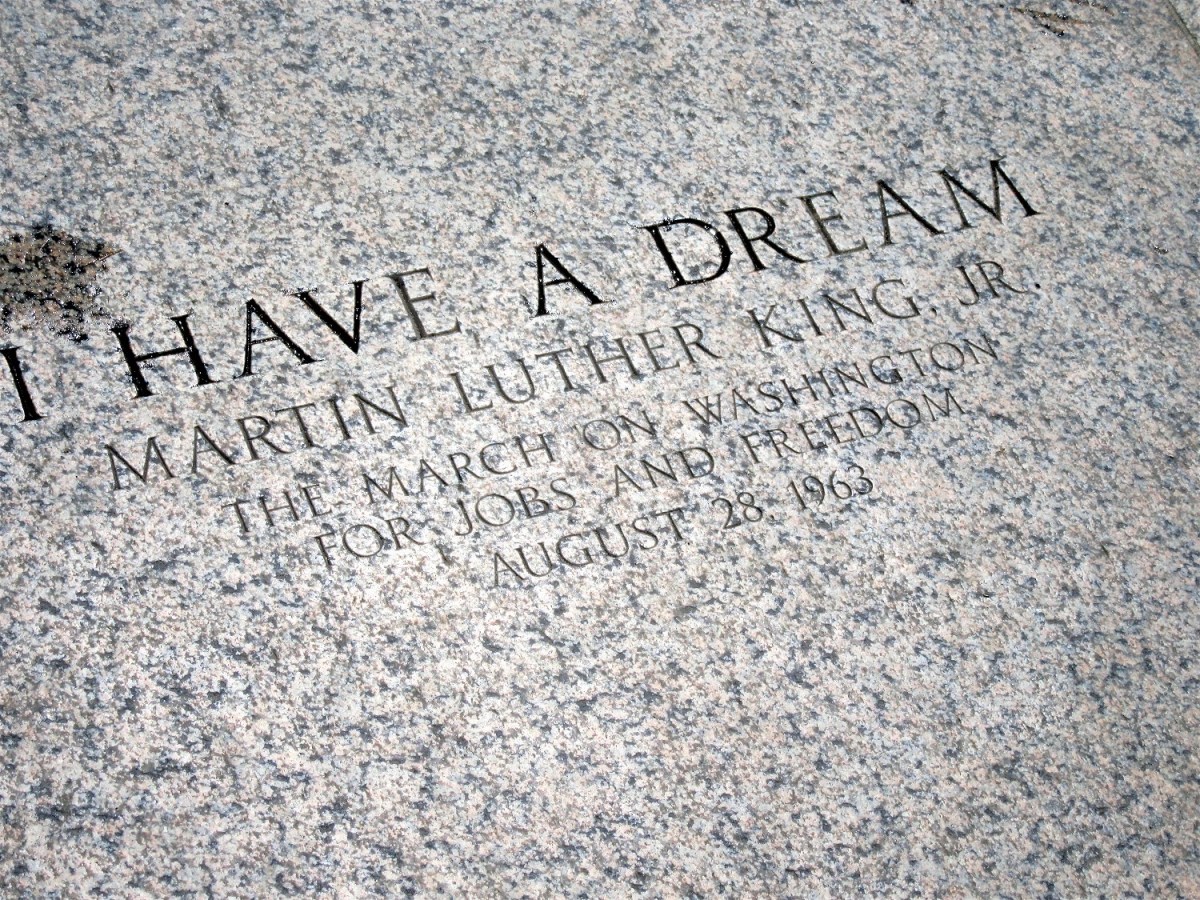
I found out that King even alluded to a jazz musician’s composition in his “I Have a Dream” speech at the Lincoln Memorial in Washington, D.C. in 1965. A friend of King shared that the civil rights leader had used the refrain “Now is the time” from Charlie Parker’s 1945 classic tune.
“Now is the time to make real the promises of democracy. Now is the time to rise from the dark and desolate valley of segregation to the sunlit path of racial justice. Now is the time to life our nation from the quick sands of racial injustice to the solid rock of brotherhood. Now is the time to make justice a reality for all of God’s children.”
I’m just guessing, but I think Parker probably improvised his music a lot. On the other hand, as I’ve grown older, I’ve pretty much scripted what I do in my life. When I was much younger, I improvised more. It’s a common path. There’s nothing especially wrong with regularity and predictability—bowel movements come to mind as one example. I’m a geezer after all.
But sometimes my relationships with others might have been helped if I had been a little more spontaneous, a little nimbler and more flexible with my attitude and responses. I guess that goes for all of us.
Now is the time to do something about that. It’s not too late.
As I struggle to remember to write and say the year “2021” I noticed the University of Iowa Health Care quotation selection by Dr. Martin Luther King, Jr this month pertinent to the upcoming MLK Human Rights Week, starting January 18, 2021:
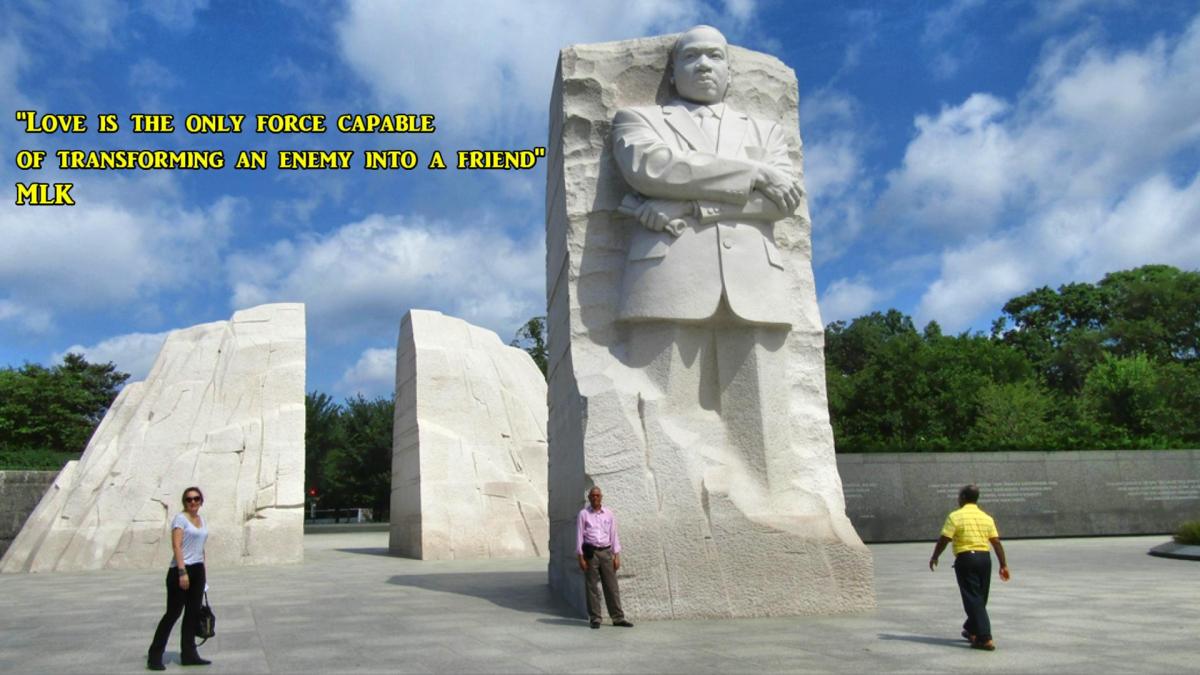
“Love is the only force capable of transforming an enemy into a friend.”
It’s funny because, as usual, the way my sense of humor works, I also recall quotes from the movie Men in Black 3. Agent K asks Agent J, “Do you know the most destructive force in the universe?” Agent J answers with a wisecrack, “Sugar?” Agent K replies, “Regret.”
Then what is the most constructive force in the universe? Dr. King thought it was love.
Since my retirement in July of last year, I’ve had a lot of time on my hands. It leaves me with too much time to reflect on my current life as a retired psychiatrist—and my past life as a consulting psychiatrist. As my thin veneer of authority, responsibility, and other lies I tell myself drop away, I become more aware of my flaws in both roles. I find deep holes in my identity as a person as my identity as a doctor fades. Just being a person who has a lot to learn about life despite being a psychiatrist—is hard. I have regrets and remorse. My sense of humor sometimes helps me get by.
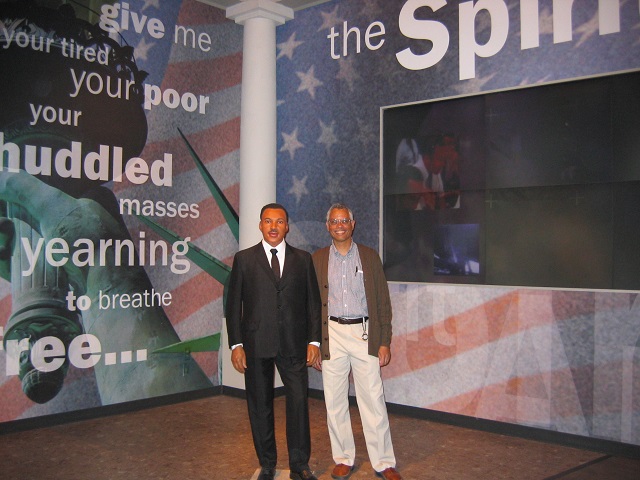
Dr. Martin Luther King, Jr and me in Vegas.
Regret can indeed be a destructive force. Though it’s similar to regret and painful, remorse could help me be a better person. It becomes more and more important that I find something constructive, both to do and to be.
Maybe love is the most constructive force in the universe. Because quotes are sometimes misquoted and inaccurately attributed, I googled the quote “Love is the only force capable of transforming an enemy into a friend.” I found the sermon from which I think the quote is derived on a Stanford University web site. It’s called the “Loving Your Enemies” sermon and it’s published in the book, A knock at midnight: inspiration from the great sermons of Reverend Martin Luther King, Jr.
There are YouTube and Vimeo videos of an audio recording of the sermon as well. The internet being what it is, you apply hyperlinks to these and other works at the risk of the links being broken at some point, which I have found and which might be due to uncertainty about whether the text of the sermon is in the public domain.
As an aside, I’m reminded of a quote variously attributed to Charles Schulz, creator of the Peanuts comic strip, Fyodor Dostoyevsky, and others: “I love mankind; it’s people I can’t stand.” This probably betrays my skepticism about the ability to love your enemies.
You know, it’s funny. I didn’t find the Dr. King quote, word for word, the first couple of times I scanned it in the Stanford University transcript. What I did was the thing most junior medical students do when they discover the vast load of information they have to memorize and digest. I scanned the sermon for the key words and didn’t see them.
Nor did I find it on the third read, in which I finally abandoned the scanning method and actually read the sermon. But I got the point.
If the Stanford version and my reading are accurate, what I found were probably the main ideas I needed to make sense of the sermon. King said that I have to look deep within myself first before attempting to understand anyone else, much less to love my enemies. I also would do well to look for the good in people who I judge are bad. Moreover, I gain nothing by trying to defeat my enemies. He even mentions the theories of psychologists and psychiatrists to support his profound conclusions. As I read them, I was acutely reminded of my shortcomings as a psychiatrist. You would think a psychiatrist would know how to analyze himself (and psychoanalysts do undergo analysis in training). I am not a psychoanalyst. But I am capable of reflection.
The exact quote might not be discoverable (at least to me) in King’s sermon. Nevertheless, the transformative and redemptive power of love is clearly expressed. The quote is distilled from the text of the sermon. That doesn’t mean that there might not be a different version of the sermon which could have contained each and every word. According to one writer, that may be the case. Perhaps it’s in the book, A Knock at Midnight: Inspiration from the Great Sermons of Martin Luther King, Jr.
What is more important for me at this time of my life is to accept that my search for the most constructive force in the universe will proceed in baby steps.
What I need to do is reflect on my own shortcomings and find ways to improve while avoiding making excuses. Stephen Covey said that we often blame our parents or our grandparents for our flaws. This was part of his three theories of determinism to explain man’s nature. Genetic determinism says I inherited my flaws from my grandparents (whom I never met), which implied my mistakes were encoded in my DNA. Psychic determinism supposedly explains what I got from my parents because of their mistakes in rearing me. Hmmm, I was exposed to fruitcake at Christmas. Environmental determinism implicates says that other people in my workplace, my school, my neighborhood or my country (politicians perhaps?) caused my flaws.
Covey disputed these ideas by the example of Viktor Frankl’s personal triumph over his experience as a prisoner in a Nazi death camp. His captors controlled his liberty to move about his environment. They could not control his freedom to choose what he thought and felt. He controlled his self-awareness, imagination, conscience, and independent will to draw meaning from his experience [The Seven Habits of Highly Effective People: By Stephen R. Covey. New York: Simon and Schuster, 1989].
How can I see the good in my enemies, despite their obvious flaws in comparison to my own angelic perfection? And how to avoid acting on the urge to defeat them, despite the reality that there have to be winners and losers at all levels in society, including elections, sports, cribbage (at which my wife regularly beats me)? Something tells me I’m getting off to a shaky start here.
I have to crawl before I can walk; I have to walk before I can run—before I fall flat on my face for the umpteenth time. Now more than any other time in my life, I must keep trying. I must get up and try again.
ADDENDUM January 11, 2021: I tried to access the King Library and Archives (KLA) today at The King Center website. There is a message indicating the KLA page is down indefinitely and redirects the reader to the Stanford University site noted above.
The Martin Luther King Jr. Day of Service is today and the University of Iowa has taken a quote from King to set the tone each year for this event. This year it is:
“Let us build bridges rather than barriers, openness rather than walls. Rather than borders, let us look at distant horizons together in a spirit of acceptance, helpfulness, cooperation, peace, kindness and especially love.”—Dr. Martin Luther King, Jr.
Dr. Martin Luther King, Jr.
As I look back on my career in medicine, it’s only natural for me to think of my role as a consultation-liaison psychiatrist as a sort of bridge between medicine and psychiatry. I’m pretty sure most would agree that as I chased around the hospital up and down the stairs doing the 3 and 30 (3 miles and 30 floors; I never take the elevator), I was doing my level best to bring psychiatric care to the patients in the general hospital who were suffering from medical illness as well.
The featured image shows the cover of a little book of kind remembrances I received from colleagues and trainees when, during one of my two such lapses in good judgment, I left the University of Iowa to have a try at private practice. The book has an image of a bridge on it. At the time, I thought of it as a depiction of my path between academia and community psychiatry. We need bridges there too, although one person let me know that someone has to teach new doctors.
I also got a fancy birdhouse as a going-away gift. I still do some bird-watching.
Starlings on ice
As I head into retirement, I hope that I’ve been a bridge of sorts between the old ways and the new to the next generation of doctors. After all, I’m the institutional memory of psychiatry on the medical and surgical units, in a manner of speaking.
The Medical-Psychiatry Unit (MPU) at University of Iowa Hospitals & Clinics was where I learned how this ward of patients with both medical and psychiatric illness served as a bridge between the departments of psychiatry and medicine. My teachers were doctors who were and still are great leaders. I still recall Dr. Roger Kathol, MD, an internist who also trained in psychiatry, and who designed and started the MPU decades ago, gave readings during sit-down rounds in the unit conference room. He read passages from the works of Galen, the Greek physician, surgeon, and philosopher in the Roman Empire.
Dr. Kathol assigned to me a task one day, which was to give a short presentation the following day on hyponatremia and how to distinguish psychogenic polydipsia from the Syndrome of Inappropriate Antidiuretic Hormone (SIADH). That night I was on call and got 4 admissions on the unit, which was chaotic. One patient actually broke a bed. I didn’t get any sleep. I was up running around until we all sat down to discuss patients.
I struggled through presentations of the 4 patients I had admitted the night before. I could barely talk. I had actually looked up a little information for my assigned presentation on hyponatremia but I was sweating it because I could barely stay awake. I was not the first resident to have episodes of microsleep on rounds and I knew Dr. Kathol saw it happening to me. That was in the days of 32 hours of call. They don’t make trainees do that now.
Dr. Kathol gave me sort of a sidelong glance as we finished discussing patients, which was usually when trainees were expected to give short educational talks. That day, he skipped me.
I should mention that he thought the proper name for the MPU was the Complexity Intervention Unit (CIU), owing to not just the medical and psychiatric complexity of our patients, but also to their social environments and the U.S. payer system which often led to many having inadequate, dis-integrated health care, meaning that there was no bridge between psychiatric and medical illness treatment and split health insurance coverage even though research showed that mental illness definitely lessened quality of life and increased health care costs. He has his own company, aptly named Cartesian Solutions, and it’s a major organization dedicated to helping hospitals and clinics set up collaborative ways to bridge the needs of patients with comorbid psychiatric and medical illness.
The University of Iowa model for the MPU has been disseminated to a number of other hospitals in the country, one of them in Pennsylvania, which I mentioned in a previous post, “Brief News Item,” on May 23, 2019. I’ve just received word a couple of days ago from Dr. Kolin Good that the unit, called the Medical Complexity Unit (MCU), a name which bridges the underlying intent of MPU and CIU, has saved the hospital a great deal of money, has drastically cut the use of sitters doing one to one observation (an extremely expensive intervention), is treasured by patients, and popular with trainees. They are very proud of it and have every right to be so. They are bridge builders too.
Dr. Louis Kirchhoff has been one the most notable internal medicine co-attendings on the MPU. He’s an infectious disease specialist, but has a knack for communicating effectively with patients who are mentally and medically ill, even speaking fluent Spanish with some of them. He and I shared triage call to the MPU every other night before the triage system was changed to a more humane schedule. He was a bridge between internal medicine and psychiatry trainees rotating on the ward. He could explain psychiatry to the medicine residents as well as I could.
I have had a penchant for finding a chair to sit down when I interview patients in their hospital rooms. There are usually not enough chairs in the rooms. A few years ago, Dr. Tim Thomsen, a surgeon and Palliative Care Medicine specialist as well, lent me a camp stool which I carry around with me so that I’m never at a loss for a chair. Everyone likes it. I think the camp stool helps build an emotional bridge with patients.
The little chair
There are special combined specialty residencies at the University of Iowa Hospitals and Clinics which bridge Internal Medicine and Psychiatry and Family medicine and Psychiatry. Slowly but surely the siloed departments of academic medical centers are broadening their curricula and training regimens to rebuild the bridge between mind and body.
It’s been evolving for years. I’m proud to have played a small role in it. This is a place where teachers, researchers, and clinicians build bridges in many ways, foster openness, and search the “distant horizons in a spirit of acceptance, helpfulness, cooperation, peace, kindness and especially love.”
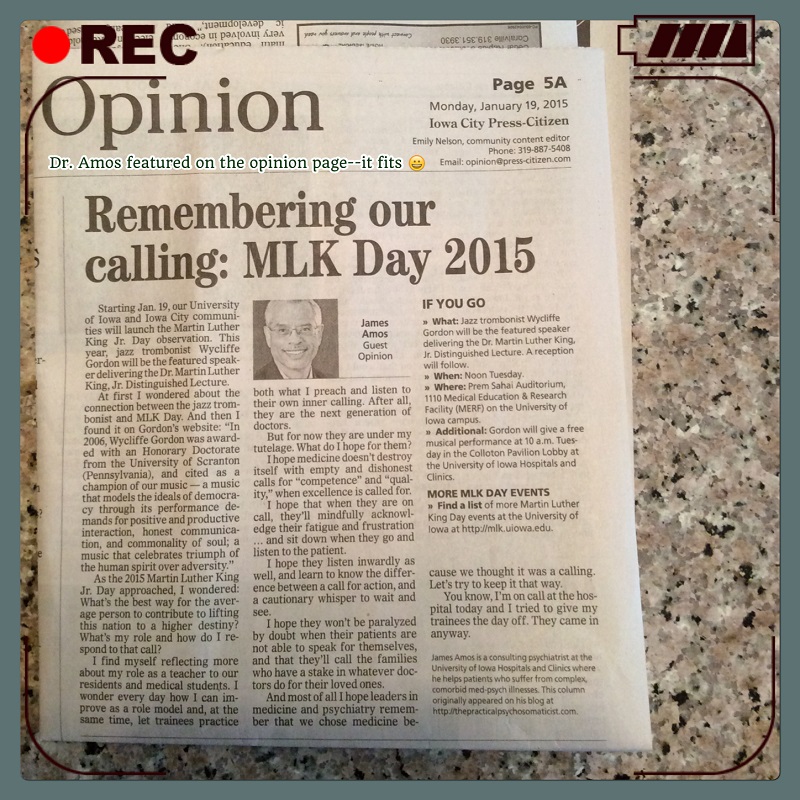
Back when I had the blog The Practical C-L Psychiatrist, I wrote a post about the Martin Luther King Jr. Day observation in 2015. It was published in the Iowa City Press-Citizen on January 19, 2015 under the title “Remembering our calling: MLK Day 2015.”
I have a small legacy as a teacher. As I approach retirement next year, I reflect on that. When I entered medical school, I had no idea what I was in for. I struggled, lost faith–almost quit. I’m glad I didn’t because I’ve been privileged to learn from the next generation of doctors.
“Faith is taking the first step, even when you don’t see the whole staircase.”
Martin Luther King, Jr.
As the 2015 Martin
Luther King Jr. Day approached, I wondered: What’s the best way for the average
person to contribute to lifting this nation to a higher destiny? What’s my role
and how do I respond to that call?
I find myself
reflecting more about my role as a teacher to our residents and medical
students. I wonder every day how I can improve as a role model and, at the same
time, let trainees practice both what I preach and listen to their own inner
calling. After all, they are the next generation of doctors.
But for now they are
under my tutelage. What do I hope for them?
I hope medicine doesn’t
destroy itself with empty and dishonest calls for “competence” and “quality,”
when excellence is called for.
I hope that when they
are on call, they’ll mindfully acknowledge their fatigue and frustration…and
sit down when they go and listen to the patient.
I hope they listen
inwardly as well, and learn to know the difference between a call for action,
and a cautionary whisper to wait and see.
I hope they won’t be
paralyzed by doubt when their patients are not able to speak for themselves,
and that they’ll call the families who have a stake in whatever doctors do for
their loved ones.
And most of all I hope
leaders in medicine and psychiatry remember that we chose medicine because we
thought it was a calling. Let’s try to keep it that way.
You know, I’m on call at the hospital today and I tried to give my trainees the day off. They came in anyway.






 Go Retire Psychiatrist