

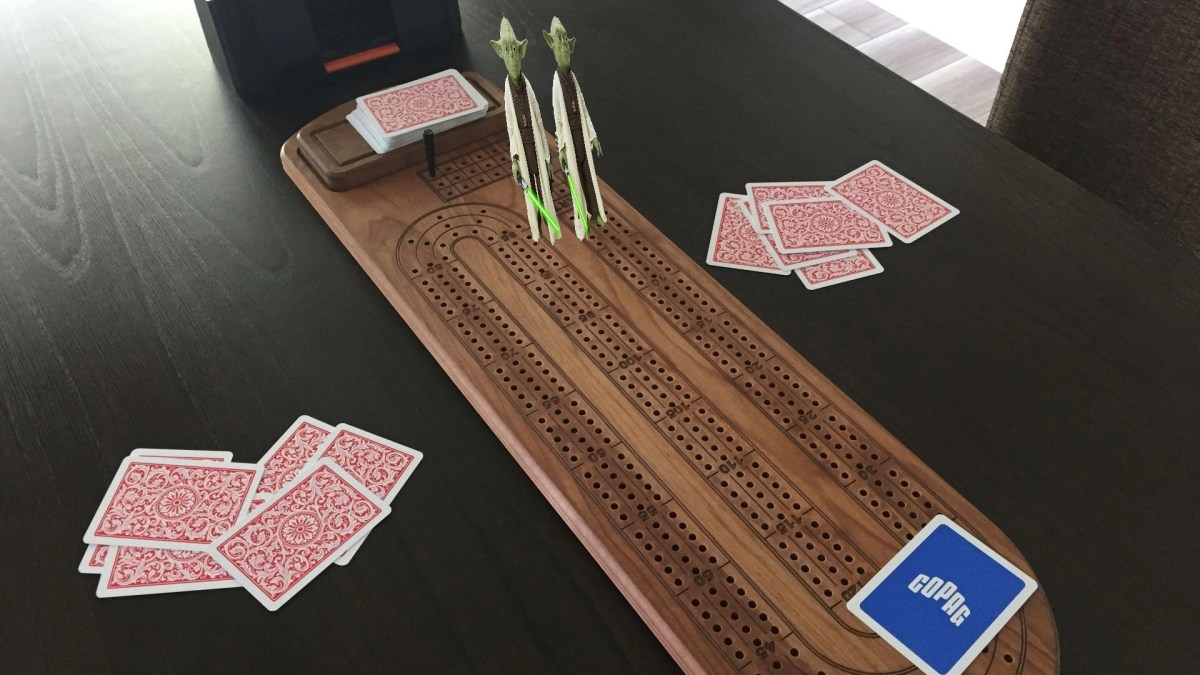
I wish we’d filmed the cribbage match we just played because it was marked by the weird combination of luck and strategy so typical of every cribbage game. On the other hand, I know if we’d tried to film it, we’d have been too flustered to make anything useful of it.
So, I’m going to point out generalities that might be interesting and useful to anyone who wants to know about how to play cribbage.
One skill I’ve picked up from playing the computer game Cribbage Pro is how to figure out which two cards I should throw to either my crib or Sena’s. In general, you can learn from any cribbage player you should throw “bad” cards to your opponent and “good” cards to yourself. It’s just about keeping the most points for yourself and as few as possible to your opponent. Cribbage Pro rates your throws. You want to keep cards that you can make points on when you’re the dealer and you want to throw cards to your opponent which will be least likely to make points for them.
It’s easy to get hypnotized into thinking that the crib tosses are the main way to win—but it’s a false hope. I’ve gotten perfect ratings on my crib throws and been skunked by Brutal, the Cribbage Pro game’s toughest opponent.
Luck is an important part of cribbage and counting on just one of the aspects that you have some modicum of control over is a mistake. In fact, one of the reasons I get dinged by the computer is my tendency to ignore the 3-point run in my hand, which when counted with a two card 15 combo can make me 5 points. I usually get mesmerized by the common double 15 with two 10 cards and a five card, which are worth 4 points and break up the 3-point run. I can’t figure out why I do that so often.
The other thing I miss is the flush in my hand, which often would net me more points, especially when I don’t see what I usually get stuck on—the 15s!
But there’s always a big luck factor along with simple inattention to careful counting that does me in. And focusing too much on the throw to the crib can distract you from learning pegging skills, which is governed by some basic understanding of probability (nothing esoteric here, please, because I barely got through biostatistics in medical school!) and whether or not you’re playing with someone you know pretty well and able to anticipate their usual moves (she always drops the 9 spot on the 6 lead!).

That reminds me of somebody who was one of the top cribbage players in the world, DeLynn Colvert. He won several national cribbage championships in his career and wrote a book about the statistical aspects of the game, including something he called the Twenty-Six Theory. I have the book and I’ve never really even tried to read that chapter. You can get a sense of what kind of cribbage expert he was by reading Part 1 of his Twenty-Six Theory on the American Cribbage Congress (ACC) web site.
Paraphrasing Master Yoda: “That is why I fail.”


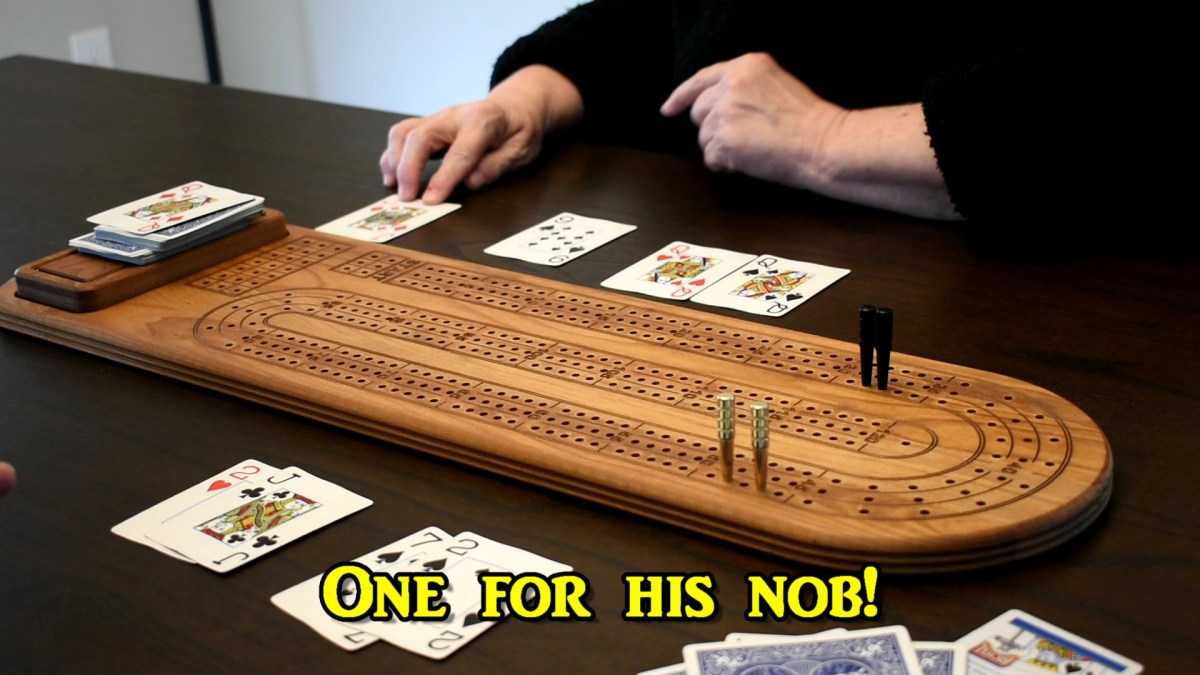
Another thing that sometimes prevents us from getting points is the uncertainty about seeing the run during the pegging phase. It’s common for players to place their cards on their sides of the table with the cribbage board between them. Here again, Cribbage Pro can sometimes interfere with learning an important skill. It does all the work because all the cards from both players are automatically placed in the center of the screen, where runs are clearly discernible.
I think in most games nobody has the luxury of seeing how runs actually look in the usual table setup. Maybe others have no trouble spotting what are called interrupter cards in sequences, but we do—although we’re getting better.
What that can lead to is avoiding playing into runs because both players have to sort of conspire to make them. You can actually see them coming and “run” away because you don’t want to get embarrassed by puzzling over what counts as a run or not. We know the cards don’t have to be in order but they do need to be resolvable into a consecutive sequence on close inspection.
That’s harder to do if the players’ cards are on opposite sides of the cribbage board. You also have to pay attention who leads after a go because it’s relatively easy to tell where a run starts at the beginning of a game since pone always leads.
It’s really hard to talk about cribbage. It would be better to make a video of it, but I’m not sure we could do it. Cribbage has been called a “finicky” game by Barry Rigal, who co-edited the book “Card Games for Dummies” and it’s tough to argue that point.
On the other hand, if you stick to it, you can get drawn into all that finickiness.
 Go Retire Psychiatrist