


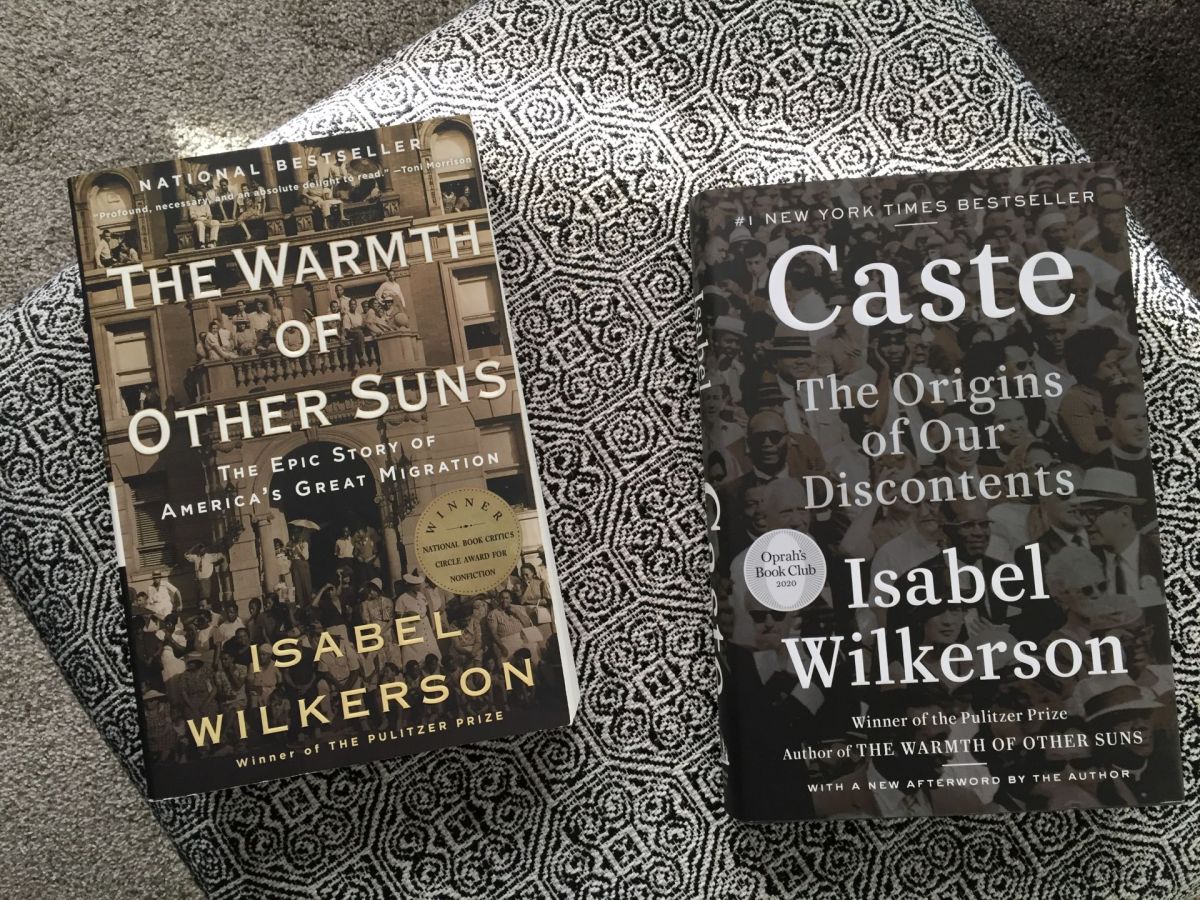
I just finished reading Isabel Wilkerson’s book, “Caste: The Origins of Our Discontents.” It was a painful read because it talks about racism in America, which is a part of my lived experience. Wilkerson’s compares it to the Nazi persecution of the Jews and the caste organization in India. The chapter on the pillars of caste make sense to me.
When I reached the last section (not at all “final” by any means), which is called “Awakening,” I was not surprised that there were no prescriptions or outlines or action plans for how to eliminate caste in any culture. It turns out that we’re all responsible for becoming aware of how we all are complicit in some way with maintaining caste divisions in society. And the word Wilkerson used for how to begin is “empathy,” or somehow becoming conscious of that tendency and to replace it with understanding.
As Wilkerson emphasizes, empathy isn’t sympathy or pity. Empathy is walking a mile in someone else’s shoes, as the song goes. But she goes a step further and uses the term “radical empathy.” It’s difficult to define concretely. It goes beyond trying to imagine how another person feels, going the extra mile and learning about what the other person’s experience. It’s not about my perspective; it’s about yours. It’s not clear exactly how to make that deep connection. She uses terms like “spirit” which may or may not resonate with a reader searching for a recipe or a cure.
Politics turns up in the book. How could it not? I’m going to just admit that I wanted to make this post humorous somehow, especially after I saw Dr. H. Steven Moffic’s article in Psychiatric Times about whether psychiatrists are to act in the role of “bystanders” or “upstanders” in the present era of political and social turmoil. He specifically mentioned the Goldwater Rule, which is the American Psychiatric Association Ethics Annotation barring psychiatrists from making public statements of a diagnostic opinion about any individual (often a politician) absent a formal examination or authorization to make any statements. The allusion to a specific person is unmistakable.
But, as a retired psychiatrist, I’m aware that my sense of humor could be deployed as a defense mechanism and it would certainly backfire in today’s highly charged political context. I’m not sure whether I’m a bystander or an upstander.
Sena and I had a spirited debate about whether America has a caste system or not. I think it’s self-evident and is nothing new to me. I suspect that calling racism (which certainly exists in the United States) a form of casteism would not be altogether wrong. Wilkerson mentions a psychiatrist, Sushrut Jadhav, who is mentioned in the Acknowledgments section of her book. Jadhav is a survivor of the caste system in India. I found some of insights on caste and racism in web article, “Caste, culture and clinic” which is the text of an interview with him.
His answers to two questions were interesting. On the question of whether there is a difference between the experience of racism and caste humiliation, he said “None on the surface” but added that more research was needed to answer the question adequately. And to the question of whether it’s possible to forget caste, he said you have to truly remember it before you can forget it—and it’s important to consider who might be asking you to forget it.
This reminded me of the speech in the movie “Guess Who’s Coming to Dinner,” said by John Prentice (played by Sidney Poitier) to his father:
“You’ve said what you had to say. You listen to me. You say you don’t want to tell me how to live my life? So, what do you think you’ve been doing? You tell me what rights I’ve got or haven’t got, and what I owe to you for what you’ve done for me. Let me tell you something. I owe you nothing! If you carried that bag a million miles, you did what you were supposed to do because you brought me into this world, and from that day you owed me everything you could ever do for me, like I will owe my son if I ever have another. But you don’t own me! You can’t tell me when or where I’m out of line, or try to get me to live my life according to your rules. You don’t even know what I am, Dad. You don’t know who I am. You don’t know how I feel, what I think. And if I tried to explain it the rest of your life, you will never understand. You are 30 years older than I am. You and your whole lousy generation believes the way it was for you is the way it’s got to be. And not until your whole generation has lain down and died will the deadweight of you be off our backs! You understand? You’ve got to get off my back! Dad. Dad. You’re my father. I’m your son. I love you. I always have and I always will. But you think of yourself as a colored man. I think of myself as a man. Hmm? Now, I’ve got a decision to make, hmm? And I’ve got to make it alone. And I gotta make it in a hurry. So, would you go out there and see after my mother?”
And there was this dialogue that Sena found on the web, which was similar to that of John Prentice. It was a YouTube fragment of a 60 minutes interview in 2005 between actor Morgan Freeman and Mike Wallace. Wallace asked Freeman what he thought about Black History Month. Freeman’s answer stunned a lot of people because he said he didn’t want Black History Month and said black history is American history. He said the way to get rid of racism was to simply stop talking about it. His replies to questions about racism implied he thought everyone should be color blind. John Prentice’s remarks to his father are in the same vein.
I grew up thinking of myself as a black person. I don’t think there was any part of my world that encouraged me to think I was anything different. I think Wilkerson’s book is saying that society can’t be colorblind, but that people can try to walk a mile in each other’s shoes.

 Go Retire Psychiatrist