
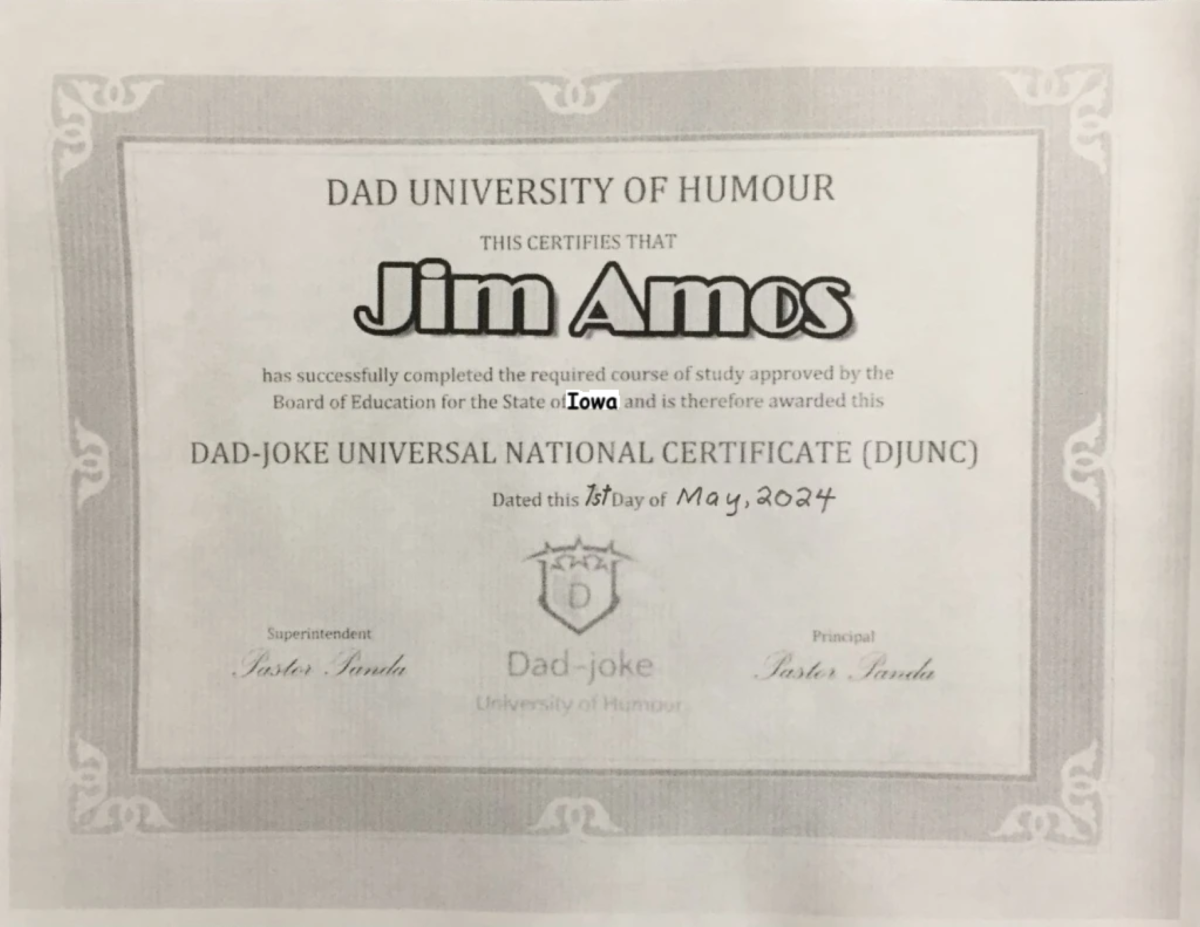
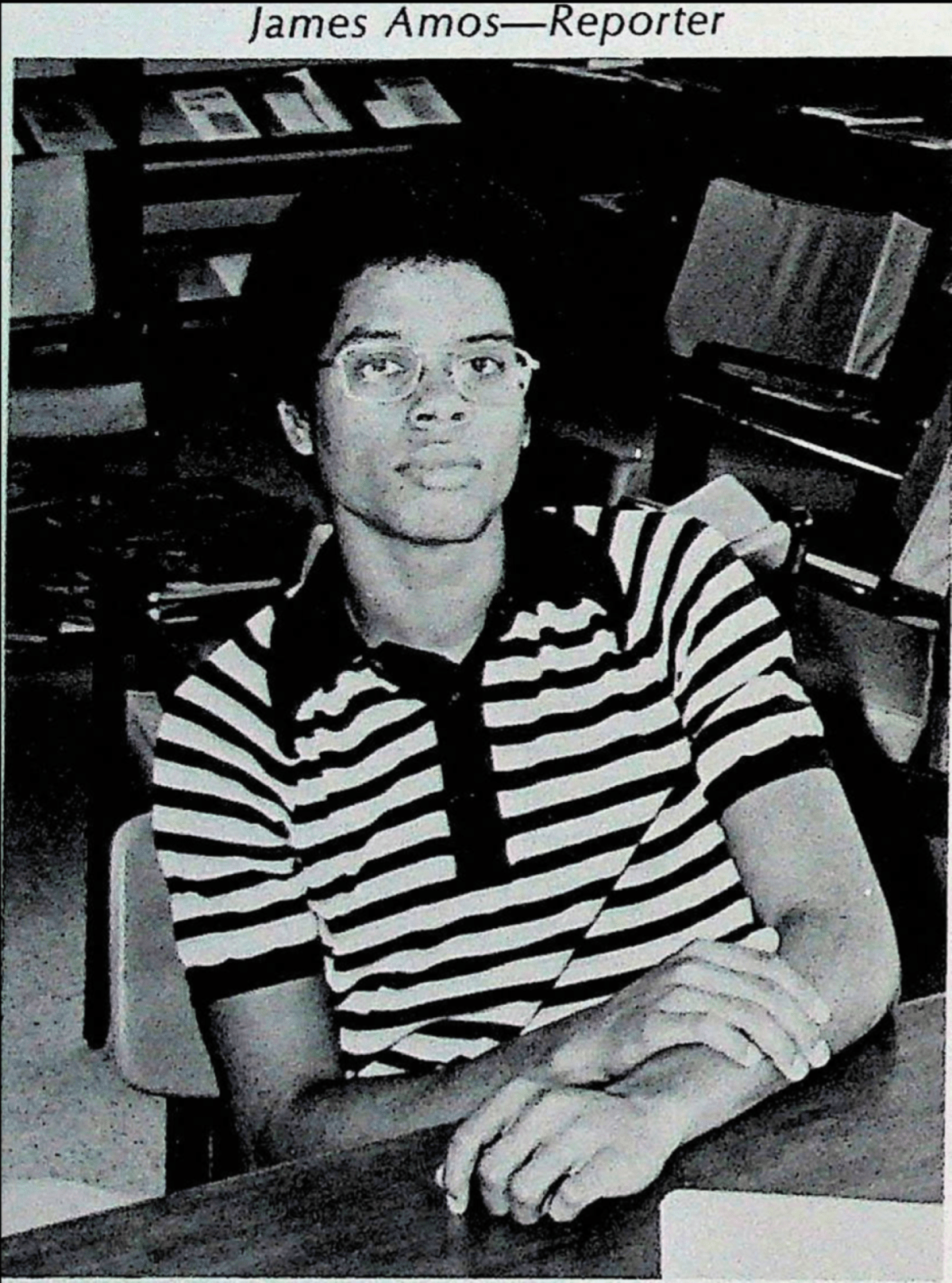
I think I found a pair of articles from the mid-1970s in the Huston-Tillotson College Ramshorn Journal that might have a connection to each other, even though the authors didn’t know it at the time.
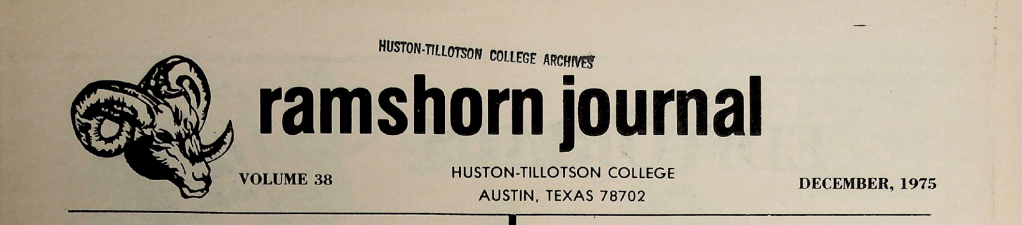
One of them was written by yours truly and published in December of 1975, entitled “H-TC Sponsors Education Seminar.”
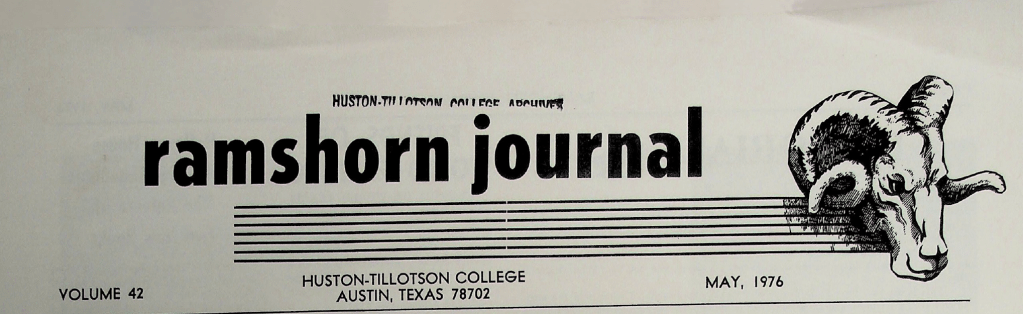
The other is a New York Times editorial from January 1976 which was reprinted in the May 1976 volume of the Ramshorn Journal and was written by Christopher F. Edley, a very successful lawyer and, at the time, the Executive Director of the United Negro College Fund.
Both were written about the same time, in the era of the civil rights struggles. I’m not comparing myself to the brilliant and accomplished Mr. Edley. And I’m just going to admit that I really don’t remember much about the trip to Houston for the Education Seminar about which I wrote my article, despite my being a participant. But I think it’s hard not to notice the language I used in my description of the importance of what the education seminar was all about. While much of the text is rather dry, when I discuss what was emphasized, I sound a little more intense. I may not remember much of what we specifically did and said but I caught the tone.
When I say the trip was not a guided tour, I mean that both faculty and students were serious about what the main message was for us—as black people. We had to measure up in a way that implied that we had to be better than best. That whole section starting with “Throughout the program, our people were reminded that any person who aspires to a position with any company must fulfill particular criteria.” It was as if I were saying we had to be perfect to make up for being black. We had to be the exemplars.
The individual must exhibit creativity, aggressiveness, ambition, self-confidence, initiative, dedication, maturity, and an ability and willingness to cooperate and effectively communicate with other people. The individual must punctual and reliable. Industry demands nothing less than high-gear performance. But they pay handsomely for that high-gear performance.
As I read this now, I get caught up on all the exhortations to be scrupulous, alert, and so on because, after all, we’re in a corporate jungle which is all about survival. I could have recast the last sentence above as “But they pay dearly for that high-gear performance”—which refers to the candidate, not the one doing the hiring.
I admit that how I wrote the story may reflect my reaction to rather than the reality of the emphasis of speakers at the seminar. But I did get the impression that I, as a black person, would be held to a higher standard than a white person. And I was uncomfortable about that.
When I turn to the New York Times article by Mr. Edley, I again am impressed with the struggle for fairness and justice, which didn’t seem forthcoming. He expressed the same sense of unfairness that I felt in Houston. The tone is almost one of outrage. He described the black people who were going to college in those days as most likely being the first ones in their families to go to college.
That’s what I was.
Mr. Edley was expressing frustration about blacks and browns just being able to get to the door of opportunity. I got the message that the struggle would go on forever—even if we got in the door. We didn’t just have to prove we were equal. We had to prove we were better.
Anyway, as I read the articles I wrote for the Ramshorn Journal 50 years ago, I begin to realize why I had no memory of having written them. It gradually becomes less strange that I still don’t really remember much of my time at Huston-Tillotson College, one of the historically black colleges and universities (HBCU) in America. But I needed that experience, even if I did pay dearly for it.
Click in the gallery; click on the picture, click the icon with an “i” in a circle, click view full size, click the plus sign to enlarge the image.


 Go Retire Psychiatrist