COVID Conspiracy Theories

A few days ago, I read the news story about COVID-19 antivaxx vigilantes interfering with the medical care of patients hospitalized with COVID-19. The writer interviewed Dr. Wes Ely, MD, MPH. He’s an intensive care unit (ICU) specialist at Vanderbilt University.

I first corresponded with Dr. Ely by email about 10 years ago when I wrote a blog called “The Practical Psychosomaticist.” I sort of poked fun of him in one of my posts about the chapter on psychiatrists and delirium in one of his books, Delirium in Critical Care, which he co-authored with another intensivist, Dr. Valerie Page, and published in 2011.

I can’t really tell the anecdote the way I usually told it to residents and medical students because of copyright rules but the antipsychotic drug haloperidol is mentioned. I made fun of the very short section “Psychiatrists and Delirium” in Chapter 9 (“Treatment of delirium in critical care”). It’s only a couple of paragraphs long and comically gives short shrift to the psychiatrist’s role in managing delirium. That’s ironic because I have always thought the general hospital psychiatric consultant’s role was very limited in that setting.

Maybe you should buy that book and, while you’re at it, buy the other one he recently published this month, Every Deep-Drawn Breath. My wife just ordered it on Amazon. It’s reasonably priced but in order to qualify for free shipping, she had to buy something else. It turned out to be Whift Toilet Scents Drops by LUXE Bidet, Lemon Peel (travel size, not that we’re traveling anywhere in this pandemic). Be sure to get the Lemon Peel.

In the email Dr. Ely sent to me and many others about the book, he said, “Every penny I receive through sales of this book is being donated into a fund created to help COVID and other ICU survivors and family members lead the fullest lives possible after critical illness. This isn’t purely a COVID book, but stories of COVID and Long COVID are woven throughout. I have also shared instances of social justice issues that pervade our medical system, issues that you and I encounter daily in caring for our community members who are most vulnerable.”

Anyway, the Anti-Vaxx vigilantes have played a big role in filling up the Vanderbilt ICU and many others by posting conspiracy theories about the COVID-19 vaccines on social media, which for some reason are hard to control. They persuade patients and their families that doctors are trying to kill them with the treatments that are safe and effective. Instead, they recommend ineffective and potentially harmful interventions such as Ivermectin, inhaling hydrogen peroxide, and gargling iodine.

There are different opinions about conspiracy theories and those who believe in them. Some psychiatrists say that conspiracy theories are not always delusional. One psychiatrist wrote a short piece in Current Psychiatry, Joseph Pierre, MD, “Conspiracy theory or delusion? 3 questions to tell them apart.”  Current Psychiatry. 2021 September;20(9):44,60 | doi:10.12788/cp.0170:

What is the evidence for the belief? Can you find explanations for it or is it bizarre and idiosyncratic?

Is the belief self-referential? In other words, is it all about the believer?

Is there overlap? There can be elements of both.

The gist of this is that the more self-referential the conspiracy theory, the more like it is to be delusional.

Another article which expands on this idea is on Medscape: Ronald Pies and Joseph Pierre, “Believing in Conspiracy Theories is Not Delusional”—Medscape-Feb 04, 2021. According to them, delusions are fixed, false beliefs (something all psychiatrists learn early in residency) and usually self-referential. Conspiracy theories are frequently, but not necessarily, false, usually not self-referential, and based on evidence one can find in the world—often the internet. Conspiracy theories have blossomed during the COVID-19 pandemic. One of them is that it’s a government hoax. An important difference between the current pandemic and the flu pandemic of 1918 is the world wide web which makes it easier for many people to share the conspiracy theories.

Pies and Pierre describe a composite vignette of someone who has a conspiracy theory featuring many false beliefs about the COVID-19 vaccines ability to change one’s DNA, thinks that research results about the vaccines are faked, mistrusts experts, has no substance abuse or psychiatric history and no mental status exam abnormalities. He exhibits exposure to misinformation, biased information processing, and mistrusts authorities.

They would say he has no well-defined psychiatric illness and antipsychotic treatment (such as haloperidol) would not be helpful. However, similar to the approach with frankly delusional patients, they would argue against trying to talk the person out of his false beliefs. Instead, if the person can be engaged at all, the focus should be on trying to establish trust and respect, clarifying differences in the information sources available, and allowing time for the person to process the information. It would be more helpful to avoid confrontation and arguments, instead pointing out inconsistencies in the information the person has and contrasting it with facts. Countering misinformation with accurate information could be helpful.

There are two major routes to anti-vaccination beliefs of the severity under discussion here. One is the problem of conspiracy theories out there. The other is the florid delirium that can happen to patients admitted to ICUs with severe COVID-19 disease. The former may not be a classifiable mental illness per se, but the latter definitely is.

Haloperidol is not the main solution for either problem.
My Most Dreaded Retirement Question

Yesterday somebody asked me “So what do you do now that you’re retired?” I have come to dread the question. I told him I write this blog. That seemed to surprise him a little. It sounded a little lame to me as I said it. I’m not sure it’s the right answer to this question that I still don’t know how to answer, even though I’ve been retired for a little over a year.

I remember the blog post I wrote a couple of years or so ago, “Mindfully Retiring from Psychiatry.” It sounded good. It still sounds good even as I re-read it today. Others were reading it too, judging from my blog stats. I wondered if one of them was the guy who asked me the dreaded question.

I still exercise and do mindfulness meditation, although for several months after I retired, I dropped those habits. A lot was going on. We moved. I didn’t weather that process well at all. I was bored. In fact, I still struggle with boredom. The derecho hit Iowa pretty hard. It knocked over a tree in our front yard, which I had to cut up with a hand saw. The COVID-19 pandemic and social upheaval is an ongoing burden for everyone and seems to be directly related to making everyone very angry all the time. Sena and I are fully vaccinated but I’m pretty sure that more vaccinations are on the way in the form of boosters.

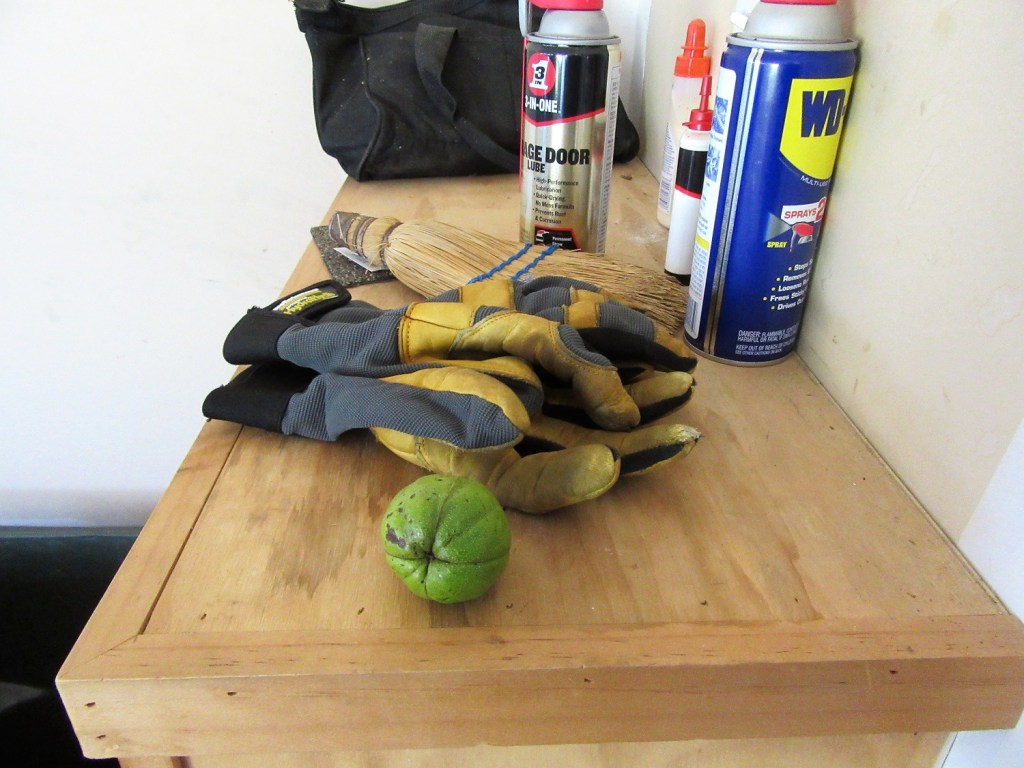
I’ve had to do things I really never wanted to learn how to do. Sena handed me a hickory nut she found in the yard this morning, reminding me of walnut storms we had at a previous home. I picked up scores (maybe hundreds) of walnuts there. I don’t want to do that again. I remember being jarred awake each time a walnut hit the deck.

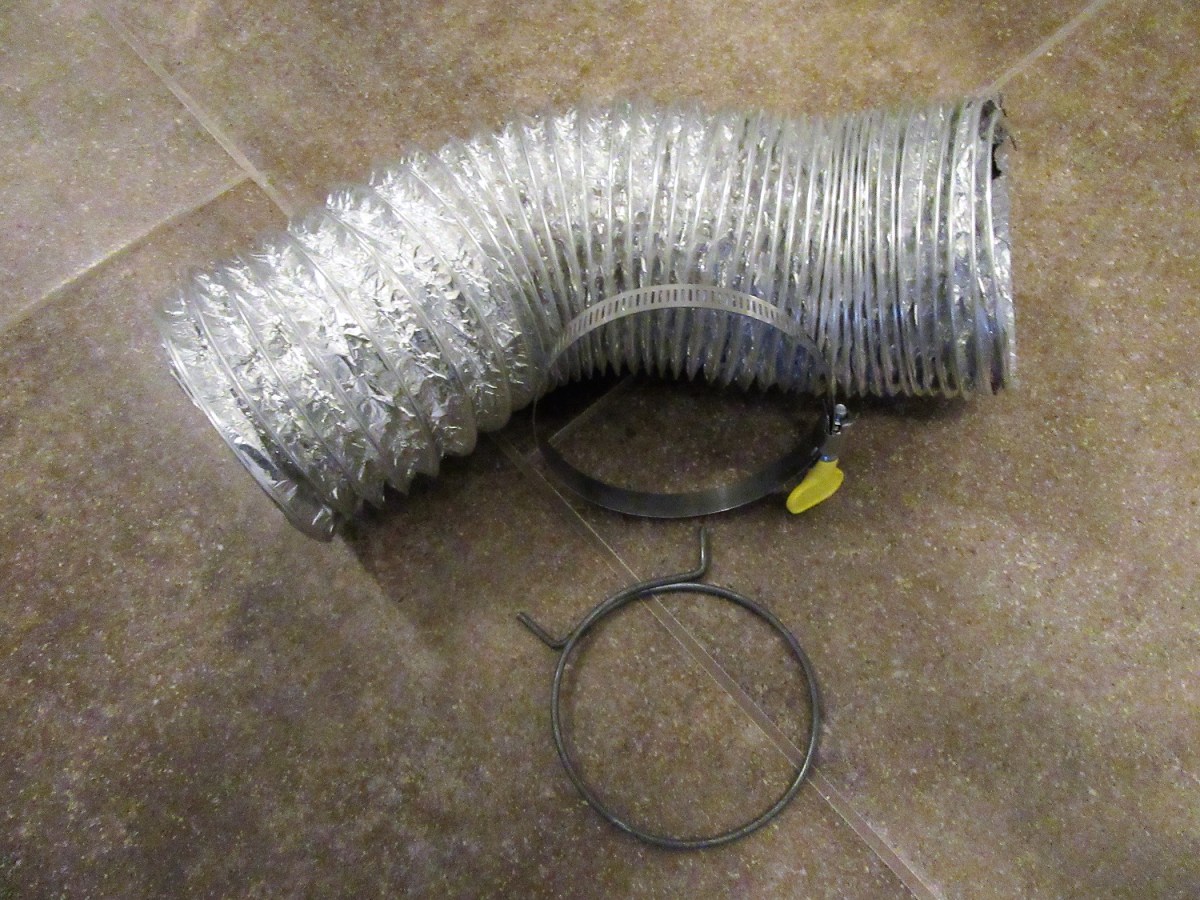
And for the first time, I had to replace a dryer vent duct. I’m the least handy person on the planet. Our washer and dryer pair are both 54 inches tall and I found out that when you have to drag a big dryer away from the wall, you have to do it like you really mean business.

You don’t want to look at what’s behind the dryer. Worse yet is jumping down behind it in a space barely big enough for me to turn around. Getting out of it is even harder. Jump and press to the top of the machines and watch those cords and hoses.

I tried so-called semi-flexible aluminum duct. I switched to flexible foil duct, despite the hardware store guy telling me that it’s illegal. It’s not. You want to wear gloves with either because you’ll cut up your hands if you don’t.

Who’s the genius who thought of oval vent pipe on the wall when the duct is 4-inch round? It’s not illegal but it does make life harder. And how do you attach the duct ends to the pipes? Turn key or screw type worm drive clamps. If you don’t have enough room for a screw driver, the turn key style is the best bet. Good luck finding those wire galvanized squeeze-style full clamps. I think they’re often out of stock because they’re not only older, but easier to use and cheaper.

See what I mean? I would not even have the vocabulary for that kind of job if I were still working as a psychiatrist. I would just hire a handyman to do it—like I do for a lot of other things I still don’t know how to do since I retired. It’s sort of like that Men in Black movie line from Agent K when he tells Agent J what they have to do on their first mission: “Imagine a giant cockroach, with unlimited strength, a massive inferiority complex, and a real short temper, is tear-assing around Manhattan Island in a brand-new Edgar suit. That sound like fun?”

No, it doesn’t and neither does replacing a dryer vent duct or any number of things retired guys get to learn because they have too much time on their hands.

So, I’m really glad to change the subject and talk about other people who are doing things I admire. First is a former student of mine, Dr. Paul Thisayakorn, who is a consultation-liaison (CL) psychiatrist in Bangkok, Thailand. He did his residency at The University of Iowa Hospitals and Clinics. He put together a CL fellowship program in Thailand. The photo below shows from left to right: Paul, Dr. Tippamas, the first CL Psychiatry fellow, and Dr. Yanin. Dr. Tippamas will be the first CL Psychiatry trained graduate in Thailand next year and will work at another new medical school in Bangkok. Dr. Yanin just graduated from the general psychiatry residency program last year. Paul supervised her throughout her CL Psychiatry years. Now she is the junior CL staff helping Paul run the program. Within the next few years, Paul will send her to the United States or the United Kingdom or Canada for clinical/research/observership experience so she can further her CL education. Way to go, Paul and your team!

Dr Paul Thisayakorn and CL Psychiatry grads (see text for details)

By the way, that tie I’m wearing in the Mindfully Retiring from Psychiatry post picture (the one with white elephants; the white elephant is a symbol of royal power and fortune in Thai culture) was a going away gift from Paul upon his graduation.

The other is a heavy-hitter I met years ago, Dr. E. Wes Ely, MD, MPH, a critical care doctor who is publishing a new book, Every Deep-Drawn Breath, which well be coming out September 7, 2021. Our interests converged when it came to delirium, especially when it occurs in the intensive care unit, which is often. I met him in person at an American Delirium Society meeting in Indianapolis. He’s a high-energy guy with a lot of compassion and a genius for humanely practicing critical care medicine. I sort of made fun of one of his first books, Delirium in Critical Care, which he wrote with Dr. Valerie Page and published in 2011, the same year I started a blog called The Practical Psychosomaticist (which I dropped a few years ago as I headed into phased retirement). Shortly after I made fun of how he compared the approaches of consult psychiatrists and critical care specialists managing delirium, he sent me an email suggesting I write a few posts about the ground-breaking research he and others were doing to advance the care of delirious ICU patients—which I gladly did. I think he actually might have remembered me in 2019 when he came to present a grand round in the internal medicine department at University of Iowa Hospitals & Clinics (I wrote 3 posts about that visit: March 28 and April 11 and 12).

In the email Dr. Ely sent to me and many others about the book, he said, “Every penny I receive through sales of this book is being donated into a fund created to help COVID and other ICU survivors and family members lead the fullest lives possible after critical illness. This isn’t purely a COVID book, but stories of COVID and Long COVID are woven throughout. I have also shared instances of social justice issues that pervade our medical system, issues that you and I encounter daily in caring for our community members who are most vulnerable.”

I look up to these and others I had the privilege of working with or meeting back before I was not retired and struggling to come up with a good answer to the dreaded question: What do you do now that you’re retired?

Hey, what do you do now that you’re retired?