First Cribbage Solitaire Win Today!

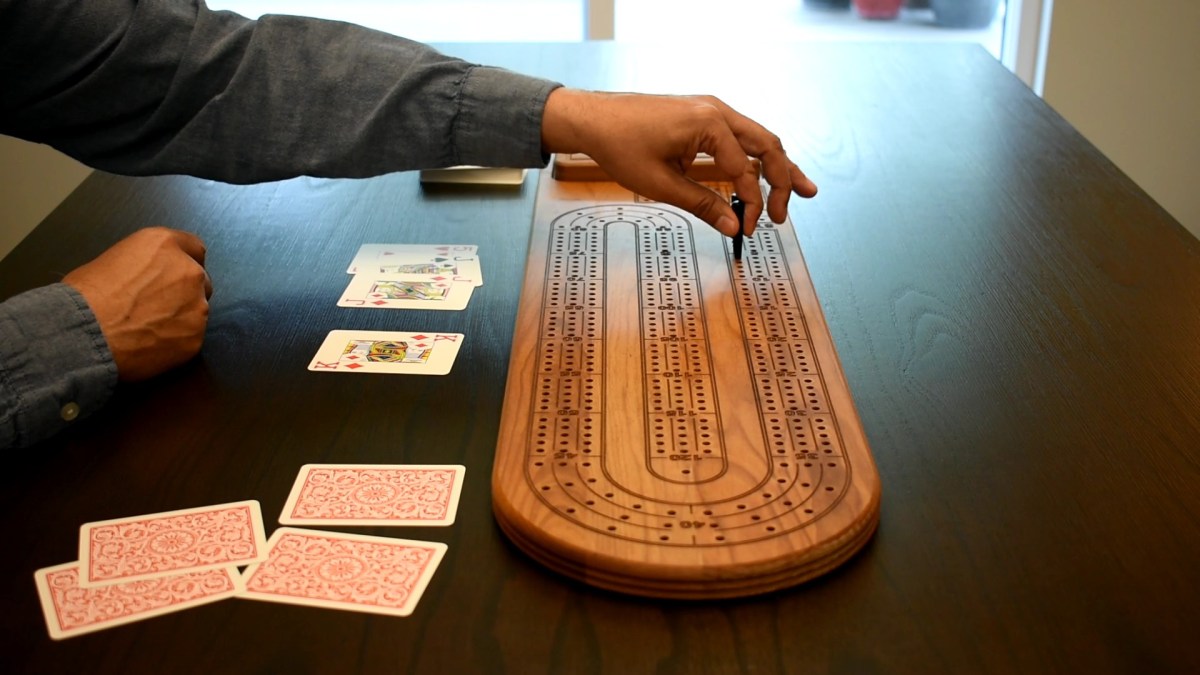
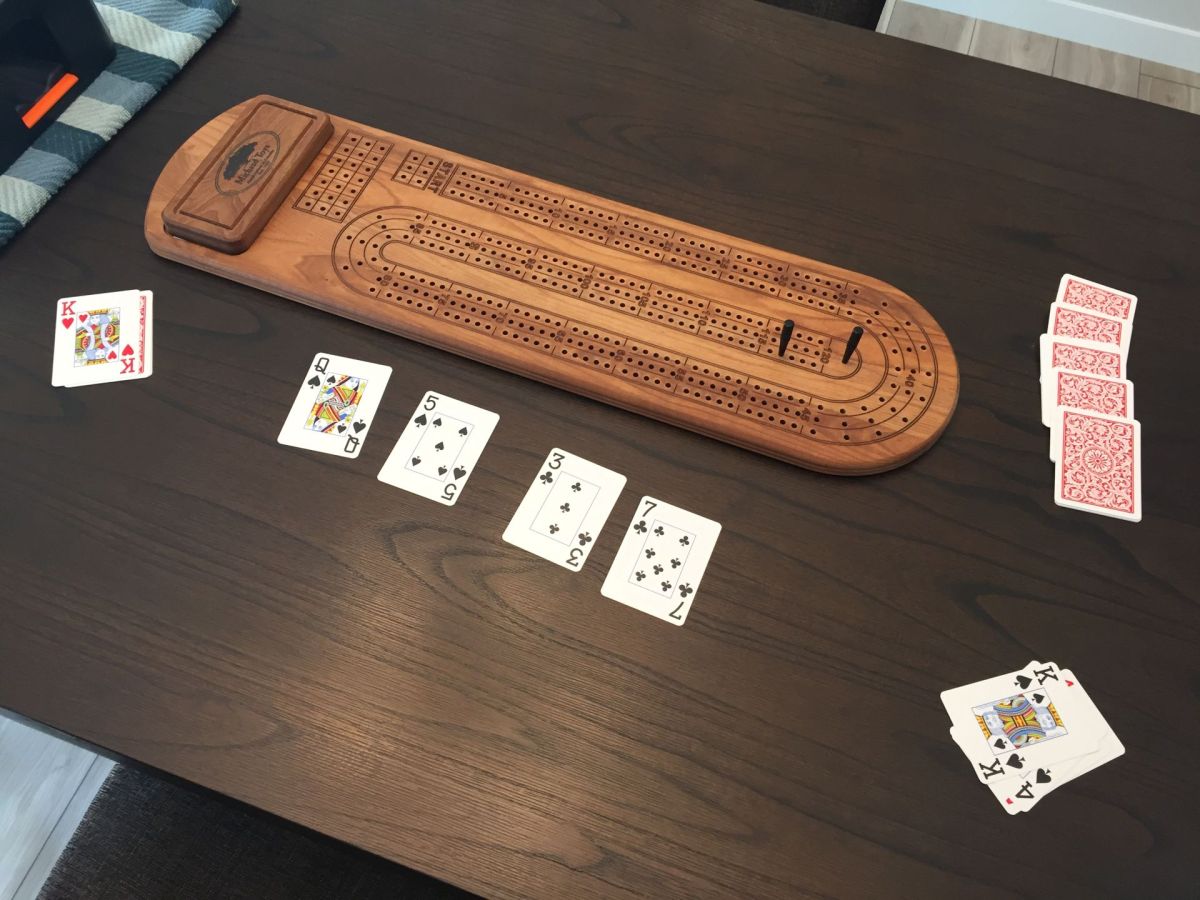
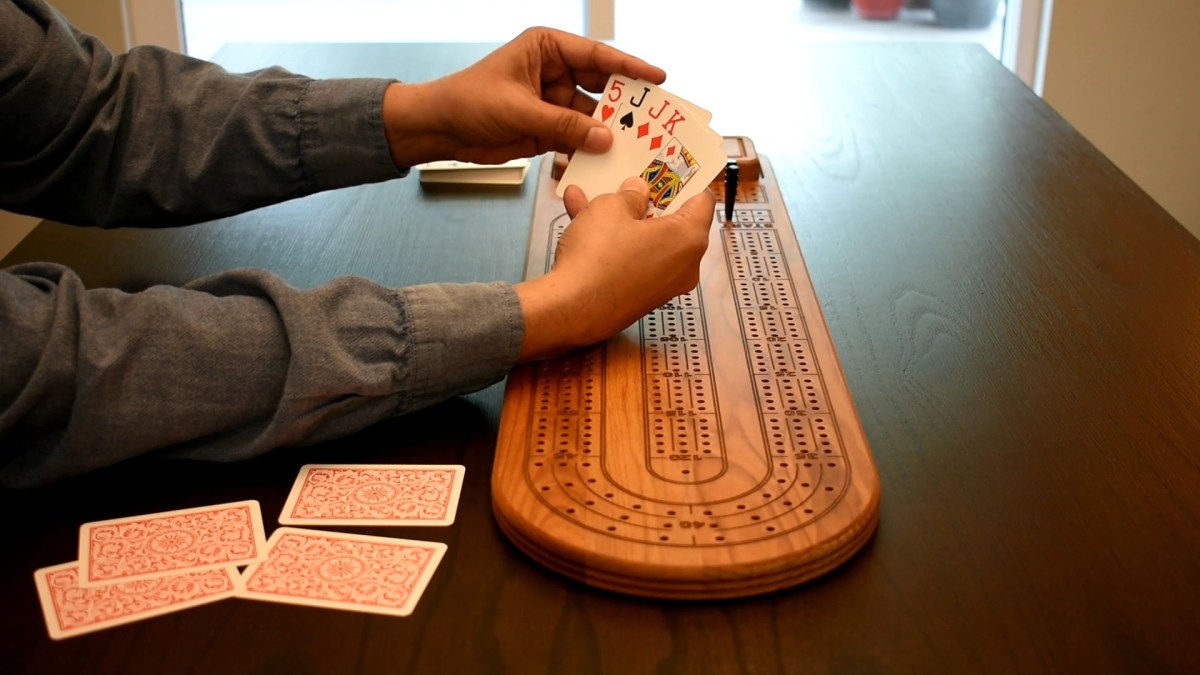
I got lucky and won my first game of cribbage solitaire today! I got to 121 in six deals. I probably should have videotaped the game, but since you never know if you’re going to win, you’d probably waste a lot of time filming. Sena watched me do it and I wonder when she’s going to give it a try. What you see in the picture are the 4 crib cards spaced out, the deck with starter card, the hand cards face up in a pile on the right, and the 5 other deals in piles face down on the left.

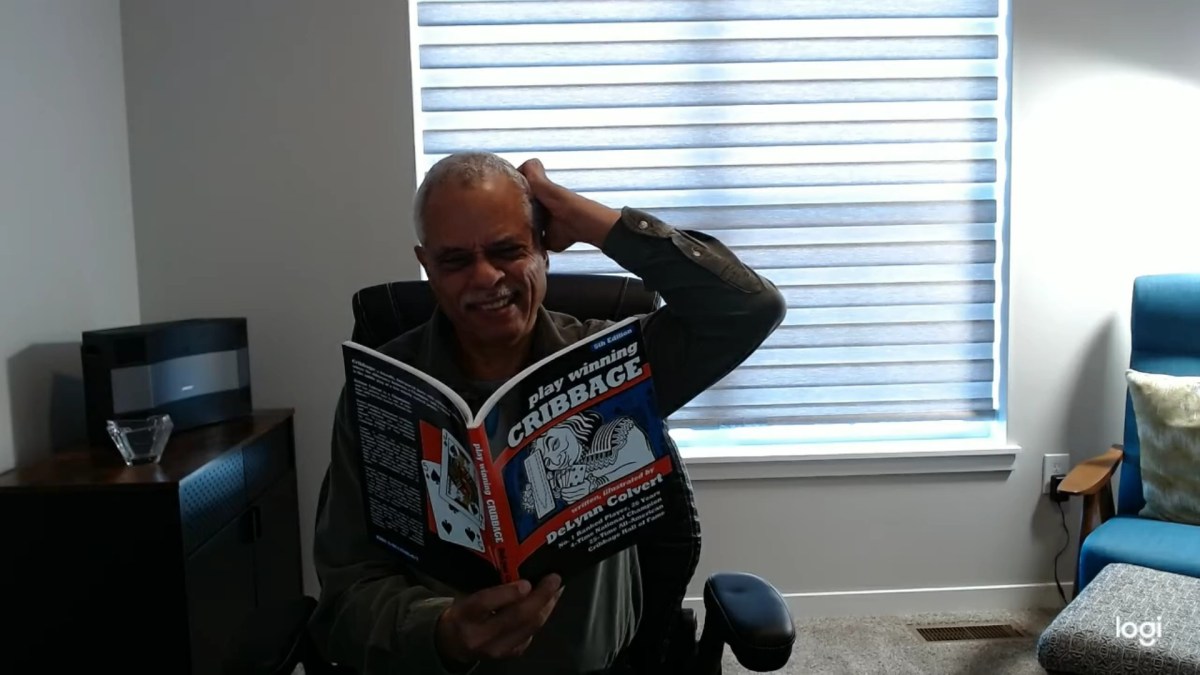
According to DeLynn Colvert in his book “Play Winning Cribbage” 5th Edition, published in 2015 in the appendix, “This game is simple, fast, and difficult to win…but it can be done.” You have to average 20 points per deal to win the 121-point game. See my YouTube video below for a quick demo.

Rules summarized:

Cribbage solitaire has six hands and six cribs and you peg your six hands.

Start by dealing two cards down to form part of your hand, then one down to form part of the crib. Deal two more to your hand, one more to the crib, and finally two more to your hand (which now has six cards and the crib has two.

Discard two of the six cards to form a four-card crib. Then flip the top card of the deck for the starter card.

Then peg your hand for maximum count, which would not always be the way you’d peg in a game with an opponent. Colbert’s example paraphrased: if you hold 5-10-10-jack. Play the 5 first, then a 10 for “15-2,” then the other 10 for “25, a pair for two and a go.” The remaining jack also scores a “go” for one point. Your peg is six points total.

After scoring the peg, count your hand, then your crib.

Then start the second deal by using the first-hand starter card, which becomes one of the first six cards for your hand. Again, deal the crib two cards. Repeat this process until you complete the game with the sixth deal (the deck will have four cards after six deals). (Colvert, 2015).

Reference

Colvert, D. (2015). Play Winning Cribbage 5th ed. Missoula, Montana: Starr Studios.
Cribbage Solitaire Inventor Lost in the Mists of Time?

I just played 3 games of cribbage solitaire that I posted about in the last couple of days. I got to 4th street in 2 of them and got to 115 in one. I think getting to 121 is at least possible. You have 6 deals to get there and you need over 20 points per deal to make it. Each game takes me about 10 minutes.

I haven’t seen any rules for this cribbage solitaire variation about looking at your cards or not as you deal them. I deal the hand cards face down as well as the first two crib cards face down. I look at the six cards in my hand from which I select the other two cards to throw to the crib. I only look at all four crib cards when I’m ready to count the crib points. I don’t know if anybody else does it differently. See my YouTube video demo for how I interpret the game play.

The only rules I’ve seen for this cribbage solitaire version are in DeLynn Colvert’s book (“Play Winning Cribbage, 5th edition, published in 2015) or were cited by someone on the boardgamegeekdotcom thread which dates to 2008 and they are virtually identical. Neither source identifies the inventor of the rules. I wonder if they would be in the original edition of Colvert’s book, which was first published in 1980. You can find a 1993 edition on eBay going for $150. There’s a 1985 edition advertised for $113. I can’t find anything on the Internet Archive about it.

It’s probably lost in the mists of time.

Learning How to Play Cribbage Solitaire

I thought I would try to learn how to play cribbage solitaire as described by DeLynn Colvert in his book Play Winning Cribbage, 5th edition published in June 2015.

There are several versions of the variation of the game often called cribbage solitaire, but I think this one teaches the most about the important phases of the game of cribbage.

I don’t know who originally created this variation of cribbage solitaire, but I found the same description on the website boardgamegeekdotcom.

If anyone else knows more about this variation, please let me know!

Addendum: The best I could do today was 111.

Cribbage Solitaire According to DeLynn Colvert or Whoever

I was leafing through Delynn Colvert’s book “Play Winning Cribbage” and found a section on how to play cribbage solitaire. I’ve never considered it, but I tried it tonight just for laughs. It’s easier to understand than his 26 Theory, which I never got. I looked for the rules as Colvert described them and was lucky to find them in the forum on the boardgamegeek website.

Just read Jesse Hickle’s description. If you look at stuff on the web about cribbage solitaire too long, you’ll find dozens of variations. I’d stick with Colvert’s version (or Hickle’s version, whatever). I don’t know where the rules originated.

Colvert says it’s not impossible to beat—but I didn’t win tonight after a few tries. It’s good practice.

Cribbage Book Arrives

I finally got DeLynn Colvert’s book Play Winning Cribbage yesterday after it traveled a circuitous delivery route starting in Missoula, Montana, and seemingly stopping at several U.S. Postal Service carrier facilities along the way—some of them in the reverse direction from the destination.

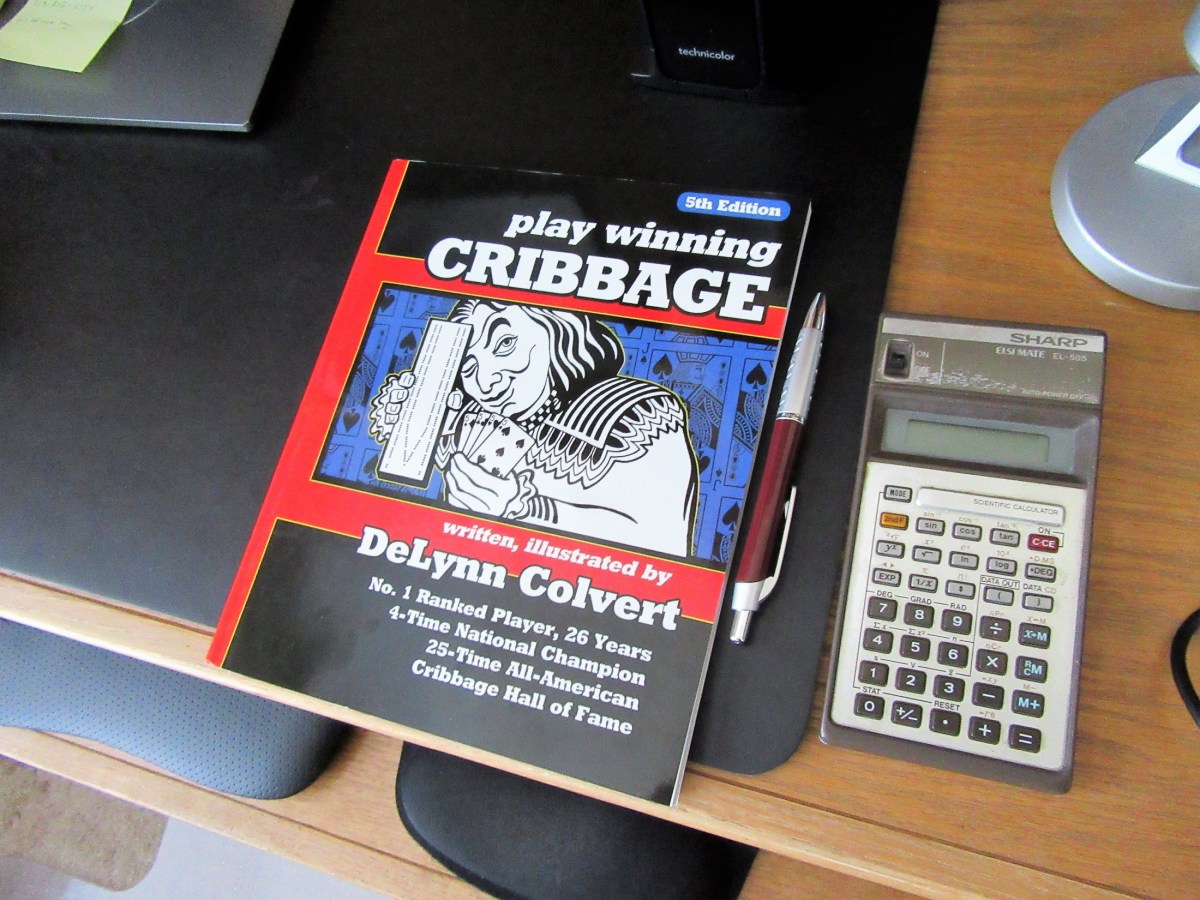
The book is the 5th edition, updated as of 2015 (not 2018 as Amazon advertises). On the cover is, presumably, an illustration of Sir John Suckling, (who invented cribbage almost 400 years ago) holding a tournament cribbage board which was designed by Colvert himself. We have one in our small collection. He not only wrote the book but did all the illustrations as well. It was originally published in 1980. In a sense, it’s sort of a vintage item (like the old calculator next to it in the picture).

Tournament cribbage board

As the cover indicates, he was the No. 1 Ranked Player for 26 years, a 4-time National Champion, and was inducted into the Cribbage Hall of Fame in 1989.

I’ve just started reading it. It’s pretty entertaining. A cribbage master named Frank Lake once said cribbage is 85% luck. That’s from an Oregon news item published on line in 2005 in The Bulletin. Frank was 83 years old at the time and the story mentions Delynn Colvert who played cribbage with Frank for 20 years. Colvert said Frank was a good player although age was starting to take a toll on his game.

I’m not sure whether Colvert would have agreed with Lake’s opinion about how big a role luck plays in cribbage. He has many tips for improving skillful play and even came up with a special “Twenty-Six Theory” about the game. If applied consistently, the theory is said to improve a player’s winning average by 6%. It doesn’t sound like much, but if you’re into tournament play, it is the winning edge. I haven’t read that chapter yet and I don’t have aspirations to be a tournament player.

But perhaps you do?