Delirium and Catatonia: Medical Emergencies

It was a very busy day on the consultation psychiatry service today. Besides that, I gave a lecture about delirium and dementia to the medical students. The talk is similar to the one below:

As a reminder, Dr. Wes Ely, MD will be in Iowa City at the University of Iowa Hospitals and Clinics to talk about delirium, “A New Frontier in Critical Care: Saving the Injured Brain.” It will be at noon.

I’m urging medical students and residents to attend. Unfortunately, I’ll probably be too busy in the hospital to go.

I sometimes see what is called a catatonic variant of delirium in patients who are medically very sick.

A condition called catatonia can occur in the setting of delirium. Most commonly, patients with this condition are mute and immobile. They may have a fever and muscular rigidity that leads to the release of an enzyme associated with muscle tissue breakdown called creatine kinase (CK). The level of CK can be elevated and detectable on a lab test.

Many patients will have a fast heart rate and fluctuating blood pressure. They may sweat profusely which can lead to a sort of greasy facial appearance. They may have a reduced eye blink rate or seem not to blink at all. They may display facial grimacing.

The patient may exhibit the “psychological pillow” (some call this the “pillow sign”). While lying in bed, the patient holds his head off the pillow with the neck flexed at what looks like an extremely uncomfortable angle. The position, like other odd, awkward postures can be held for hours.

Catatonia can be caused by both psychiatric and medical disorders. It tends to be more common in bipolar disorder than in schizophrenia even though catatonia has historically been associated with schizophrenia as a subtype. You can also see it in encephalitis, liver failure, and in some forms of epilepsy and other medical conditions.

The patient may perseverate or repeat certain words no matter what questions you ask. He may simply echo what you say to him and that’s called “echolalia”.

Although catatonic stupor is what you usually see, less commonly you can see catatonic excitement, which is constant or intermittent purposeless motor activity.

The usual way to assess catatonic stupor in order to distinguish it from hypoactive delirium is to administer Lorazepam intravenously, usually 1 to 2 milligrams. A positive test for catatonic stupor is a quick and sometimes miraculous awakening as the patient returns to more normal animation. The reaction is usually not sustained and the treatment of choice is electroconvulsive therapy (ECT), which can be life-saving because the consequence of untreated catatonia can be death due to such causes as dehydration and pulmonary emboli.

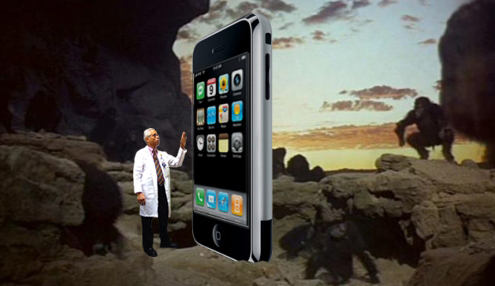
Another less invasive test that doesn’t use medicine is the “telephone effect” described in the 1980s by a neurologist, C. Miller Fisher. It was used to temporarily reverse abulia, which in a subset of cases of stupor is probably the neurologist’s word for catatonia. Sometimes the mute patient suffering from abulia can be tricked into talking by calling him on the telephone. It’s pretty impressive when a patient who is mute in person answers questions by cell phone. I have never tried texting.

The goal is to identify any medical condition left undiscovered and treat it. Both delirium and catatonia should be thought of as ominous indicators of a medical emergency.
Wes Ely to Visit University of Iowa in April

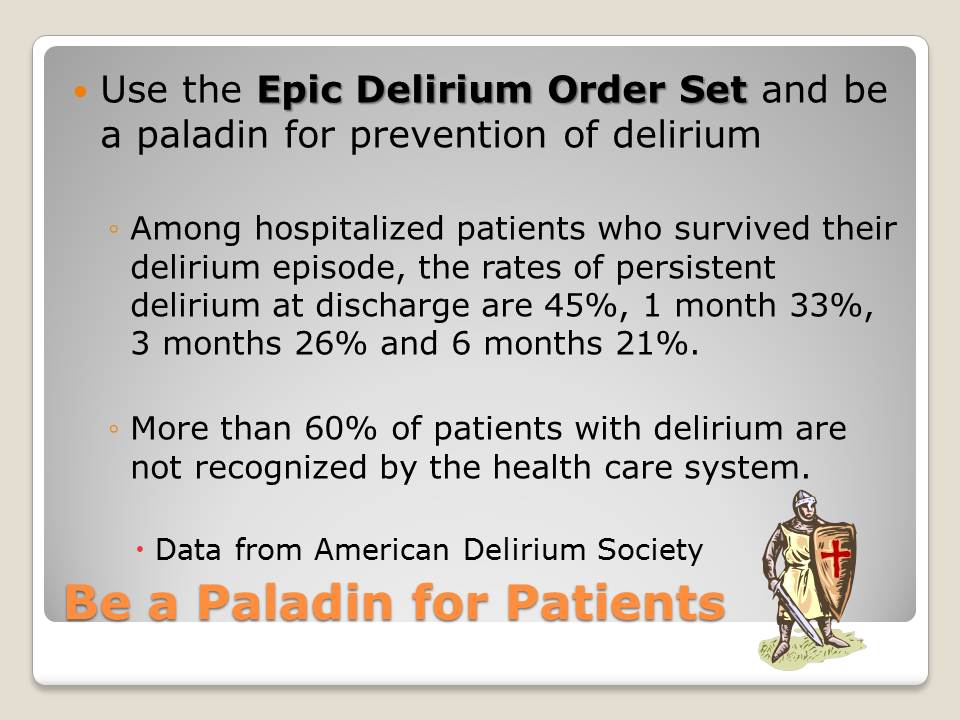
Retirement takes a back seat today for this announcement: Dr. Wes Ely, Critical Care Specialist and one of the foremost experts in intensive care unit (ICU) delirium at Vanderbilt University will be speaking at The Newman Center in Iowa City on April 11, 2019 at 7:00 PM, “Maximizing Dignity at End of Life: Insights from the ICU.” He’ll also deliver the Internal Medicine Grand Rounds at the University of Iowa at noon, “A New Frontier in Critical Care: Saving the Injured Brain.”

I was notified by one of our critical care specialists, Dr. Gregory A. Schmidt, MD, who co-authored the recently published study showing that antipsychotics are not effective treatment for delirium. Wes talks about the study in the video below:

Dr. Wes Ely

I met Dr. Ely briefly at one of the annual meetings of the American Delirium Society several years ago. He’s enthusiastic, brilliant, and inspiring. He’s published hundreds of articles and book chapters on delirium and taking care of the brain. Along with Dr. Valerie Page (another critical care specialist) he co-authored a book entitled Delirium in Critical Care, originally published in 2011 and I see that there is a 2nd edition available, published in 2015 by Cambridge University Press.

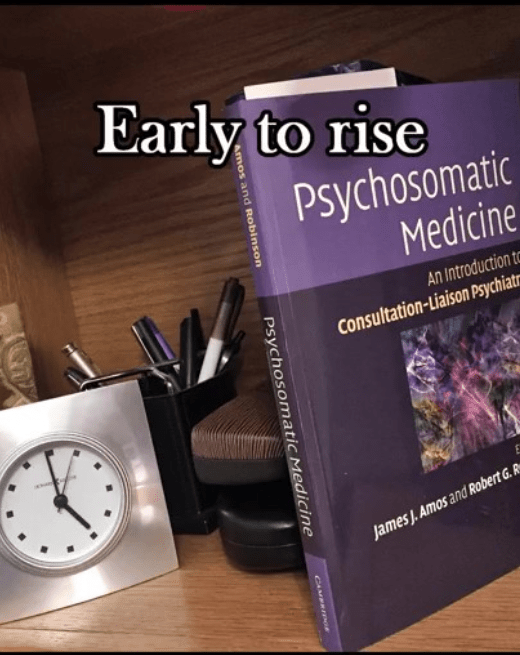
That is the same publisher, incidentally, for the book I co-edited with Dr. Robert G. Robinson, Psychosomatic Medicine: An Introduction to Consultation-Liaison Psychiatry)–shameless plug for my book.

I have a copy of the first edition, which contains a section about the role of the psychiatrist in ICU delirium. It’s very short, which I think is very appropriate. Dr. Alasdair MacLullich, Professor of Geriatric Medicine, Professor of Geriatric Medicine at the University of Edinburgh and past President of the European Delirium Association, wrote the foreword to the 2nd edition and he describes Dr. Ely as “…perhaps the best recognized expert in this field worldwide,” referring to delirium.

Incidentally, about 8 years ago Dr. MacLullich and I corresponded about his research team’s development of the Edinburgh Delirium Test Box (EDTB), an instrument for detecting attentional abnormalities that are a defining feature of delirium. He loaned us the box and I eventually turned it over to a colleague for continuing use of it as part of an ongoing delirium committee project to improve the early detection and prevention of delirium at our hospital. There is now a smartphone application for it.

Where is this thing called an “app”?

Regrettably, I probably won’t get to hear Wes give his presentation—because I’m on duty as the general hospital psychiatric consultant and most likely will be trying to help physicians care for delirious patients.

References:

Girard, T. D., et al. (2018). “Haloperidol and Ziprasidone for Treatment of Delirium in Critical Illness.” N Engl J Med 379(26): 2506-2516.
BACKGROUND: There are conflicting data on the effects of antipsychotic medications on delirium in patients in the intensive care unit (ICU). METHODS: In a randomized, double-blind, placebo-controlled trial, we assigned patients with acute respiratory failure or shock and hypoactive or hyperactive delirium to receive intravenous boluses of haloperidol (maximum dose, 20 mg daily), ziprasidone (maximum dose, 40 mg daily), or placebo. The volume and dose of a trial drug or placebo was halved or doubled at 12-hour intervals on the basis of the presence or absence of delirium, as detected with the use of the Confusion Assessment Method for the ICU, and of side effects of the intervention. The primary end point was the number of days alive without delirium or coma during the 14-day intervention period. Secondary end points included 30-day and 90-day survival, time to freedom from mechanical ventilation, and time to ICU and hospital discharge. Safety end points included extrapyramidal symptoms and excessive sedation. RESULTS: Written informed consent was obtained from 1183 patients or their authorized representatives. Delirium developed in 566 patients (48%), of whom 89% had hypoactive delirium and 11% had hyperactive delirium. Of the 566 patients, 184 were randomly assigned to receive placebo, 192 to receive haloperidol, and 190 to receive ziprasidone. The median duration of exposure to a trial drug or placebo was 4 days (interquartile range, 3 to 7). The median number of days alive without delirium or coma was 8.5 (95% confidence interval [CI], 5.6 to 9.9) in the placebo group, 7.9 (95% CI, 4.4 to 9.6) in the haloperidol group, and 8.7 (95% CI, 5.9 to 10.0) in the ziprasidone group (P=0.26 for overall effect across trial groups). The use of haloperidol or ziprasidone, as compared with placebo, had no significant effect on the primary end point (odds ratios, 0.88 [95% CI, 0.64 to 1.21] and 1.04 [95% CI, 0.73 to 1.48], respectively). There were no significant between-group differences with respect to the secondary end points or the frequency of extrapyramidal symptoms. CONCLUSIONS: The use of haloperidol or ziprasidone, as compared with placebo, in patients with acute respiratory failure or shock and hypoactive or hyperactive delirium in the ICU did not significantly alter the duration of delirium. (Funded by the National Institutes of Health and the VA Geriatric Research Education and Clinical Center; MIND-USA ClinicalTrials.gov number, NCT01211522 .).

Tieges, Z., Stíobhairt, A., Scott, K., Suchorab, K., Weir, A., Parks, S., . . . MacLullich, A. (2015). Development of a smartphone application for the objective detection of attentional deficits in delirium. International Psychogeriatrics, 27(8), 1251-1262. doi:10.1017/S1041610215000186