“Our Hidden Conversations” is a Very Tough Book to Read

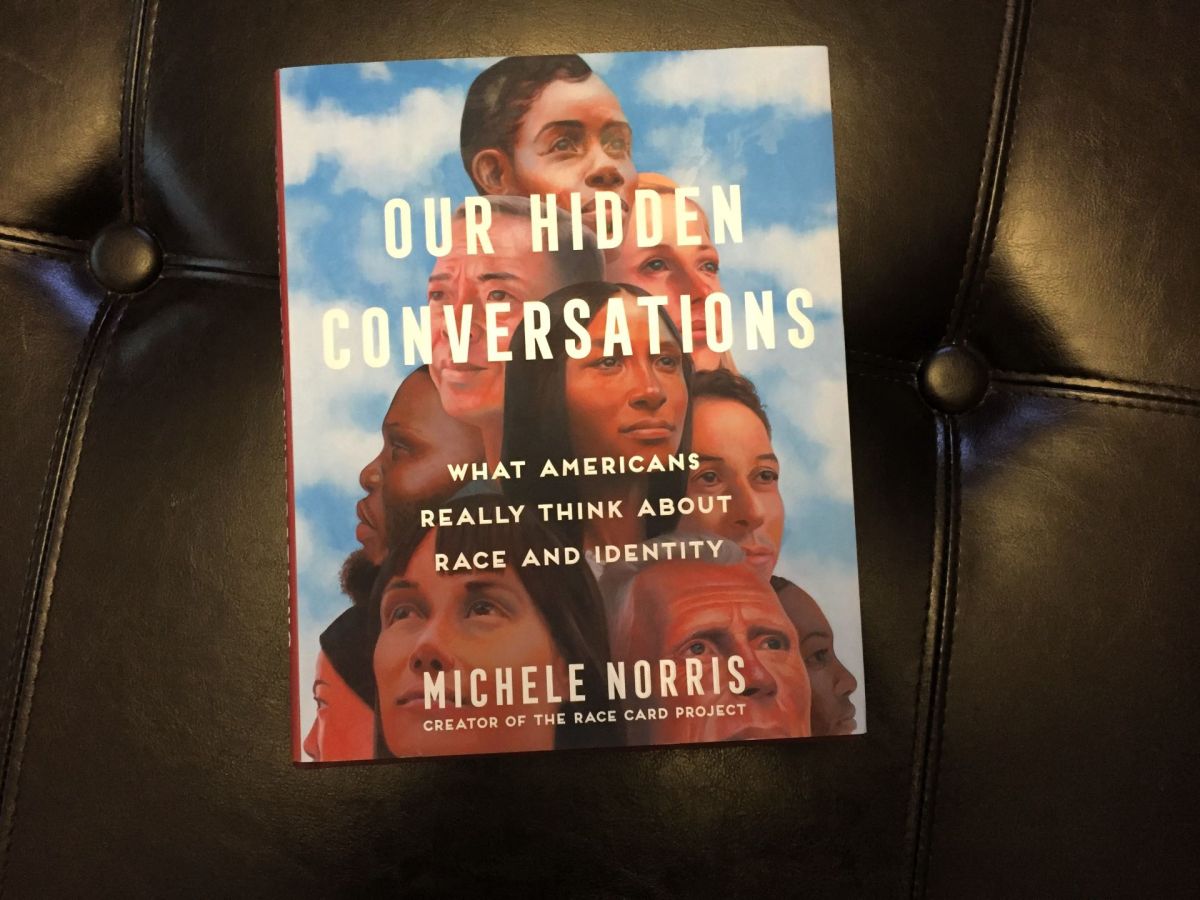
As I approach the end of the book “Our Hidden Conversations” by Michele Norris, I find myself doing what I often do when I feel uncomfortable emotionally. I start to deploy my sense of humor.

As a psychiatrist (now retired since 2020), I learned early in my residency training that humor can be thought of as a “mature” psychological defense.

Given the painful memories that the book evokes, I find that I self-edit my usual habit of turning pain into comedy. Maybe it’s not always mature.

On the other hand, there are times when facing what is nowadays called my “lived experience” about racism and identity in the era my wife and I grew up in, while not funny, can be peeked at most safely from the funny edge.

So, with that in mind I took a look at the web page of the National Association of Black Social Workers (NABSW) which summarizes the organization’s position on white adoption of black children. I first read about it in Ms. Norris’s book, in the chapter “Black babies cost less to adopt.”

I was surprised to see the actual document, which has been posted since 2013. Sections of the position paper titled “Transracial Adoption Statement (c) 1972” are underlined. It expresses clearly an opposition to placing black and transracial adoptees with white parents. I might have missed it, but I don’t see another position statement that modifies it.

There are 30 state chapters of the NABSW. Iowa is not listed.

There is no National Association for White Social Workers. There is a website for the National Association of Social Workers (NASW). When I typed in “National Association of Black Social Workers” in the search field on the NASW website, almost 800 results were returned. When I applied the filter for ethnicity and race, there were 5 results attesting to the NASW efforts in countering racism. I didn’t see any mention of the NABSW. Maybe I just missed it.

I lived for a brief time in an African American foster home eons ago. I can’t think of anything funny to write about it. Has there ever been an opportunity for cross talk between the NASW and the NABSW? I’m not judging anyone here. I’m just asking.

Moving right along, I have again searched the web using the term “African American psychiatrists in Iowa.” I’ve posted about this before, looking at it from the funny edge (this allows me to take a deep breath). I still find my former colleague, Dr. Donald Black, MD listed. The only thing black about him is his name. And my 2019 blog post is the 3rd link down from the top, preceded by two from Psychology Today.

Most of the mental health care providers from the Psychology Today lists are Nurse Practitioners who are black. One of them does not look black. She looks white. She’s a psychiatrist. I’ve worked with her in the past and don’t recall her ever identifying as black. But because I’m reading the race card stories in “Our Hidden Conversations,” and because I’ve been around a little while, I’ve learned that some black people can look white. You can’t always judge a book by its cover.

A good black psychiatrist is hard to find. In fact, a black psychiatrist of any quality is hard to find. However, in general, there are notable black psychiatrists in our history. One of them was Chester Middlebrook Pierce, MD. Among his many accomplishments, he was the founding president of the Black Psychiatrists of America in 1969, which was one year after the NABSW was established. Dr. Pierce was also the president of the American Board of Psychiatry and Neurology in 1978. I didn’t learn about him until today. How is that possible?

There is a website for the Black Psychiatrists of America and you can try the search field to look for a black psychiatrist there. I couldn’t find any listed in Iowa. Most of them seem to be in Texas. I had a little trouble applying the search filters.

Those are my thoughts for now about “Our Hidden Conversations” by Michele Norris. This is not a funny book.

Preliminary Thoughts on “Our Hidden Conversations” Book

This is a short post about my initial impressions about the book, “Our Hidden Conversation” by Michele Norris.

I’m not finished with the book yet, but I thought I would let you know that the first chapter, “Bread Crumbs” was tough to read. I had to put it down and come back to it a few times because it brought back memories.

The chapter title “Bread Crumbs” means the clues that parents, grandparents, etc. might leave for subsequent generations to find which might shed light on one’s background, explain troubling circumstances, and so on.

I have some bread crumbs left to me by my family. Some are in the form of photos, although there is no family photo of all of us together.

I remember the hair combing routine my mom had with me and my brother every Sunday morning before church when we were kids. Our father was black and my mother was white. Dad was out of the home and we lived with mom. We were the only black kids in the church. In fact, all the members were white.

Mom used a prodigious amount of hair oil while vigorously combing our curly hair back. It took many strokes and the pulling pinched a bit. The ritual took a little while. When I look back on it, I guess the goal was to straighten our hair as much as possible.

Everyone in the church always treated us kindly and I was baptized there.

If you decide to read “Our Hidden Conversations,” give yourself a break whenever you feel like you need it.

Thoughts on the Dr. MLK, Jr Distinguished Lecture by Michele Norris

Sena and I viewed a recording of the Dr. Martin Luther King, Jr Distinguished Lecture given by Michele Norris on January 23, 2023. It was not available to the general public, about which I have inquired. It was a very interesting, informative, and entertaining presentation. It was about her 14-year Race Card Project which led to her new book, “Our Hidden Conversations: What Americans Really Think About Race and Identity.”

Michele opened with a little information about Bayard Rustin, which we didn’t know. There’s a film titled “Rustin,” available on Netflix which is about him and Dr. King and their complicated relationship. He was a gay black man, which was difficult for the civil rights movement leaders to accept. He was the key organizer for the 1963 March on Washington for Jobs and Freedom.

In her own words, Ms. Norris created the Race Card Project because she thought no one wanted to talk about race. She found out she was wrong because there was an avalanche of response to her request that people write something about race on a small postcard (6 words) and send it back. Interesting examples:

“Father was racist. I’M NOT. Progress!”

“Did my Southern Grandpa attend lynchings?” (This card came from Iowa.)

“Married a white girl. Now what?” (The girl thought of the guy as an “assimilated” brown man.)

“Alabama. MLK assassinated. Students cheered. Horrified.” (This was in a college classroom.)

“We aren’t all strong, black women.” (Norris’s comment was that it makes black women seem more like a weed and not a flower).

“Two white dads. Three black kids.” (Adorable photo included of gay married men with three adopted black children.)

“Can someone help me find my privilege?” (Photo of a white man included. Ms. Norris said that most of the cards are from white people, which surprised her.)

“My name is Jamaal. I’m white.” (Include a picture of a white guy. This was a story about Iowa. The guy showed up for a job interview, and the receptionist says “I thought you would be taller.”)

“Vote for Obama. Look like me.” (White guy married to white gal; they adopted black girl. I think he meant, in the abstract, that no matter what color you or the candidate are you should vote based on whether the person is qualified for the job. It’s funny that his very young daughter commented on it in a predictably concrete way given her age. She said she lived in Iowa and didn’t see too many people who looked like her. Ms. Norris said this story would be included in the book.)

It’s tough to express complicated ideas in just six words.

Ms. Norris says it’s unlikely that we’re going to agree with each other. She wants to build bridges across the chasm which divides us and she is hopeful about our ability to do that. We ordered her book.