
Waiting for Another Jab

I’m still waiting for my Moderna booster, which has to be blessed by the CDC Advisory Committee on Immunization Practices (ACIP). Every time I check the schedule for their next meeting on October 20, 21, I still see a draft agenda. The CDC still does not recommend heterologous boosting, although last week the FDA advisory committee discussed the preliminary results from an ongoing study about it and the data showed it was safe and resulted in impressive boosting. They had a discussion question about it, but there was no vote.  

My wife Sena, got her Pfizer booster last week. She had a sore arm for about a day and no other side effects. When I got my first Moderna shot, my left arm swelled up and got red and sore. If I had gotten another injection in the other arm, I would have looked buff.
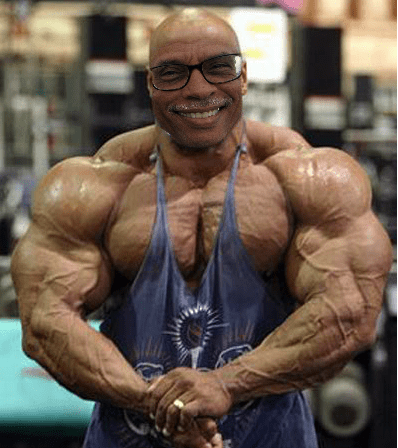
I just remembered that when I was playing junior league baseball, I got hit with a bat in that same arm in the same spot. I think it took longer for that to heal up. I always struck out anyway. I think the pneumovax I got last month hurt more than the COVID shot.

After my second jab, I got pretty tired for about a day, but still exercised and didn’t really limit my activities beyond my usual laziness. I was still able to sprint away at top speed from Sena when she came looking for me to do some chores. She didn’t have any side effects at all from her primary series.

Before the vaccines were available about a year and a half ago and I was still working at the hospital as a psychiatric consultant, I saw patients who had COVID-19. In the general hospital, all of them were pretty sick, although at that time we were not supposed to see any ICU COVID-19 patients. I saw a patient with a catatonic-like syndrome, who didn’t respond to an intravenous benzodiazepine challenge test (see yesterday’s post about the catatonic variant of delirium). I always wore the proper Personal Protective Equipment (PPE).

Anyway, it sounds like more and more people are getting COVID-19 vaccines. I believe it’s the right thing to do. I’m not a big fan of mandates. Million-dollar lotteries didn’t seem to get the vaccination rates up very much. I don’t think scaring people is the ideal way to motivate them. I guess it’s up to you.

CDC Advisory Committee on Immunization Practices Meeting October 20-21

I’m not sure what the announcement for the Advisory Committee on Immunization is all about for October 20, 21, 2021. It’s supposed to have 2 pages for the agenda and I see only one. The date in the agenda heading is “October 14, 2021” and the agenda has two dates: one for October 20 which is not about COVID-19 vaccine boosters and one for October 21 which says “Coronavirus Disease 2019 (COVID-19) Vaccines TBD.”

I suspect the ACIP will be discussing the Moderna and J&J vaccine boosters, which is what would follow the FDA advisory committee meeting decisions on October 14, 15.

FDA Advisory Committee on Janssen Booster and Heterologous Dosing: Day 2

Dr. Arnold Monto, Acting Chair “Arnie” couldn’t get his camera to work right off the bat on this, Day Two of the FDA Advisory Committee meeting on COVID-19 vaccine boosters. The microphone mute virus was also an issue—again. One committee member had real problems with audio skipping, which the on-screen captioning could not fix. There were many on-screen notices of “indiscernible,” as well as comical errors, “public urine speakers.” That captioning reminded me of voice recognition software, which I tried to use when I dictated my clinical notes.

Early in the meeting, Arnie asked for a clarification of the voting question:

“10/15 Voting Question:

Question 1) Do available data support the safety and effectiveness of Janssen COVID-19 Vaccine for use under EUA as a booster dose in individuals 18 years and older at least 2 months after a single dose primary vaccination?

1a. If yes to # 1, do available data support that an interval of at least 6 months between a single primary dose and a booster dose may result in a more robust booster response?

2b. If no to # 1, do available data support the safety and effectiveness of Janssen COVID-19 Vaccine for use under EUA as a booster dose in individuals 18 years and older at least 6 months after a single dose primary vaccination?”

This led to what Sena and I thought was a hilarious “clarification” interaction between Arnie and Dr. Peter Marks. We couldn’t really follow it, mainly because we couldn’t stop laughing.  It reminded me of the “Who’s on First” routine by Abbott and Costello. However, Arnie said he understood it.

The Q&A session between the committee, the sponsor, and FDA seemed conflicted about the data on the efficacy of the Janssen vaccine. The FDA received a large amount of data from Janssen, but apparently got it too late to conduct its own analysis of it. There was the overall impression that the Janssen vaccine efficacy is lower than the mRNA vaccines. The participants on both the FDA and the sponsor side acknowledged that maybe part of the reason to hold today’s meeting was in view of the urgency to do something for those patients who got the Janssen vaccine. Most people acknowledged that the Janssen vaccine had good durability. Arnie kept the proceedings on a short leash as usual, and by the break for lunch at 11:25 AM CDT, it wasn’t very clear what the outlook was for the Janssen booster.

I’ll update after the break.

Several committee members advanced the idea that the Janssen vaccine is actually best considered a 2-dose vaccine rather than a 1 dose vaccine. They moved toward not calling the 2nd dose as a booster per se, and also seemed agreeable to simplifying the voting question above to only number 1, setting aside the a and b questions. Arnie called out “We need a simplification” and the group went along with it. Dr. Perlman suggested that it might be helpful to hear the presentation about heterologous boosting prior to addressing the voting question; however, Arnie and Dr. Marks thought heterologous boosting might be addressed as a separate EUA in the near future.

The committee voted only on the revised question:

Question 1) Do available data support the safety and effectiveness of Janssen COVID-19 Vaccine for use under EUA as a booster dose in individuals 18 years and older at least 2 months after a single dose primary vaccination?

The above was upvoted unanimously. The word “booster” might be changed to something like 2nd dose later.

After a 15-minute break, the heterologous (mix and match) vaccine boosting presentation will be given. I’ll update after that.

After the presentation on heterologous boosting, it seemed like mRNA boosting was stronger than Janssen boosting. A limitation was that this was an antibody data study only. The committee was impressed with the safety data. The discussion question to the committee was about what other studies they would want to see in order to evaluate an EUA to help guide decisions on, for example, how to boost the Janssen vaccine. Not all members thought an EUA was necessary for this issue. It sounded like some members wanted to see some flexibility in allowing for a fact sheet that would provide clear guidance on how to use heterologous boosting. In fact, some heterologous boosting is already happening out in the real world, which members acknowledged.

The meeting was adjourned at 2:30 PM CDT on the proverbial and a celebratory “You’re muted” reminder.

FDA Advisory Committee Meeting on EUA for Moderna COVID-19 Vaccine Booster Today

Today I’m watching the FDA meeting on extending the Emergency Use Authorization (EUA) for Moderna COVID-19 Vaccine Booster application. Right now, I’m in-between presentations and I’ll be updating later this afternoon. I’m skipping the Open Public Hearing.

I’m wondering if the question to vote on will get changed like it did last month for the Pfizer booster. So far, today’s question is:

“10/14 Voting Question:

Question 1) Do available data support the safety and effectiveness of Moderna COVID-19 Vaccine for use under EUA as a booster dose (50 mcg mRNA-1273) at least 6 months after completion of a primary series in the following populations:

• Individuals 65 years of age and older,

• Individuals 18 through 64 years of age at high risk of severe COVID-19, and

• Individuals 18 through 64 years of age whose frequent institutional or occupational exposure to SARS-CoV-2 puts them at high risk of serious complications of COVID-19 including severe COVID-19.”

Dr. Arnold Monto is in fine form and has already starting limiting the number of questions participants can ask. But we’re ahead of schedule and he’s very pleased overall.

My wife, Sena, finally got her Pfizer booster this morning. It has been kind of complicated for her to schedule and she went through a telephone algorithm about a half dozen times. She showed up on the day scheduled a couple of days ago and the pharmacy manager cancelled it, saying it was too early for the 6-month mark (by 2 days) following her 2nd primary series dose. This morning he apologized for being the “Vaccine Nazi.”

My Moderna booster depends on what happens today, and after the CDC advisory committee makes its decision at their meeting next week Oct 20-21. If approved, I’d get half the dose I received during my primary series (50 mcg instead of 100 mcg)—provided I don’t run into the Vaccine Nazi.

Anyway, this morning’s meeting went fairly well; only 2 people forgot to unmute their microphones. The Israeli researchers gave a presentation on their updated booster program that impressed committee members, who called the data “compelling.” As I recall, last month, some people raised questions about their definition of COVID-19 disease severity, making it hard to judge how applicable their data results would be in the United States. This morning, they clarified that the disease severity criteria actually came from the NIH (slide 15).

Update around 2:15 PM today: The committee upvoted the question above unanimously.

Tomorrow the committee will take up the issues of J&J boosters and heterologous vaccinations.

Heeeeeere’s Arnie—at the FDA Advisory Committee Meeting

I got a big kick out of Acting Chair of the FDA’s Vaccine and Related Biological Products Advisory Committee. Dr. Arnold Monto at the FDA meeting last month for the Pfizer COVID-19 vaccine booster. Everybody else did too, I bet. They all called him Arnie. I’m looking forward to seeing Arnie in action again this week for the meeting on the other boosters, Moderna and J&J. They’ll also discuss mixing and matching vaccine boosters—if Arnie lets them.

Arnie is pretty good at keeping speakers on a timeline. Everybody has a short leash. “That’s all you can ask.” “Keep it short, or I’ll cut you off.” “Hurry up, people want to get out in their gardens.” (He actually said something like that toward the end of the last meeting). The end of the meeting was abrupt. Arnie evidently expected the Advisory Committee on Immunization Practices (ACIP) to tidy up the regulatory decision with which the FDA committee seemed to struggle regarding the Pfizer booster.

I’m not the only one who notices Arnie’s preference for terseness. I found the article “Hearing Without Listening” by David S. Hilzenrath, who posted it on the web, December 16, 2020 on POGO.

I think Hilzenrath was a little hard on Arnie. People do tend to talk too much at meetings and that can interfere with getting things done.

I wonder what Arnie thinks about the Moderna and J&J boosters and the heterologous vaccination dosing strategies (“mixing and matching”)? My impression of what I read in the news is that different experts might be purposely jazzing up the topic, sending readers in different directions decorated with teaser headlines and leading statements. One might say something like, sure, the booster does what it’s supposed to do, which is boost—but does it boost enough? Another might say the boosters are barely needed. Many of them tend to be identified as “former” directors of something or other.

I’m not sure I’ll pay much attention to the hour long open public hearing, 3-minute-long diatribes per speaker on the miraculous properties of lemon-freshened Ivermectin gummies, including breathless accounts of also witnessing armies of Bigfoot hacking hairballs at armies of Gray Aliens doing impressions of Elvis (“thank ya-thank ya very much”) all on the head of a pin. If YouTube is kicking out purveyors of COVID-19 vaccine misinformation, why can’t the FDA and CDC advisory committees do the same?

I wonder if Arnie will rush the upcoming meeting because has a butternut squash garden he wants to get back to as soon as possible?

OK, we’re done here. You need to pick your pumpkins.

FDA Advisory Committee Meetings on COVID-19 Vaccine EUA Amendments for Moderna, J&J Boosters and Heterologous Boosters, Pfizer Vaccine for Children

The FDA Advisory Committee will hold a meeting October 14-15 to discuss amendments to the Emergency Use Authorization (EUA) for Moderna and J&J COVID-19 boosters as well as heterologous boosting (mix and match). New data is available, including NIH preliminary results on the mix and match study.

The FDA also announced a meeting to discuss Pfizer COVID-19 vaccine for children age 5-11, which is scheduled for October 26, 2021.

Links to the livestream meetings details are in the press announcement (link above).

Meeting materials are posted here.

CDC Statement on COVID-19 Vaccine Boosters

The CDC published a media statement this morning that outlines the amended Advisory Committee on Immunization Practices (ACIP) recommendations for COVID-19 vaccine boosters. Late last night, CDC Director Rochelle Walensky restored the recommendation that ACIP voted down yesterday: “People aged 18-64 years who are at increased risk for COVID-19 exposure and transmission because of occupational or institutional setting may receive a booster shot of Pfizer-BioNTech’s COVID-19 vaccine at least 6 months after their Pfizer-BioNTech primary series, based on their individual benefits and risks.” This is consistent with the FDA regulatory recommendations made on Wednesday.

Now, to my understanding, at least in Iowa, according to University of Iowa Hospitals & Clinics (UIHC) and others, it’s up to the Iowa Department of Public Health (IDPH) to green-light the booster rollouts locally.

ACIP Meeting on COVID-19 Vaccine Boosters: Day Two

It must have been after 8:00 PM last night that the FDA posted the COVID-19 Booster EUA authorization. The ACIP took that ball and ran with it all day long. Today was the second day of the ACIP meeting and the committee covered a lot of ground and ran over the schedule by more than an hour by the time voting on recommendations ended.

In a nutshell:

The committee voted unanimously to give boosters for people 65 and over as well as nursing home residents. Most of them voted to give boosters to those 50-64 with medical conditions that raise the risk for severe COVID-19 infection. A smaller majority voted to give boosters to those 18-49 with based on individual benefit and risk given underlying medical conditions. The committee voted down a proposal to give boosters to those 18-64 who would be at elevated risk of infection because of occupational or other setting, including health care workers, prison guards, and people who live or work in homeless shelters.

Nobody was happy about not giving an option to “mix and match” vaccines. If you got Pfizer in the initial series, you got Pfizer. But if you got Moderna or J&J—you couldn’t get Pfizer. More data is coming about heterologous vaccine dosing, but it’s not immediately available. On the other hand, the 6-month mark for getting the booster is anything but a hard line. You could wait months longer and still retain adequate vaccine effectiveness.

I thought it was interesting that, according to a survey in unpublished data, about a third of unvaccinated respondents said that offering a booster would make them even less willing to get vaccinated at all. See slides 52 and 53 in the presentation “Evidence to Recommendation Framework: Pfizer -BioNTech COVID-19 Booster Dose” by Dr. Sara Oliver. Despite that, several members of the committee stressed the critical importance of continuing to attempt vaccinating them.

There’s going to be a lot of flux in the next several weeks as more data is obtained. These recommendations are subject to updates and there will likely be several more meetings ahead, according to attendees.

I know that in Iowa, a lot of people are counting on the Iowa Department of Public Health (IDPH) to give the word on when to roll out the boosters. The University of Iowa Hospitals & Clinics and Story County officials have said that. I have not seen boosters even mentioned on the IDPH website, though. I inquired about what their plans are for the booster rollout this morning on their website contact form. I expect it may be a while before I get a reply, if I get one at all. They’re incredibly busy.

I heard one expert say that in his community, they were offering the vaccine to people in a way that emphasized the individual’s benefit only. I think that’s certainly one way to “sell” it. Altruism has a place here, though. I get regular email messages from Hektoen International, hekint.org.

They almost always contain some essay or quote that’s thought-provoking and inspiring. Here’s one I got this morning that included a public domain photograph of Bertrand Russell as well as his thoughts on the receding ego:

Bertrand Russell on life from Hektoen International hekint.org

Make your interests gradually wider and more impersonal, until bit by bit the walls of the ego recede, and your life becomes increasingly merged in the universal life. An individual human existence should be like a river — small at first, narrowly contained within its banks, and rushing passionately past rocks and over waterfalls. Gradually the river grows wider, the banks recede, the waters flow more quietly, and in the end, without any visible break, they become merged in the sea, and painlessly lose their individual being.

“How to Grow Old,” from Portraits from Memory and Other Essays by Bertrand Russell

Bertrand Russell by Fotograaf Onbekend / Anefo. 1957. Nationaal Archief. Public Domain. Via Wikimedia.

ACIP Meeting on COVID-19 Vaccine Boosters: Day One

This was the first day of the Advisory Council on Immunization Practices (ACIP) on COVID-19 vaccine boosters. I was struck by how organized it was. I was also struck by the statement by one presenter that they’re still waiting for a final decision from the FDA on the issue. I thought they made that last Friday. The decision has not yet been posted, though and I think it has to be published on the FDA website before it’s gospel.

In fact, ACIP is wondering if tomorrow’s meeting should be postponed if the FDA decision has not been made by then. Tomorrow is when ACIP plans to vote on what they decide about the who and how of the booster shots. Would they really leave it up in the air like that?

The only thing I see about boosters on the FDA website after the September 17th meeting is a podcast on September 20th that FDA Commissioner, Dr. Janet Woodcock did on a show called “In the Bubble with Andy Slavitt.” I thought it was a good general introduction to the booster issue. The interview also included questions about Pfizer’s latest study of their COVID-19 vaccine in children, ages 5-11 years of age. I thought there were too many commercials. There was supposed to be another broadcast about boosters on the show today, but I was too busy watching the ACIP meeting. I’m pretty sure I’m getting most of what I need from that, but I might check out the Andy Slavitt show “Toolkit: Answering Your Booster Questions.”

I know one thing; I heard the best lecture about the basic immunology of the boosters this morning. See the slides from the presentation “Adaptive immunity and SARS-CoV-2” by Dr. Dr. Natalie Thornburg, PhD. I still have cold sweats every time I think of the first basic immunology lecture we got in medical school. That was ages ago. The poor lecturer at some point during her talk happened to look up at us and she abruptly stopped talking. She looked dismayed by what must have been the totally lost look on our faces. She was demoralized and there was this—pause. She looked like all the air was sucked out of her. I thought for a moment she was too demoralized to go on.

I don’t remember how I got through the immunology exam. I do know I still have flunking nightmares of being a student at some level of college or medical school. In the dream, I’m usually trying to find a lecture hall, riffling through a key set of notes and books, all of which are incredibly jumbled up. I’m always hopelessly late and I have this sense of despair about ever graduating.

But today’s presentations were brilliant, fascinating, and helped clarify at least some issues in the complexity, not the least of which is deciding what the main goal of the boosters should be. Should it be preventing severe disease, hospitalization, and death, or preventing infection altogether?

I learned that not only are nursing home residents at high risk for getting COVID-19 but that it’s actually the level of community transmission that drives infection rates in residents (see presentation “Modeling the potential impact of booster doses in nursing home residents” by Dr. R. Slayton). Which brings up the issue of transmissibility of the virus, which is very high. Would the boosters cut the transmissibility? It’s unclear.

The boosters seem to be very safe and effective for pregnant people, yet only about 30% of them get vaccinated—cut that percentage in half for African American women. See the lectures with the word “pregnancy” in the title.

Dr. Sara Oliver’s “Work Group Summary” was enlightening and disturbing. The safety and immunogenicity date are reassuring but limited. But getting more data takes more time. What are the next steps for the ACIP? They are awaiting regulatory action from the FDA. I get a sense that we need a lot more beyond Dr. Janet Woodcock’s word on that. As she said in the “In the Bubble” interview with Andy Slavitt— “We need to get this right.” I think that means they need to take whatever time it takes to do that.

Will ACIP meet tomorrow? Will they vote? Don’t ask me; I still have flunking nightmares.

CDC Advisory Committee on Immunization Practices Meeting This Week on COVID-19 Vaccine Boosters

The CDC Advisory Committee on Immunization Practices (ACIP) will meet this week, Sept 22 and Sept 23 to discuss COVID-19 vaccine boosters. The agenda is posted although slides are not and the topic headings do not so far indicate a clear plan to vote on any specific booster recommendations. Recall on the August 30, 2021 ACIP meeting, Dr. Sara Oliver alluded to the probability of a vote on boosters (slide 49) in the presentation, “Framework for booster doses of COVID-19 vaccines.”

The University of Iowa Hospitals & Clinics (UIHC) today announced what its plan would be for boosters after the ACIP committee makes its own recommendation for boosters. The Iowa Department of Public Health must also give its approval. It looks like the guidance would be for UIHC employees only for the time being. Since more information about the ACIP recommendations for boosters will be posted on The Loop, you can access that directly. I will also be posting a link in the main menu on my blog site for now.