CDC ACIP Meeting on Covid 19 Vaccine Additional Dose

The CDC ACIP meeting on February 28, 2024 on the proposal of a Spring booster of the Covid 19 vaccine was interesting and confusing. Initially right after the morning presentations, we were a little confused about whether the committee was targeting only those who got the vaccine booster last fall or everybody. That didn’t make much sense given the concern about low overall uptake of the vaccine.

The presenters also mentioned that getting the Spring Covid booster would be part of a shared clinical decision-making discussion with your doctor, similar to that recommended for the RSV vaccine. That was bewildering because we think that’s part of the reason some people might skip the RSV vaccine, given the news reports last year pointing out you had to have a prescription from a medical provider in some states to get it.

I was pretty interested in learning more about T-cell immunity given the concern about waning which of immunity from vaccines over a few months, which I think was based on neutralizing antibodies from B cells. I thought the CDC web site link to an article about the T-cell immune response suggested that cell mediated immune responses might mean that our immunity might not be waning that quickly. However, one of the presentations, “Evidence to Recommendation” showed a slide indicating that your T-cell immunity gets weaker with age (ref. de Candia P, Prattichizzo F, Garavelli S, Matarese G. T Cells: Warriors of SARS-CoV-2 Infection. Trends Immunol. 2021 Jan;42(1):18-30. doi: 10.1016/j.it.2020.11.002. Epub 2020 Nov 13. PMID: 33277181; PMCID: PMC7664351.)

I’ve read other articles, one of them on the CDC website, which says you may have more durable immunity provided by T-cells, but if I read it carefully, the authors hedge and say that T-cell adaptive immunity may not be as strong when you’re older. (Moss, P. The T cell immune response against SARS-CoV-2. Nat Immunol 23, 186–193 (2022). https://doi.org/10.1038/s41590-021-01122-w).

Later in the afternoon, the committee voted that those who are 65 years old and older should get the spring dose. There was no further discussion of limiting it to only those who got the Covid vaccine in the fall of 2023. There was also no discussion of the shared clinical decision-making detail. The committee upvoted the resolution with a majority.

And yet, the voting question did say: ACIP recommends that persons greater than or equal to 65 years of age “should” (which was changed from “may”) receive an additional dose of 2023-2024 Formula COVID-19 vaccine. The “additional dose” means in addition to the vaccine (monovalent XBB.1.5) given last fall. That’s a relatively select group, when you take the subset of those who are 65 and older.

However, the slides in the “Evidence to Recommendation” had recommended there should be shared clinical decision-making, meaning that you should discuss getting the vaccine with your doctor. However, according to the STAT NEWS article summary of this meeting, substituting the word “should” for “may” would make the conversation with a doctor unnecessary.

Finally, there was no discussion at all of changing the 5-day isolation precaution for those testing positive for Covid-19. If the committee were planning to drop that, as many news agencies recently reported, I would think they’d have discussed it at length at the meeting.

The CDC Director will have to sign off on the additional Covid-19 shot before it’s official.

2/29/2024 Update: CDC Director endorsed the additional dose yesterday.
Thoughts on Upcoming CDC ACIP Meeting

Sena and I are talking about the upcoming CDC meeting on February 28th-29th next week. The agenda looks like they’ll be talking about an “additional dose” of the Covid-19 vaccine.

Given the extent of vaccine fatigue going on, I tried to find a layperson-friendly article on the web about vaccine immunity with details about how long it lasts.

There’s review article from 2022 that helps a little bit. The author says that boosting every few months may not be practical as a long-term strategy. It leads to vaccine fatigue in the population. We all know how low the Covid-19 vaccine uptake has been. The author says that boosters should be offered annually or even less often. There is more to immunity than neutralizing antibodies.

The suggestion of some experts is to offer Covid-19 boosters to whoever wants it. I feel like I’m getting mixed and circular messages when I read that my immunity is “waning,” and I need another one. We’ve gotten every Covid-19 shot since the vaccine campaign began. Experts even differ on whether to call Covid-19 a “seasonal” respiratory virus. That would suggest you could get one shot annually during the respiratory virus season-like the flu shot. Obviously, it’s not that simple if the CDC recommends another Covid-19 vaccine this spring.

And the CDC respiratory virus channel snapshot from February 16, 2024 is a little concerning. A couple of days ago there was a news report that schools in Forest City, Iowa would have to move to remote learning because of outbreaks of influenza, strep throat, and even stomach flu. According to the CDC, respiratory virus activity levels are high all over Iowa, which surprised me this late in the season.

What’s Up with Intranasal Covid-19 Vaccines?

I saw the JAMA article on intranasal vaccines research for Covid-19. It starts off pretty supportive of the principle. However, at the bottom of the article, the outlook looks pretty stable for injectable vaccines for at least a good long while.

It’s an interesting read. Skip to the Many Questions section:

How these experimental mucosal vaccines stack up against mRNA vaccines, considered the standard of care, remains to be seen, Beigel noted. The NIAID intends to conduct phase 2 trials that would compare mucosal and mRNA vaccines head-to-head, “so you’d know for certain what you’re trading off,” he said.

Ideally, a mucosal vaccine would generate as good a systemic immune response as an mRNA vaccine as well as a robust mucosal immune response. But an excellent mucosal immune response might make up for a bit of a decline in the systemic immune response, Beigel explained. Perhaps a vaccine inhaled through the mouth and into the lungs could provide the best of both worlds—strong mucosal and systemic immunity—but there are no data yet to support that theory, he said.

“Everyone knows we need a better vaccine and would really like it if we could get something that interrupts transmission and stops even mild disease,” Beigel said. “Whether that’s attainable or not, we don’t know.”

I’m not knocking the concept by suggesting you read the Conflict of Interest Disclosures.

Reference:

Rubin R. Up the Nose and Down the Windpipe May Be the Path to New and Improved COVID-19 Vaccines. JAMA. Published online December 06, 2023. doi:10.1001/jama.2023.0644

CDC Update on Covid-19 Variant BA.2.86

I saw a news item headline which mentioned Covid-19 Variant. BA.2.86. The CDC website tracking respiratory variants has a definitive update as of November 27, 2023:

“What to know about BA.2.86

  • The virus that causes COVID-19 is constantly changing over time. Sometimes these changes allow new variants to spread more quickly or effectively. If that occurs, the new variant may become more common relative to other variants that are circulating.
  • Since CDC’s first post on BA.2.86 in August 2023, the proportion of infections caused by BA.2.86 has slowly increased. In the CDC Nowcast posted Nov. 27, 2023, BA.2.86 is projected to account for 5-15% of currently circulating variants.
  • CDC projects BA.2.86 and its offshoots like JN.1 will continue to increase as a proportion of SARS-CoV-2 genomic sequences.
  • At this time, BA.2.86 does not appear to be driving increases in infections or hospitalizations in the United States.
  • CDC contributed to and agrees with the World Health Organization’s recent risk assessment about BA.2.86 suggesting that the public health risk posed by this variant is low compared with other circulating variants, based on available limited evidence.
  • Updated COVID-19 vaccines are expected to increase protection against BA.2.86, as they do for other variants.
  • As mentioned in previous updates, COVID-19 tests and treatments are expected to be effective against this variant, including its offshoot JN.1.
  • It is not possible at this time to know whether BA.2.86 infection produces different symptoms from other variants. In general, symptoms of COVID-19 tend to be similar across variants. The types of symptoms and how severe they are usually depend more on a person’s immunity than which variant causes the infection.
  • Regardless of what variants happen, CDC will continue to track them, working closely with partners around the world to understand how they are spreading and how they respond to vaccines and treatments.”

CDC Educates About Covid-19 Variants

Sometimes I see news about Covid-19 variants. They typically sound alarming. The CDC has posted an update on Covid-19 variants that is reassuring. There will always be variants. Not all will be serious threats. According to the update:

“While new variants like BA.2.86 and JN.1 attract attention, right now, 99 percent of SARS-CoV-2 variants are part of the XBB group of the Omicron variant, which is what this year’s updated vaccines are based on. CDC is continuing to track the spread and impact of BA.2.86 and JN.1, as well as other variants as they come and go.

For as long as we have COVID-19, we’ll have new variants. Nearly all represent relatively small changes compared with previous variants. CDC and other agencies monitor for impacts of new variants on vaccines, tests, and treatments, and will alert the public quickly if anything concerning is detected. Most of the time, new variants make little to no impact.

Regardless of the variant, all SARS-CoV-2 viruses spread the same way. So it’s important to protect yourself and others by staying up to date with COVID-19 vaccines, improving ventilation and staying home when you’re sick.”

CDC Update on Respiratory Viruses and the Covid-19 Vaccine

CDC posted an update on Covid-19 vaccination on October 13, 2023. In brief, the salient points:

They save lives and prevent hospitalizations.

The vaccines work.

The side effects are mild or moderate.

Scientific evidence supports the safety and effectiveness of the vaccines.

They don’t make you magnetic and they don’t have microchips to track your movements. We’re not living in an X-File episode.

Covid-19 and Flu Vaccines Today

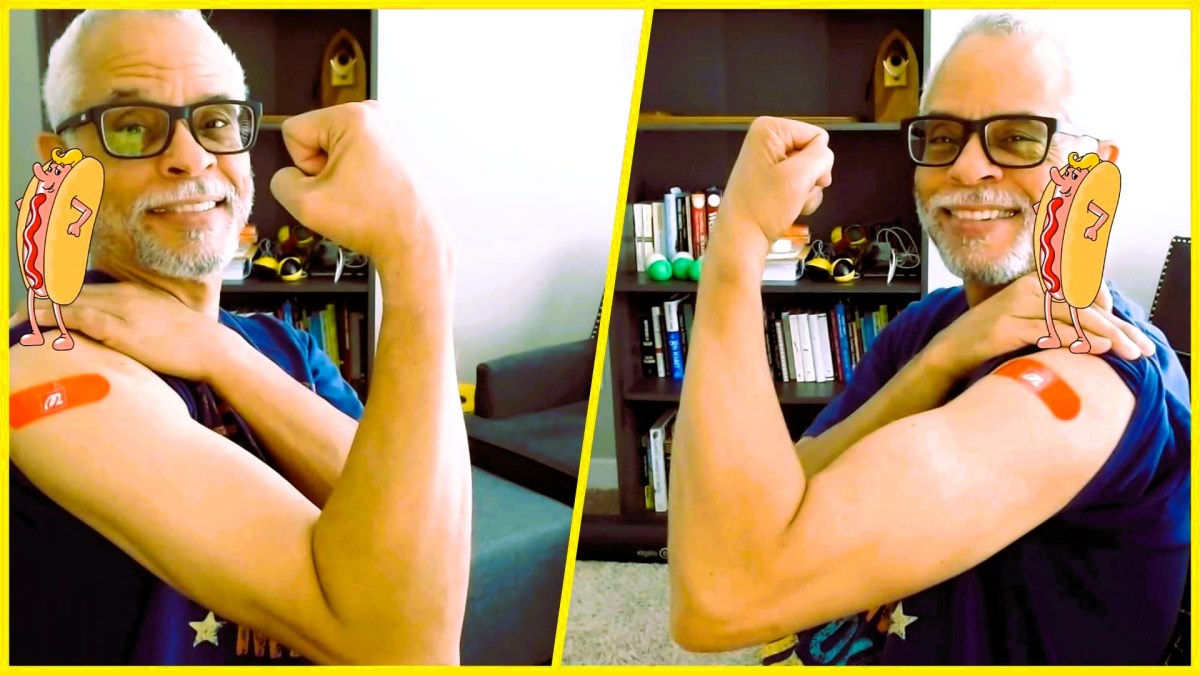
Today I got the new Covid-19 vaccine and the flu shot. I scheduled on line late last week and got right in. I didn’t have to wait long in line—and there were others getting the same vaccines. Sena will get them tomorrow.

It’s up to you.

COVID-19 in the Rearview Mirror?

One way to think about the Covid-19 pandemic can be that it’s in our rearview mirror, which is one way of saying it’s behind us now.

On the other hand, another way to think about it is that COVID-19 is in our rearview mirror because it’s tailing us.

So, we can’t keep staring in the rearview mirror because that’s not a safe way to drive. We can look forward and drive, paying attention to the signs, which guide us on how to stay ahead of and outrun another pandemic.

One way to do that is to bookmark the CDC COVID-19 web site.

How to Find Covid-19 Vaccine Availability By County

I’m finding out that maybe the best way to learn what the local public health issues are concerning Covid-19 infections as well as vaccine availability are through the county public health agency in my area.

According to the Johnson County Public Health department, hospital admission rates in Johnson County currently low. I can search the map and see that admissions are rising in certain areas of Iowa.

I also learned that the new Covid-19 vaccine will more likely be available closer to the end of the month or early next month rather than in a few days as suggested by presenters at the CDC meeting on September 12, 2023.

The county public health agencies may not have the most current information. Johnson County’s last update as of yesterday was September 1, 2023.

You can also check local pharmacies for availability of the Covid-19 vaccine.

CDC Recommends Updated COVID-19 Vaccine This Fall-Winter Season

The CDC has posted a press release announcing that it has recommended the updated COVID-19 vaccine for the fall/winter virus season.