


The FDA Vaccines and Related Biological Products Advisory Committee (VRBPAC) will meet on May 16, 2024 to make recommendations on Covid-19 strain selections for the fall vaccine of 2024-2025.
Tag: Covid 19
CDC ACIP Meeting on Covid 19 Vaccine Additional Dose

The CDC ACIP meeting on February 28, 2024 on the proposal of a Spring booster of the Covid 19 vaccine was interesting and confusing. Initially right after the morning presentations, we were a little confused about whether the committee was targeting only those who got the vaccine booster last fall or everybody. That didn’t make much sense given the concern about low overall uptake of the vaccine.
The presenters also mentioned that getting the Spring Covid booster would be part of a shared clinical decision-making discussion with your doctor, similar to that recommended for the RSV vaccine. That was bewildering because we think that’s part of the reason some people might skip the RSV vaccine, given the news reports last year pointing out you had to have a prescription from a medical provider in some states to get it.
I was pretty interested in learning more about T-cell immunity given the concern about waning which of immunity from vaccines over a few months, which I think was based on neutralizing antibodies from B cells. I thought the CDC web site link to an article about the T-cell immune response suggested that cell mediated immune responses might mean that our immunity might not be waning that quickly. However, one of the presentations, “Evidence to Recommendation” showed a slide indicating that your T-cell immunity gets weaker with age (ref. de Candia P, Prattichizzo F, Garavelli S, Matarese G. T Cells: Warriors of SARS-CoV-2 Infection. Trends Immunol. 2021 Jan;42(1):18-30. doi: 10.1016/j.it.2020.11.002. Epub 2020 Nov 13. PMID: 33277181; PMCID: PMC7664351.)
I’ve read other articles, one of them on the CDC website, which says you may have more durable immunity provided by T-cells, but if I read it carefully, the authors hedge and say that T-cell adaptive immunity may not be as strong when you’re older. (Moss, P. The T cell immune response against SARS-CoV-2. Nat Immunol 23, 186–193 (2022). https://doi.org/10.1038/s41590-021-01122-w).
Later in the afternoon, the committee voted that those who are 65 years old and older should get the spring dose. There was no further discussion of limiting it to only those who got the Covid vaccine in the fall of 2023. There was also no discussion of the shared clinical decision-making detail. The committee upvoted the resolution with a majority.
And yet, the voting question did say: ACIP recommends that persons greater than or equal to 65 years of age “should” (which was changed from “may”) receive an additional dose of 2023-2024 Formula COVID-19 vaccine. The “additional dose” means in addition to the vaccine (monovalent XBB.1.5) given last fall. That’s a relatively select group, when you take the subset of those who are 65 and older.
However, the slides in the “Evidence to Recommendation” had recommended there should be shared clinical decision-making, meaning that you should discuss getting the vaccine with your doctor. However, according to the STAT NEWS article summary of this meeting, substituting the word “should” for “may” would make the conversation with a doctor unnecessary.
Finally, there was no discussion at all of changing the 5-day isolation precaution for those testing positive for Covid-19. If the committee were planning to drop that, as many news agencies recently reported, I would think they’d have discussed it at length at the meeting.
The CDC Director will have to sign off on the additional Covid-19 shot before it’s official.
2/29/2024 Update: CDC Director endorsed the additional dose yesterday.
Thoughts on Upcoming CDC ACIP Meeting
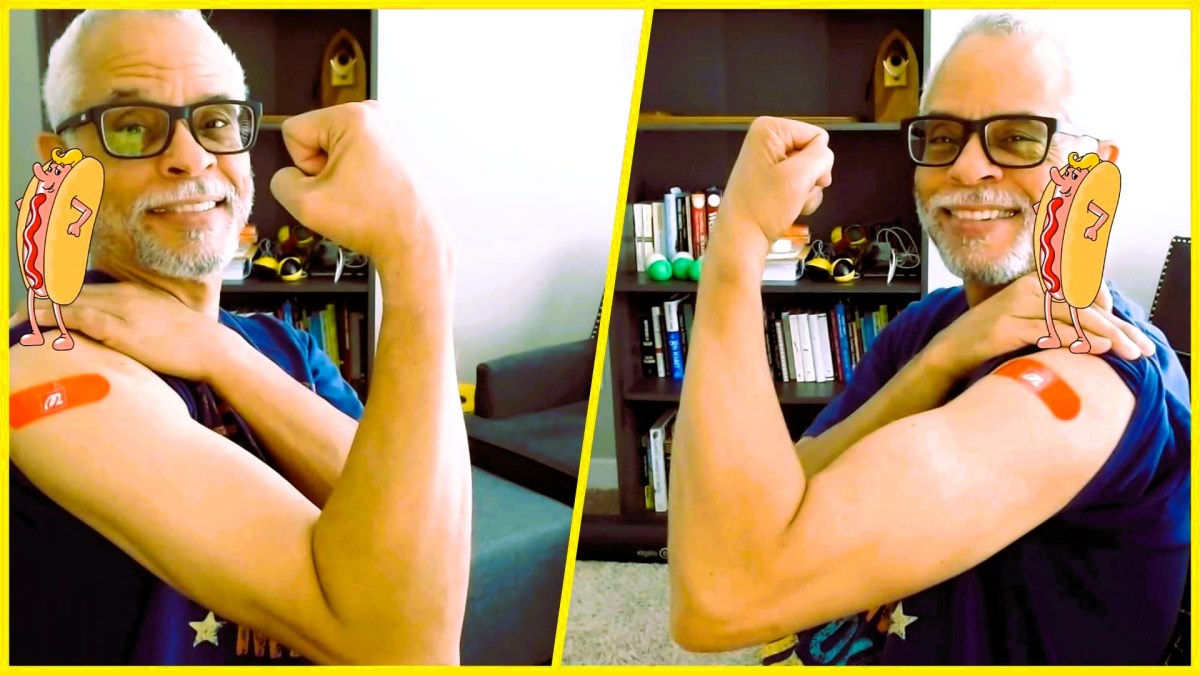
Sena and I are talking about the upcoming CDC meeting on February 28th-29th next week. The agenda looks like they’ll be talking about an “additional dose” of the Covid-19 vaccine.
Given the extent of vaccine fatigue going on, I tried to find a layperson-friendly article on the web about vaccine immunity with details about how long it lasts.
There’s review article from 2022 that helps a little bit. The author says that boosting every few months may not be practical as a long-term strategy. It leads to vaccine fatigue in the population. We all know how low the Covid-19 vaccine uptake has been. The author says that boosters should be offered annually or even less often. There is more to immunity than neutralizing antibodies.
The suggestion of some experts is to offer Covid-19 boosters to whoever wants it. I feel like I’m getting mixed and circular messages when I read that my immunity is “waning,” and I need another one. We’ve gotten every Covid-19 shot since the vaccine campaign began. Experts even differ on whether to call Covid-19 a “seasonal” respiratory virus. That would suggest you could get one shot annually during the respiratory virus season-like the flu shot. Obviously, it’s not that simple if the CDC recommends another Covid-19 vaccine this spring.
And the CDC respiratory virus channel snapshot from February 16, 2024 is a little concerning. A couple of days ago there was a news report that schools in Forest City, Iowa would have to move to remote learning because of outbreaks of influenza, strep throat, and even stomach flu. According to the CDC, respiratory virus activity levels are high all over Iowa, which surprised me this late in the season.
COVID-19 in the Rearview Mirror?

One way to think about the Covid-19 pandemic can be that it’s in our rearview mirror, which is one way of saying it’s behind us now.
On the other hand, another way to think about it is that COVID-19 is in our rearview mirror because it’s tailing us.
So, we can’t keep staring in the rearview mirror because that’s not a safe way to drive. We can look forward and drive, paying attention to the signs, which guide us on how to stay ahead of and outrun another pandemic.
One way to do that is to bookmark the CDC COVID-19 web site.
 Go Retire Psychiatrist