
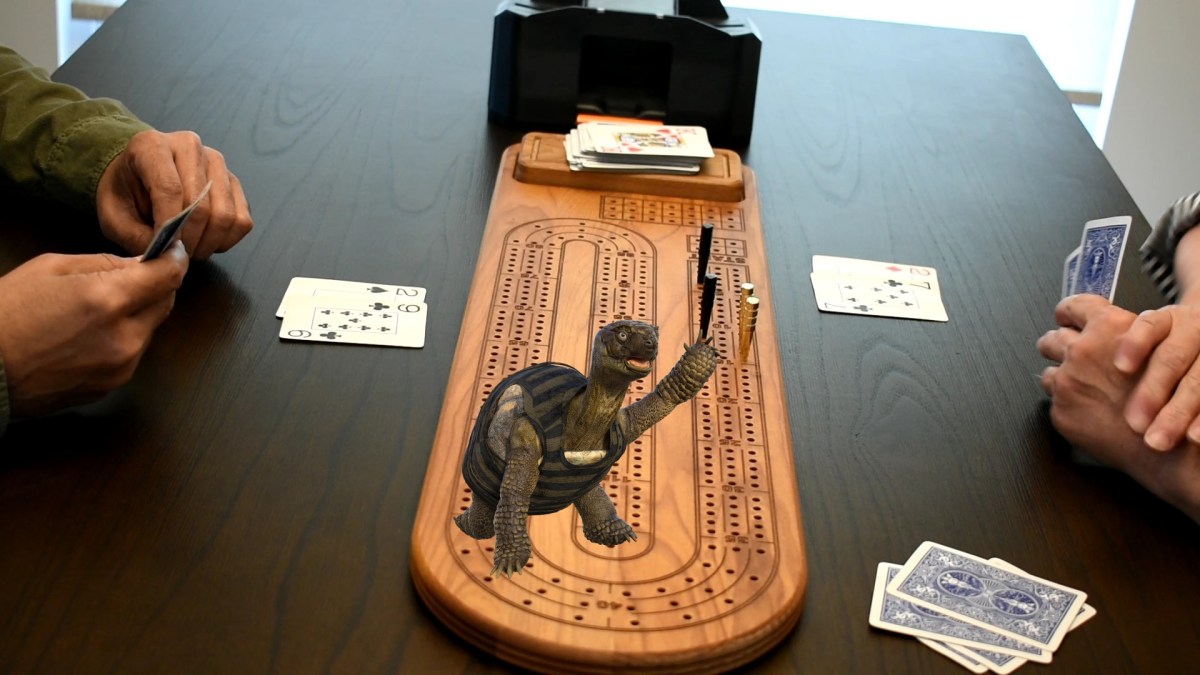
We’re still turtles when it comes to how long we take to play a cribbage game. And, I think I misjudged how randomization works with shuffling cards using a machine. I checked on line and various sources say, in general, whether you’re manually shuffling or using an automatic shuffling machine, adequate randomization of 52 cards would require shuffling seven times.
We experimented a little using a stopwatch. I can shuffle a deck in about 10 seconds using one table shuffle riffle and cuts. Sena probably takes about the same amount of time although she uses a different manual shuffling method (overhand, riffle). Rounding the numbers, shuffling 7 times would take about one minute and over 10 deals (one game), it would use up about 10 minutes or so.
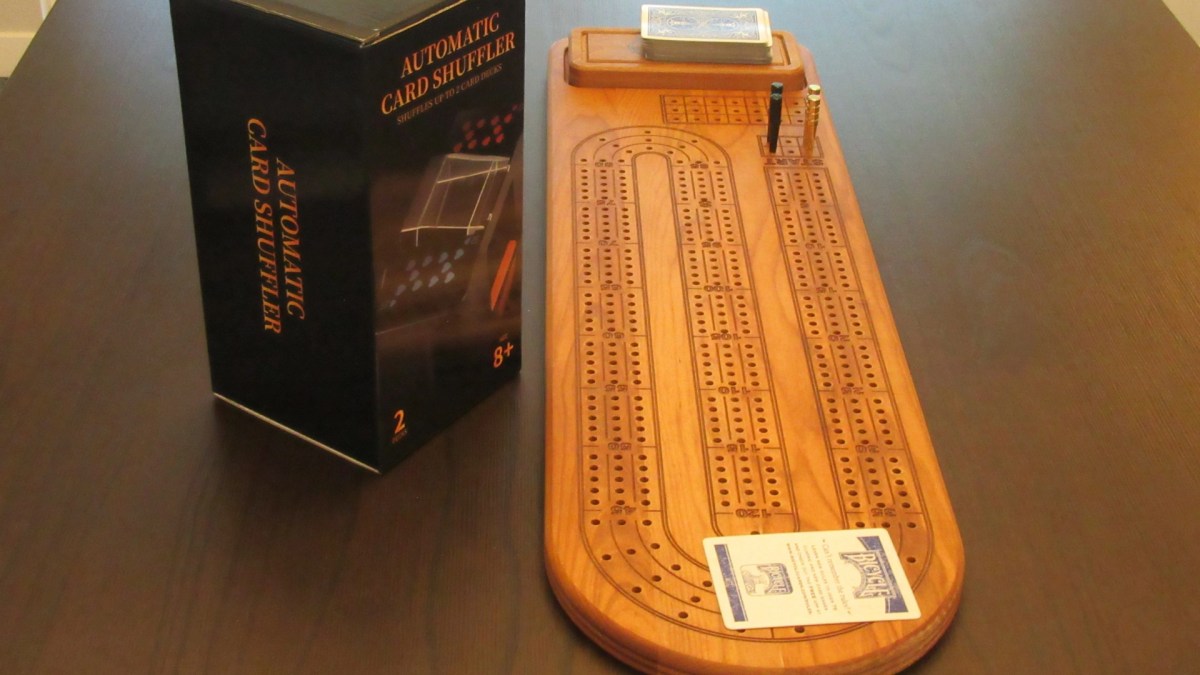
The automatic shuffling machine takes about 5 seconds to shuffle a deck and doing that 7 times would take 35 seconds. Over 10 deals this would take up about 6 minutes. You can see it in action in our YouTube video, “Cribbage Meets Card Shuffler.”
We also ran the 24 face cards through the machine and it didn’t randomize them at all. Adding more cards didn’t improve it that much. It occasionally jams, but overall, it seems to do the job when you’re playing with a full deck—although I’m now skeptical that it does any better at randomizing cards than manual shuffling. And that probably accounts for the recommendation to shuffle seven times—by machine or manual methods.
This imposes an incentive for the tournament cribbage player to cut the time out of certain phases of the game. That’s because of the rule that you need to be able to play a cribbage game in 15 minutes. We wonder if experienced players might skimp on the shuffling phase.
For reference, the American Cribbage Congress (ACC) official rules about proper mixing of the cards (sec. 2.1) says:
2.1. Proper Mixing The pack must be mixed or shuffled at least three times (including mechanical card shufflers) with the cards face down or otherwise hidden from both players. The shuffler is not permitted to look at the bottom card after the last shuffle. If the shuffler should do so, the nonshuffler is to remind the shuffler of the prohibition and score a two-point penalty. The pack shall then be reshuffled by the offender.
What’s interesting about this is that it looks like the ACC allows automatic card shufflers, which made me wonder about whether mufflers are required. Ours makes a real racket. Note that a table riffle would work well to hide the numbers sides of the cards. It’s also clear you have to shuffle at least three times.
We’ve never been to a cribbage tournament so we don’t know how this works in actual practice. Let’s suppose that the strict 15-minute game time limit is the main rule and players shuffle three times. Then using a machine would take up only 3 minutes and manual shuffling would take up 5 minutes—if you’re not that concerned about randomization.
Manual shuffling means a tournament player might have 10 minutes for actual game play, so there could be an incentive to use a machine. On the other hand, experienced cribbage tournament players probably play every phase of the game very fast.
We take about 20 minutes to play a game regardless of whether we shuffle manually or with a machine. That’s how turtles roll.
 Go Retire Psychiatrist