This post just provides further information (in addition to what was in yesterday’s post) on the evolution of the Focused Practice Designation (FPD) for consultation-liaison psychiatrists who might be interested in certifying to work in emergency departments. I use the word “certifying” because it seems clear that the FPD pathway has been intended to follow the board certification pathway, which I wondered about.
There’s a little background on the progress to the FPD path (established by ABMS in 2017) that began a few years ago in the article below:
Simpson S, Brooks V, DeMoss D, Lawrence R. The Case for Fellowship Training in Emergency Psychiatry. MedEdPublish (2016). 2020 Nov 11;9:252. doi: 10.15694/mep.2020.000252.1. PMID: 38058898; PMCID: PMC10697437.
The take home message is quoted below:
“-Over 10 million emergency department encounters a year in the United States are for behavioral health concerns, but quality emergency psychiatric care remains inconsistently available.
-New emergency psychiatry fellowship programs are being developed to train expert clinicians and prepare leaders in the subspecialty.
-These efforts will improve access to high quality mental health treatment for all patients regardless of treatment setting.”
And there is a 55-page form on the web from the American Board of Medical Specialties (ABMS) Committee on Certification (COCERT). There are several endorsements from various stakeholders including but not limited to the Academy of Consultation-Liaison Psychiatry (ACLP) and the American Board of Psychiatry & Neurology (ABPN) which make it clear there is a consensus about the value of “board certification” because most of the endorsement letters specify that. These letters are dated from just last year.
The University of Iowa Health Care system, based on the website does not (yet) offer an emergency psychiatry fellowship. They do offer a consultation-liaison psychiatry fellowship, which the ABMS supports as contributing to the attainment of the FPD credential.
However, I’m unclear if the FPD pathway won’t soon become yet another ongoing certification challenge for clinicians, many of whom find it more of an interference to their practice than a benefit. Although I believe that appropriately trained psychiatrists are helpful in the emergency room (after all, I did that for a long time), I have a nagging doubt that it will unclog the overcrowding there. Dr. George Dawson pointed that out yesterday in his comment to my post.
In the Purpose, Status, and Need section of the ABMS 55-page application form, starting on p.2 of the pdf, the American Board of Emergency Medicine (ABEM) specifies that the PFD would not be yet another subspecialty. The proposed 12-month fellowship in Emergency Behavioral Health (EBH) “…would not be ACGME-accredited training…” which distinguishes it from a subspecialty—yet they would be “recognized” for having the FPD.
Further, the application asserts that the EBH would “…address the mental health crisis in the US.” The reference to the “moral injury” that our colleagues suffer in the emergency room is not lost on me. I believe in the all for one and one for all concept. However, I’m less confident that this would lead to fewer patients boarding in emergency rooms. These days, entire hospitals often have no or too few beds available for either psychiatric or non-psychiatric patients.
Under the “Eligibility and Assessment” section, the emergency room psychiatrist seeking FPD status must hold ABEM or ABPN primary psychiatry certification. They would also be required to meet continuing certification requirements in EBH to maintain active FPD status. There is presently a “Practice Pathway” to the FPD, but that would eventually close. After that, the psychiatrist would need to complete a 12-month ABEM-approved EBH fellowship. The cycle length for the FPD in EBH would be 5 years, beyond which the applicant would be subject to re-verification of ongoing EBH practice experience “…to meet continuing certification requirements.”
You can learn more about FPD (including frequently asked questions) at this ABMS web site.
It sounds like board mandated MOC to me, and I don’t know how many clinicians will choose that route. It could discourage some psychiatrists from pursuing the FPD pathway. I’m also unsure how this will address the practical issue of emergency room boarding of patients with psychiatric illness, since doctors ultimately don’t control hospital bed capacity.
I’m back on my soap box about Maintenance of Certification (MOC) again. Sidney Weissman, M.D. remarked in a letter to the editor of Psychiatric News (April 19, 2019 issue, Vol. 54, No. 8) on the rising numbers of graduating medical students who match in psychiatry residency slots. Many will graduate from these programs into private practice clinics which will emphasize seeing large numbers of patients primarily for medication management. Psychiatric hospitalists like me are uncommon, which tends to decelerate the movement toward integrating medical and psychiatric care and limits the application of psychotherapy which psychiatrists have historically done but which has been replaced by medication management.
While the match
numbers continue to grow in psychiatry, the dissatisfaction with regulatory
pressures from certification boards like the American Board of Psychiatry and
Neurology (ABPN) also continue to frustrate psychiatrists who are compelled to
oppose the Maintenance of Certification (MOC). Indeed, another prominent story
in the psychiatric news is the class action lawsuit against the ABPN filed by
two psychiatrists, alleging that the MOC requirements are illegal and
anticompetitive. See the story in the April issues of Clinical Psychiatry News
and Psychiatric News.
Along with the
increasing numbers of psychiatrists who are retiring (more than 60% of
psychiatrists are over the age of 55), and I interpret the increasing
Psychiatry match numbers with cautious optimism at best.
I have always
advocated for the principle of life-long learning for physicians and opposed
MOC because, in my opinion, it’s a drag on the progress of fulfilling the
principle. The reason is that there is very little evidence supporting the
certification boards’ assertions that MOC makes better physicians.
I have supported the position of Dr. Paul Teirstein, MD, one of the leading physicians spearheading the National Board of Physicians and Surgeons (NBPAS), and I’ve recommended that the University of Iowa Hospitals and Clinics (UIHC) consider accepting NBPAS as an alternative to the American Board of Medical Specialties (ABMS) MOC. Three Iowa hospitals already do so.
I’ve been in phased retirement and expect to be fully retired by 2020. Because of that, I decided not to seek continued certification through either NBPAS or ABMS. I chose not to pay the fee required by the American Board of Psychiatry and Neurology (ABPN) to sit for the recertification examination. Consequently, that resulted in my being identified as “Certified” although “Not Meeting MOC Requirements.” This was data about me as a physician which was readily available to the public and other organizations. I think it’s unfortunate that this practice tends to convey the impression some physicians are less qualified than others based on their certification status alone.
My current listing on the ABPN web site.
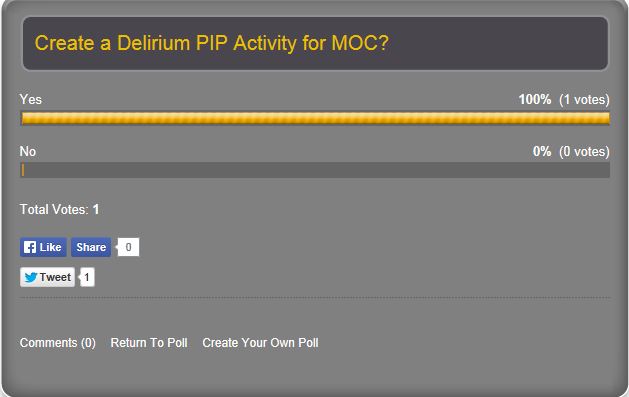
Now I’m listed on the ABPN as “Not Certified” of course. Ironically, my Performance in Practice (PIP) module on delirium, the Delirium Clinical Module is still there. You can find it just by typing the word “delirium” in the search field. In my previous blog, The Practical C-L Psychiatrist, there was virtually no interest in such a module, at least judging from my far from scientific poll about 6 years ago. Yet it’s one of the few modules available on the ABPN website that C-L psychiatrists would welcome.
Low interest in an ABPN MOC Delirium PIP activity in 2013
I’m aware that
declining to sit for what would have been the last MOC recertification
examination in my career might not be viewed as much of a protest, especially
since I’m retiring.
I’m also aware that
many physicians are not in a position to decline participation in MOC. Some
organizations and health insurers demand it, prompting several physicians and
state legislators to collaborate toward adopting or consider adopting laws to
discourage it.
To be fair, MOC is
often not the only criterion that organizations use to ensure patients are
getting the best health care available. And there are many who work diligently
to improve the MOC process and believe it works. Enhancing the motivation for
physicians to participate in MOC is complicated and we need to consider
different practice environments, physician burnout, and financial incentive
programs which have typically attracted few physicians overall.
It’s difficult to
find much information on PubMed about MOC, whether you search using the Most
Recent or the Best Match filter. In both, I found a paper by a doctor which
appeals to my sense of humor as well as to my sense of fair play. It was
written by a Singapore physician, for whom the dollar cost of recertification
was over $10,000. His nerves took a beating as well as his bank account.
Speaking of banking, here is the authors’ final observation:
Physicians
should be able to choose a programme that best fits their scope of practice.
However, it is likely that, besides the efforts put in by physicians themselves
as a commitment to professionalism, the economic price will be borne by
patients in the name of public assurance of medical competence and safety. If
the burden becomes too onerous, one can always become a banker. —
Teo, B. W. and S. Subramanian (2015). “Maintenance of certification: the
price of medical professionalism is $10,108.05, two weeks leave and five white
hairs.” Singapore Med J 56(4): 181-183.
I’m a very busy consultation-liaison
psychiatrist in a large academic medical center. I think there are alternatives
to MOC which don’t waste my time with modules and tests which typically are not
relevant to my practice.
For example, I have
followed the model of the practice-based learning and improvement competency at
the University of Iowa by using what Drs. William R. Yates and Terri Gerdes
called the “problem-based learning” case conference. The abstract for their
paper describes it:
“Problem-based
learning (PBL) is a method of instruction gaining increased attention and
implementation in medical education. In PBL there is increased emphasis on the
development of problem-solving skills, small group dynamics, and self-directed
methods of education. A weekly PBL conference was started by a university
consultation psychiatry team. One active consultation service problem was
identified each week for study. Multiple computerized and library resources
provided access to additional information for problem solving. After 1 year of
the PBL conference, an evaluation was performed to determine the effectiveness
of this approach. We reviewed the content of problems identified, and conducted
a survey of conference participants. The most common types of problem
categories identified for the conference were pharmacology of psychiatric and
medical drugs (28%), mental status effects of medical illnesses (28%),
consultation psychiatry process issues (20%), and diagnostic issues (13%).
Computerized literature searches provided significant assistance for some
problems and less for other problems. The PBL conference was ranked the highest
of all the psychiatry resident educational formats. PBL appears to be a
successful method for assisting in patient management and in resident and
medical student psychiatry education.”
This is now called the Clinical Problems in Consultation-Psychiatry (CPCP) and trainees from medical students to residents participate as presenters. The format is also used as a framework for the Consultation-Liaison Psychiatry Interest Group at Iowa. There are lively discussions at these meetings, to which colleagues from other medical specialty departments are invited. The model for this was adapted from that reported by Puri and colleagues.
Yet these and other
creative practice-based learning efforts which are relevant to our practices
are not on the approved product list for CME and Self-Assessment at the ABPN.
To be sure, one
Performance in Practice (PIP) clinical module (mentioned above) that I and one
of our residents submitted to ABPN was approved. This was the Delirium Clinical
Module, for which we received congratulations from leaders of the Academy of
Consultation-Liaison Psychiatry (ACLP). This is a clinically relevant exercise
which could be useful to many medical specialists, not just psychiatrists. It would
also be important for enhancing patient safety—which is the whole idea of
practice-based learning.
I have worked with the Iowa Medical Society (IMS) to get resolutions adopted as IMS Policy which support the principle of lifelong learning and which oppose both MOC and Maintenance of Licensure (MOL).
The idea that if doctors don’t develop a
system for monitoring continued competence in psychiatry, other groups will do
it for us likely comes from what are essentially cases of medical malpractice.
This was probably what was meant by the ABPN response to my criticisms of the
MOC process several years ago, which was that part of the reason for MOC was
the public’s demand for a way to hold physicians accountable for harming
patients.
One of the papers citing this problem was by
Shaw and colleagues. The authors mention “damaging high-profile cases” one
example of which triggered the Bristol Inquiry in the United Kingdom leading to
the “development of a compulsory integrated regulatory program with oversight
in all levels of medical care from hospital systems to the practice of
individual physicians.
This is the United Kingdom’s revalidation
program, which is similar to MOC or perhaps more properly, MOL.
The irony is that the
American Board of Medical Specialties (ABMS) and member specialty boards
including the ABPN claim the American version of MOC is a voluntary program and
that this is “self-regulation.” It’s not clear who else would “do it for us”
though—some government agency? It’s hardly necessary when, as Dr. Paul Mathews
reported recently, some private insurance payers require participation in MOC.
He’s a voluntary board member of the National Board of Physicians and Surgeons
(NBPAS), which is a newly established alternative to the ABMS which doesn’t
require MOC participation:
“WHAT DO PRIVATE PAYERS GAIN FROM REQUIRING
MOC?
As a volunteer board member of NBPAS (no
compensation or honorarium as opposed to the salaries of ABMS board members,
which can range from $300,000 to greater than $800,000), I have often wondered
why private payers require MOC when Medicare does not require board
certification or MOC. The answer is quite disturbing. Private payers actually
participate in certification, which is issued by the National Committee of Quality
Assurance (NCQA). Margaret E. O’Kane is the founder and president of the NCQA,
and she is also a member of the ABMS Board of Directors. The NCQA requires
private payers to require physicians to participate in MOC in order to be NCQA
certified. Thus, anyone contracting with a private payer will require MOC. In
the conflicted case of Ms. O’Kane, she profits from the NCQA requiring private
payers to require physicians to participate in MOC, and then she profits again
from her ABMS position when said physicians must pay to comply with MOC
requirements”
This raises another concern about MOC, which
is the ever-present cloud of suspicion the ABMS and some of the member
specialty boards are under, especially the American Board of Internal Medicine
(ABIM).
According to Charles
Cutler, M.D., M.A.C.P., in the winter 2016-17 issue of Philadelphia Medicine,
Philadelphia County Medical Society, in an issue entitled “Is The ABIM Too
Broken to Fix?” article “A Message to the ABIM: Reign in Spending and Stop
Turning Staff into Millionaires,” reforms should in fact include doing just
what the title says and much more.
Board executives, especially CEOs, make what
appear to be enormous six-figure incomes from the MOC programs, including Dr.
Larry Faulkner, M.D., the President and CEO of the ABPN who earned over
$900,000 in 2014 according to IRS Form 990.
Those with a low
opinion of the adage about “…the wise old doctor who improves with experience…”
should probably be shared with those board leaders who made the arbitrary
cutoff date for requiring participation in MOC, grandfathering physicians board
certified prior to 1994, thereby exempting them from the program.
Participation in MOC would make more sense if there were credible research evidence that it improves patient outcomes. However, the studies tend not to support this conclusion.
And MOC is not
supported by most physicians, according the results of a Mayo Clinic
Proceedings survey, indicating that “Dissatisfaction with current MOC programs
is pervasive and not localized to specific sectors or specialties. Unresolved
negative perceptions will impede optimal physician engagement in MOC.”
Finally, any
suggestion to sign up right away for MOC probably should be preceded by another
important action, which is to first check with your institution to see if MOC
participation or, indeed, board certification itself, is a condition of
employment. It may not be.
What are the
alternatives to the MOC approach? They depend on one’s level of attachment to
keeping some sort of certification status.
There is the
alternative National Board of Physicians and Surgeons (NBPAS), which was
launched in 2015 and offers board re-certification without MOC or
recertification examination requirements. There is a nominal fee and CME
requirement. A previous ABMS certification is also required, but if that has
lapsed one can still obtain certification by submitting a higher number of CME
credits.
NBPAS leaders are
very much aware that certain private insurance payers require MOC participation.
It was the top priority for NBPAS in 2017. See their website for full details
about their re-certification process.
Physicians could simply forgo MOC or alternative certifications, which would probably raise more anxiety. For example, if one simply stops sending money to the ABPN toward MOC requirements and declines to sit for the recertification examination, then after the general board expires one would be identified as “Certified-not meeting MOC requirements.” But after the examination date passes, you’re Not Certified. The prudent diplomate should first check with ABPN for clarification of specific details and should check their employer’s expectations and insurance payer rules about MOC.
In my opinion, there
ought to be a choice to participate in MOC or some other vehicle for fulfilling
the principle of lifelong learning. Those who want MOC should keep it. Those
who don’t should be allowed to continue using the method they’re most
comfortable with for maintaining their knowledge and clinical skills, including
CME and other creative methods for staying current with the medical literature.
Our patients deserve
at least this much.
“It is far better to light the candle than to curse the darkness”—attributed to William L. Watkinson in a 1907 sermon according to Quote Investigator.
William L. Watkinson
References:
Pato, M. T., et al. (2013). “Journal club
for faculty or residents: A model for lifelong learning and maintenance of
certification.” International Review of Psychiatry 25(3): 276-283.
Brooks, E. M., et al. (2017). “What
Family Physicians Really Think of Maintenance of Certification Part II
Activities.” J Contin Educ Health Prof 37(4): 223-229.
Tieder, J. S., et al. (2017). “A Survey
of Perceived Effectiveness of Part 4 Maintenance of Certification.” Hosp
Pediatr 7(11): 642-648.
Stoff, B. K., et al. (2018). “Maintenance
of Certification: A grandfatherly ethical analysis.” Journal of the
American Academy of Dermatology 78(3): 627-630.
Glover, M., et al. (2017). “Participation
and payments in the PQRS Maintenance of Certification Program: Implications for
future merit based payment programs.” Healthcare.
Teo, B. W. and S. Subramanian (2015).
“Maintenance of certification: the price of medical professionalism is
$10,108.05, two weeks leave and five white hairs.” Singapore Med J 56(4):
181-183.
More References:
1. Boland, R., MD, Maintenance
of Certification, in Psychiatric Times. 2017, UBM Medica.
2. Knoll, J.L., IV, MD;
Cotoman, Dan, MD, Maintenance of Certification and Self-Mortification, in
Psychiatric Times. 2017, UBM Medica.
3. Shanafelt, T.D., L.N.
Dyrbye, and C.P. West, Addressing physician burnout: The way forward. JAMA,
2017. 317(9): p. 901-902.
4. Bright, R.P. and L. Krahn,
Value-added education: enhancing learning on the psychiatry inpatient
consultation service. Acad Psychiatry, 2015. 39(2): p. 212-4.
5. Yates, W.R. and T.T.
Gerdes, Problem-based learning in consultation psychiatry. Gen Hosp Psychiatry,
1996. 18(3): p. 139-44.
6. Puri, N.V., P. Azzam, and
P. Gopalan, Introducing a psychosomatic medicine interest group for psychiatry
residents. Psychosomatics, 2015. 56(3): p. 268-73.
7. Shaw, K., et al., Shared
medical regulation in a time of increasing calls for accountability and
transparency: comparison of recertification in the United States, Canada, and
the United Kingdom. JAMA, 2009. 302(18): p. 2008-14.
8. Mathew, P., MD, MOC and
Physician Burnout: Treating the Cause, Not the Symptoms, in Practical
Neurology. 2016.
9. Cutler, C., MD, MACP, A
Message to the ABIM: Reign in Spending and Stop Turning Staff into Millionaires,
in Philadelphia Medicine: The Official Magazine of the Philadelphia County
Medical Society Philadelphia Medicine 2016, Hoffmann Publishing Group, Inc.
10. Gray, B.M., et al.,
Association between imposition of a Maintenance of Certification requirement
and ambulatory care-sensitive hospitalizations and health care costs. JAMA,
2014. 312(22): p. 2348-57.
11. Hayes, J., et al.,
Association between physician time-unlimited vs time-limited internal medicine
board certification and ambulatory patient care quality. JAMA, 2014. 312(22):
p. 2358-63.
12. Cook, D.A., et al.,
Physician Attitudes About Maintenance of Certification. Mayo Clinic
Proceedings, 2016. 91(10): p. 1336-1345.





 Go Retire Psychiatrist