Baby Boomer Tools

The featured image for this post is a group of three snow shovels, one of which is my new ergonomic snow shovel, which is the one with the silver handle with the black grip. It’s right next to the old one, roughly the same model only with a crack in the blade from the time last winter when I tried to use it as an ice chopper. That’s why there is also a box labeled “Ice Chopper”—which is also new.

Snow shovels are important at our place because we don’t have a snow blower. We got a little snow yesterday (which promptly melted almost completely) and the forecast is for a few inches tomorrow. I probably won’t need the shovel.

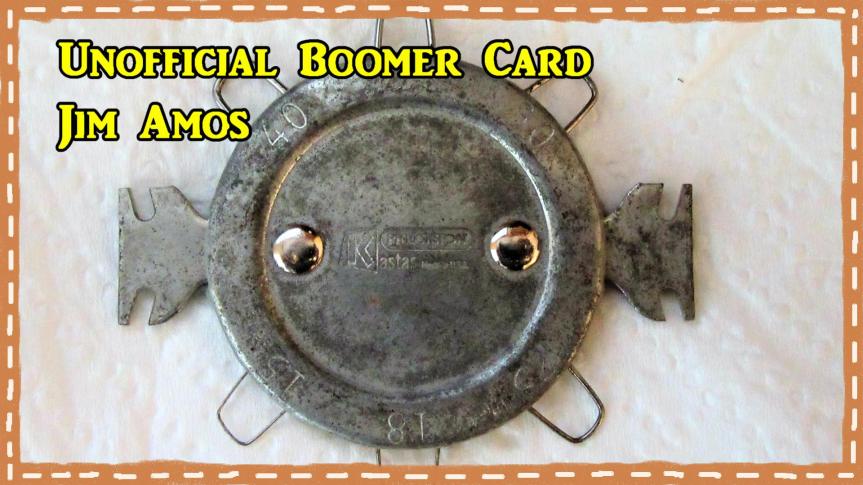
The snow shovel is about the only tool I feel reasonably confident in using these days.  I used to be more comfortable with a variety of tools years ago, even including some automotive tools, like the one pictured below. If you don’t know what it is, it might be because you’re not a baby boomer, like me.
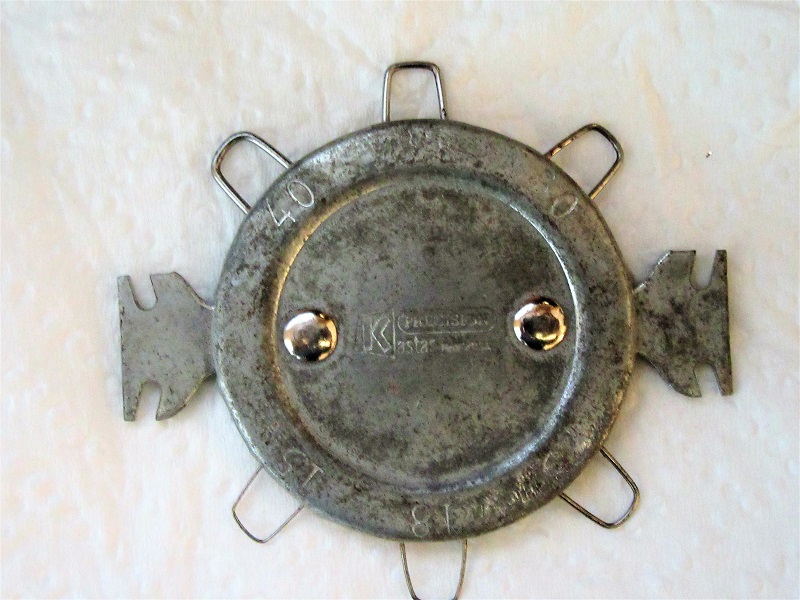
Vintage Auto Tool

There’s a similar tool that a seller on eBay calls “vintage” and which you can buy for about five bucks. I can’t recall what I paid for the auto tool when it was new. I’m sort of a vintage boomer. There have been a couple of surveys done in the last few years which tend to indicate that baby boomers know a lot more than most younger people about what do with cars for preventive maintenance and repair. It surprised me a little that young folks may know more about how to set up the GPS than change a tire. I have changed a tire once or twice in my entire life. One of those times was in the pouring rain. Everyone should have those experiences; they build character.

At least, that’s the kind of things many of the old-timers (I assume most of them are older) say on some of those DIY web sites. There were 70 comments in reply to an on-line story written by someone who was courageous enough to mention that he didn’t think it was worthwhile for most people to change their own oil these days. Most of the commenters were polite but a few mentioned that if you didn’t change your own oil, you should lose your “man card.” One of them was named Natalie.

That doesn’t necessarily apply to all boomers. I changed my oil regularly back in my younger days. I used that tool and knew what I was doing—sort of. On the other hand, I did have a slight problem getting a transmission adjustment done, which resulted in a large bulge in our garage wall, when I mistakenly hit the gas instead of the brake. Sena thought I would not mention that. It was another time, maybe in another dimension.

Sena asked me to check the fluids in the SUV yesterday, which tends to puzzle me anymore. I’m not sure what to do about the oil, transmission fluid, and whatnot these days and, because we lease a car, I’m not motivated to do much, including oil changes. I used to change the oil in our cars but that was many years ago. I had a pair of red ramps I drove the car up onto so I could slide on my back under the car; I had an oil wrench; I had a pan to catch the old oil; I had a big oil stain in our driveway. Sena was a bit more tolerant of certain things like that back in those days.

I also knew what to do with that strange looking tool pictured above.

Anyway, I checked the oil. It was fine. I was not sure where the transmission fluid dipstick was—and eventually found out by checking on the web that there is no dipstick for it. The driver can’t check that; it has to be done by a dealership mechanic.

I topped off the windshield wiper fluid. The radiator fluid level was fine. There was also the matter of a maintenance alert on our dashboard screen that I tried to reset but could only get partly accomplished. We didn’t need to change the oil yet but the darn thing was constantly alerting us to do so, each and every time we started the vehicle.

The owner’s manual was not helpful for learning how to reset the maintenance alert or much of anything else. Sena stopped at the dealership while she was out doing other things and told him the manual was not informative. He was surprised to learn that we even looked at it—most people don’t.

I see snow flurries out there already; maybe I will need the new shovel after all tomorrow. I’m prepared.

My shovel and me

By the way, that tool in the picture is my vintage Kastar Precision spark plug gauge tool (which the guy on eBay called a “rare type”). You see the spark plug is a key component in the combustion engine, which works mainly because of a series of controlled small explosions caused by the spark from several plugs igniting a critical mixture of gasoline and air which leads to a series of relay switches and connectors to the GPS unit on the dash which tells you to drive your car through the back of your garage.

At least I still have my boomer card.
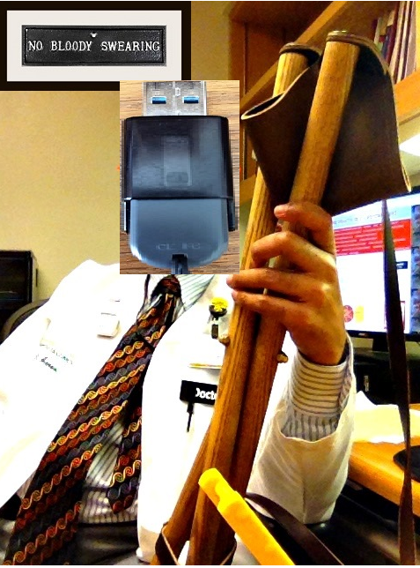
The Last White Coat I’ll Ever Wear

I’m a big fan of the Men in Black movies. I’m not going to tell you how many times I’ve watched them on TV (78 million and if that number reminds you of a scene from Men in Black, you’re just as much a fan as I am, if not worse). One of my favorite lines is when Zed says to Edwards, “Edwards. Let’s put it on.” Edwards asks, “Put what on?” And Zed says, “The last suit you’ll ever wear.”

Today, I asked my secretary to order some new white coats for me. I went down to the Uniform Shop and checked on it. All they need is the requisition and they’ll get it.

Since I’m retiring after this year, these are the last white coats I’ll ever wear. There’s no Zed to tell me that. The Uniform Shop staff person won’t know it when the coats arrive—unless I tell her, of course.

I found a very long, involved discussion on the web about the meaning of Zed’s “last suit you’ll ever wear” statement. All I got out of it was that some people take that movie way too seriously.

But for me the last white coat I’ll ever wear means exactly that. I’m going to wear the coat until I retire (in about 14 months according to the countdown)—and then I’m never going to wear white coats again.

I can almost hear certain persons snickering in the background. I suspect there may be a few bets about this retirement thing being another temporary leave-taking, like the times I left for private practice and came back, sort of like bringing Agent K back after neuralyzing him at his request. He really did retire—temporarily.

But nobody is going to neuralyze me. I’ll keep a lot of memories about my time as a Consultation-liaison (C-L) Psychiatrist, even though some of them are sort of like Agent K’s memories of being swallowed by a giant interstellar cockroach.

However, that reminds me of a few thoughts I have about institutional memory. I’ve mentioned my concerns about being practically the only C-L Psychiatrist in a pretty big hospital and retiring. I’m a geezer, but I know a lot about the ins and outs and moving parts and what it means to be a one-man hit-and-run fireman psychiatric consultant in a large academic medical center.

Institutional memory…

Institutional memory has been defined as “the collective knowledge and learned experiences of a group. As turnover occurs among group members, these concepts must be transitioned. Knowledge management tools aim to capture and preserve these memories.”

Institutional memory can also be characterized briefly as:

  • Accumulated knowledge, skills, “this is the way we do things”
  • Some of it gets hardened into policies and procedures
  • Much of it “…resides in the heads, hands, and hearts of individual managers and functional experts.”- “How to Preserve Institutional Knowledge” by Ron Ashkenas, Harvard Business Review, 2013
  • Too much of anything for too long can be bad, including institutional memory

The bullet point that Ron Ashkenas makes above is relevant to employers of baby boomers like me who know informal procedures, and have the skills (and they chose us so they recognized the skills, so don’t be calling us sport, feisty, hon, sweetie, or anything like that) and knowledge that’s in our heads but may not be stored anywhere else.

That makes the baby boomer retirement phenomenon a real challenge. About 10,000 boomers will reach the age of 65 every day for the next 15 years. And most of us aren’t kidding around. There’s no way to just deneuralyze us to make us come back. You can’t make it happ’n Cap’n.

There are ways to package institutional memory into handy things like mentoring partnerships, knowledge wikis, snappy videos (just shoot the damn thing!) and other media that are easily accessible and geared for the adult learner.

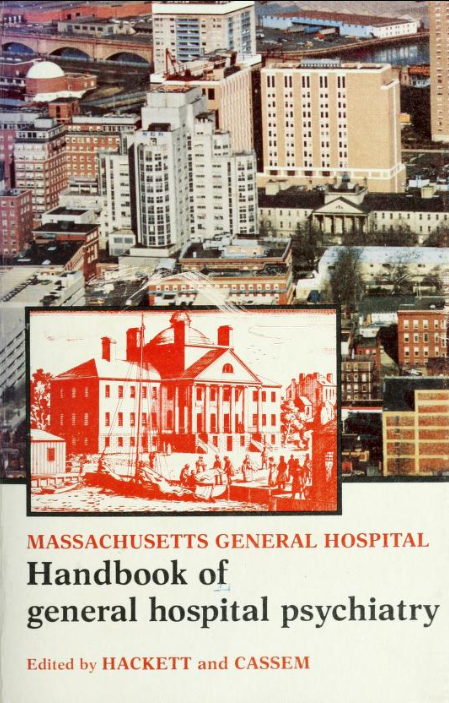
You can’t beat the Internet Archives for history. You can borrow and read the first edition of the Massachusetts General Hospital Handbook of general hospital psychiatry published in 1978, just like checking it out from a public library. Read the chapter, “Beginnings: liaison psychiatry in a general hospital.” You can learn from Dr. Thomas P. Hackett about the difference between a consultation service and a liaison service:

digital institutional memory

“A distinction must be made between a consultation service and a consultation liaison service.  A consultation service is a rescue squad.  It responds to requests from other services for help with the diagnosis, treatment, or disposition of perplexing patients.  At worst, consultation work is nothing more than a brief foray into the territory of another service, usually ending with a note written in the chart outlining a plan of action.  The actual intervention is left to the consultee.  Like a volunteer firefighter, a consultant puts out the blaze and then returns home.  Like a volunteer fire brigade, a consultation service seldom has the time or manpower to set up fire prevention programs or to educate the citizenry about fireproofing.  A consultation service is the most common type of psychiatric-medical interface found in departments of psychiatry around the United States today.

A liaison service requires manpower, money, and motivation.  Sufficient personnel are necessary to allow the psychiatric consultant time to perform services other than simply interviewing troublesome patients in the area assigned.  He must be able to attend rounds, discuss patients individually with house officers, and hold teaching sessions for nurses. Liaison work is further distinguished from consultation activity in that patients are seen at the discretion of the psychiatric consultant as well as the referring physician.  Because the consultant attends social service rounds with the house officers, he is able to spot potential psychiatric problems.”—T. P. Hackett, MD.

By the way, have you seen my YouTube Channel? I’ve been beaming me up into educational videos for residents and medical students for a while now.

 Next year I’ll be doffing the white coat for good—but I’ll be on THIS planet.

Reference:

Hackett, T. P., MD (1978). Beginnings: liaison psychiatry in a general hospital. Massachusetts General Hospital: Handbook of general hospital psychiatry. T. P. Hackett, MD and N. H. Cassem, MD. St. Louis, Missouri, The C.V. Mosby Company: 1-14.