

I have watched a few YouTube presentations by the CDC and FDA Advisory Committees in the last few weeks. I’m very impressed with the professionalism, sincerity, civility, and dedication of the members of both organizations. The most recent FDA meeting on the extension of the EUA for the Pfizer COVID-19 vaccine to children ages 5-11 was a great example of the best of the best. It’s a tough job. I appreciate them. They also have a pretty good sense of humor, especially when they forget to unmute their microphones.
FDA Advisory Committee Meeting Today on Pfizer COVID-19 Vaccine for Children Ages 5-11

The meeting will go from 7:30 AM-5:00 PM, ET, and the Voting Question will be:
“Based on the totality of scientific evidence available, do the benefits of the Pfizer BioNTech COVID-19 Vaccine when administered as a 2-dose series (10 µg each dose, 3 weeks apart) outweigh its risks for use in children 5-11 years of age.” Please vote yes or no.
This is about extending the EUA for the Pfizer vaccine for this age group. It would be administered as a 2-dose vaccine, 10 micrograms each, 3 weeks apart. COVID-19 causes substantial morbidity and mortality in this age group.
Unlike the other recent FDA presentations I’ve seen, today there was a reminder that, in view of the polarized opinions pro and con about this question, all participants should do their best to observe the utmost civility at all times during the proceedings.
Dr. Fiona Havers presented the epidemiology of COVID-19 in this age group. It showed increasing infections and severe disease and hospitalization rates, which were higher among African American and other minority children than among white. Secondary transmission can and does occur among children and adults. See the slides.
Dr. Matthew Oster’s presentation on mRNA vaccine associated myocarditis showed that myocarditis is a rare but important adverse event following COVID-19 vaccination. See the slides.
Break.
The Pfizer presentation highlighted safety and efficacy data for the vaccine. See Dr. Gruber’s briefing document and slides. The FDA presentation by Dr. Leslie Ball, MD, summarized the immunogenicity and safety data (see summary slides 34 and 35). The supplemental descriptive efficacy analysis showed 90.7% vaccine effectiveness against symptomatic COVID-19 after the second dose. There were no cases of myocarditis/pericarditis after the data cutoff time.
FDA presenter Dr. Hong Yang, PhD presented the Benefit-Risk Analysis. Slide 22 summary:
“• For Scenarios 1 (Base), 2 (Recent COVID-19 Peak Incidence), 4 (Higher Vaccine Efficacy), 5 (Higher COVID-19 Death Rate), and 6 (Lower Excess Myocarditis Rate) the model predicts that benefits of the Pfizer-BioNTech COVID-19 Vaccine 2-dose primary series clearly outweigh the risks for ages 5-11 years.
• For Scenario 3 (The Lowest COVID-19 Incidence), the model predicts more excess hospitalizations and ICU stays due to vaccine-related myocarditis/pericarditis compared to prevented hospitalizations and ICU stays due to COVID-19 in males and in both sexes combined.
• Considering the different implications and length of stay for COVID-19 hospitalization versus hospitalization for vaccine-associated myocarditis/pericarditis, and benefits related to prevention of cases of COVID-19 with significant morbidity, the overall benefits of the vaccine may still outweigh the risks under this lowest incidence scenario.
• If the myocarditis/pericarditis risk in this age group is lower than the conservative assumption used in the model, the benefit-risk balance would be even more favorable.”
“Major Limitations of the Benefit/Risk Model:
• Model assumption about constant incidence rate generates great uncertainty on the estimate of benefits.
• Vaccine efficacy may change due to new emerging variants of virus
• Hospitalizations and ICU stays from COVID-19 and myocarditis are not equivalent and cannot directly compared
• The benefit of reducing COVID related multisystem inflammatory syndrome in children may not be fully captured by preventable hospitalizations, ICU stays and deaths due to COVID-19
• This BR risk assessment does not consider potential long-term adverse effects due to either COVID-19 or myocarditis
• This BR assessment does not include secondary benefits (reducing COVID-19 disease transmission) and risks”
Break.
There were complicated questions about the applicability of the Benefit/Risk model assumptions, partly because it can be influenced by a low incidence of disease-readily acknowledged by the presenter, Dr. Yang. After extensive discussion, including the about the number of doses (One or Two?), concern for the difficult decisions this presents to parents (not just related to side effects), concern about the FDA approval being interpreted as a mandate, discomfort with the binary choice-type question.
A representative from the CDC Advisory Committee (ACIP) expressed that it seems the benefits outweigh the risks. The ACIP representative summarized the safety monitoring and reporting systems available, including but not limited to Vaccine Adverse Effects Reporting System (VAERS). The FDA can make a broad authorization; the ACIP (which may meet on this issue as soon as next week) can make implementation recommendations that could be more restrictive but could not be broader. University of Iowa representative, coronavirus expert with over 40 years’ experience and temporary voting member Dr. Stanley Perlman, indicated, in light of the thorough discussion, that he would vote in favor of the question.
“Based on the totality of scientific evidence available, do the benefits of the Pfizer BioNTech COVID-19 Vaccine when administered as a 2-dose series (10 µg each dose, 3 weeks apart) outweigh its risks for use in children 5-11 years of age.” Please vote yes or no.
The Vote: The votes were 94% (17) Yes, and there was one abstention, out of 18 votes.
The meeting was formally adjourned at 4:35 PM, ET.
Moderna Booster Jab Today and Mindful Zombies
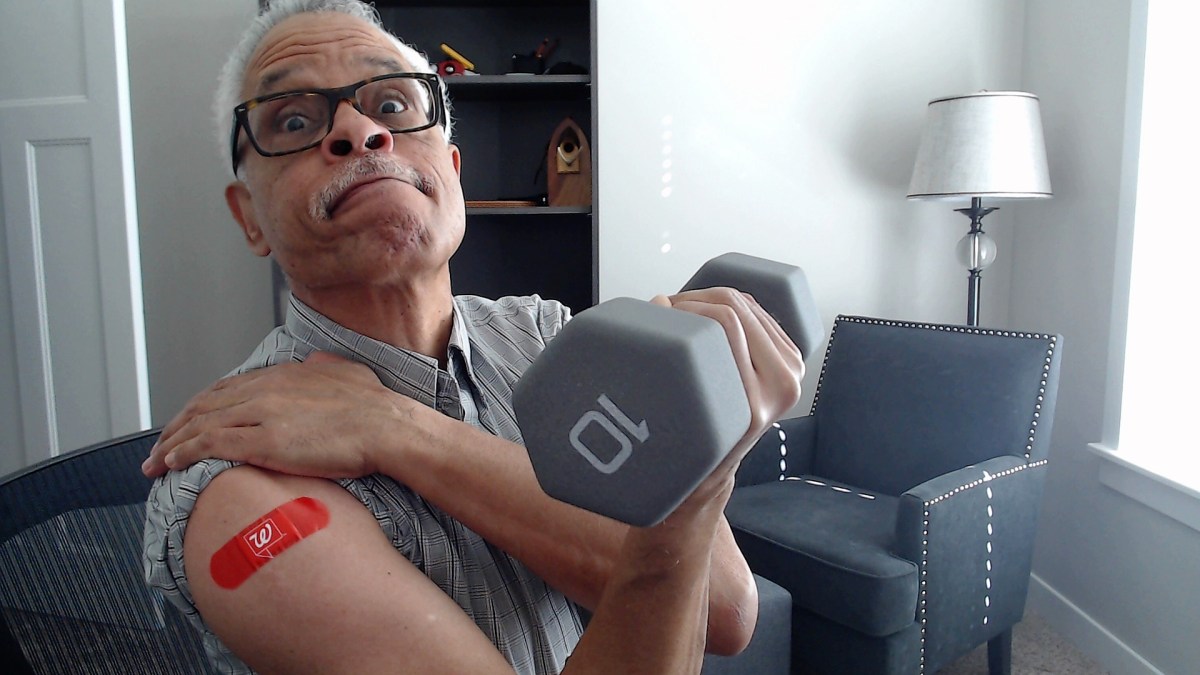
I got my Moderna Covid-19 booster jab this morning. That was quick. A guy (probably about my age, I’m not sure) waiting for his booster behind me chuckled and asked, “Did she even let you sit down for it?” I was in and out that fast. It’s the same as the primary series, only half-dose. Sena and I are now both fully vaccinated and boosted.
According to the FDA and CDC guidelines, I could have gotten a heterologous booster, but I stuck with what I got for my primary series. There was no problem with vaccine supply; it was already on the shelf, so the only thing different was the smaller dose. Since there’s not much else to say about it, we’ll move on to other more exciting news.
Sena ordered the Zombie cribbage game I just had to have. It won’t get here by Halloween, but that’s OK. I know the board is a folding plastic affair and there’s only enough peg holes for what would be half a full game (61 instead of 121). The pegs are zombie figures—which may or may not fit in the holes.
But it’s zombies! This is what happens to you in retirement, people. My gratitude to Sena for getting Zombie cribbage will be to play Scrabble with her.
That reminds me of a cribbage story I read on the web about a game between a couple of old guys in a senior community in Minnesota. One of them, Harry, was 108 years old and the other, Don, was 105. They were long time cribbage players, but they’d never played each other. The young guy won. As soon as he did, he got back on his walker, saying, “Just another game,” and left. In fact, neither player got as excited about the affair as everyone else including spectators, family, and staff, talking it up like it was a championship boxing match. Don’s family said that his attitude about the win was probably part of the reason for his longevity.
I liked Don’s reaction to winning the game. I don’t know if Don’s approach to cribbage is the same as it is to life in general. Maybe it’s about living in the present. When something is over, it’s in the past and it’s time to move on. There’s probably no point in worrying about the future either, especially when you get pretty old. There’s not much of it left.
Maybe this mean that retirees should be more like zombies—we should just play cribbage, eat brains mindfully, and forget about tomorrow. You’re welcome.

Can Cribbage Cultivate Congeniality?

Sena and I have been playing cribbage since late 2019. It’s a two-hander card game played on a board with pegs for keeping score. It’s been around for about 400 years and some have asked whether it’s a dying game, played mainly by codgers in retirement homes. The question is whether it can promote positive attributes like congeniality.
Actually, it’s a pretty popular game, especially for, some reason, in California where there are over 40 local cribbage clubs according to the American Cribbage Congress (ACC), the big boss organization in North America, established in 1980. Most states in the U.S. have only a few. Iowa has one in Ankeny.
If you look at the ACC website, you’ll find a section called the ACC Cribbage Club Code of Congeniality. It’s under the Clubs section. The wording is in some ways a bit ambiguous, probably because many of the members are very competitive. There are a lot of tournaments, including an annual Grand National. The most recent one was held in Sacramento in late September, just last month. Even though it’s a pretty big deal, attracting players from just about everywhere on the planet and possibly beyond, I can’t find out who the winner was from the website. Maybe that person is too congenial to brag.
Anyway, the ACC Code of Congeniality has a tone, for lack of a better word. For example, take this item:
“We pledge to not force new players to play a game in fifteen minutes. (We will, instead, be tolerant and not complain, remembering that we too, started slow.”)
Sena and I never can finish a game in 15 minutes, and we’ve been playing for going on a couple of years. That pledge as well as the others have an almost Mark Twain-like ring to them. It’s as though whoever wrote it was snickering behind her hand. Or maybe the ACC leadership got wind of a few complaints from new members who got horsewhipped for dragging the games out to 17 minutes or even longer. Actually, it’s the subtle sense of humor expressed in the Code of Congeniality that I appreciate.
The ACC also has a Code of Ethics which extols “true sportsmanship and respect for others, without rancor, animosity, or overwhelming self-interest during competition.”
The ACC publishes its tournament rules and it is to be contrasted with something called kitchen table cribbage. Except on my blog and YouTube video, you’re unlikely to find the term Kitchen Table Cribbage anywhere on the web.
There was a man named Peter Worden who traveled around the world, teaching people how to play cribbage, love it, and make new friends. His short documentary about his travels and adventures is called the Cribsionary. A photograph shows him hiding his face with his cards—I don’t know why. He says cribbage is 50% luck and 50% skill. There are those who have different opinions about that. He also says he likes the quotation:
It’s easy to agonize over such situations but quite profitless; sometimes one is faced with a scattered collection, at other times there’s an embarrassment of riches.
Peter Worden?
I could not find this quotation in its entirety anywhere on the web. Well, I found the “embarrassment of riches” part, the authorship of which seems to be in some doubt. This seems to capture how one feels about the hand one is dealt in a cribbage game—and perhaps in life. He doesn’t take credit for the quote, but I’m going to take a chance and give it to him.
Cribbage is a lot of fun and there are variety of handsome and even whimsical boards on which to score your points. The ACC prefers a special board for tournaments which makes it easier to avoid pegging mistakes.

We prefer a jumbo board (bigger numbers and pegs), but have played on one shaped like the number 29, the highest score you can make. The odds of getting that hand score are 1 in 216,580. You want to keep playing just to see if you ever get it. You’ll have a lot of fun on the quest.
It might also be a way to foster congeniality in society. We sure need it.

Advisory Committee on Immunization Practices Meeting on COVID-19 Vaccine Boosting: Day Two
The ACIP is back for Day Two of the COVID-19 vaccine boosters meeting. Today the focus will be on Moderna, Janssen, and heterologous boosting. They all got the green light from the FDA. I’ll be writing this post in real time according to the meeting schedule. Effectiveness and safety data will dominate the day. The afternoon presentations will cover the evidence, clinical implications, and policy questions. There will be a vote around 3:30 PM, CDT.
Questions were raised about the intention of using the same volume package of Moderna to administer both the primary series or the booster—just withdrawing half of the volume for the booster (50 micrograms in the booster as contrasted with 100 micrograms of the primary series). It sounds like there were concerns about making procedural mistakes in administration. Pharmacists would be concerned about this, and advocated for a separate booster dose package.
The Janssen vaccine booster data show that it’s safe, and increases protection against symptomatic COVID-19 infection. The combination of both humoral and cell-mediated immune responses associated with the Janssen vaccine primary single dose was emphasized. The booster dose is the same as the initial dose. The benefit of the Janssen booster dose might be higher when given at 6 months or later.
The NIH mix and match study showed relatively less boosting from the Janssen vaccine booster. The safety data were mostly reassuring. The study was non-randomized, correlates of protection are not completely elucidated, and not designed to compare between boosts. Heterologous boosts elicited similar or higher serologic responses as compared to their respective homologous booster responses. The 100-microgram dose of Moderna was used as the booster dose initially instead of the 50-microgram dose.
Update after the break:
The NIH mix and match study showed relatively less boosting from the Janssen vaccine booster. The safety data were mostly reassuring. The study was non-randomized, correlates of protection are not completely elucidated, and not designed to compare between boosts. Heterologous boosts elicited similar or higher serologic responses as compared to their respective homologous booster responses. The 100-microgram dose of Moderna was used as the booster dose initially instead of the 50-microgram dose.
Safety data were reviewed. Myocarditis/pericarditis rates (Dr. Nicky Klein’s slides) were highest in males age 18-39 years of age who got mRNA COVID-19 vaccines, generally after the second dose (data suggest maybe more from Moderna). Most patients recover. Thrombosis with thrombocytopenia syndrome (TTS) is still being monitored in the Janssen vaccine; it’s more common in women. There may be a causal association with TTS; it’s more common in females and it’s rare. There’s a lack of safety problems identified with current surveillance systems associated with heterologous dosing of mRNA and Janssen vaccines. Rare cases of Guillain-Barre Syndrome (GBS) occur with the Janssen vaccine. Risks of the aforementioned vaccines might be less with the booster doses. A couple of committee members expressed concerns about administration of a 2nd dose of Janssen as a booster given the rare but serious TTS and GBS adverse events. They favored heterologous boosting with mRNA vaccines instead.
After the break: Data were presented showing waning effectiveness of Moderna and Janssen vaccines. Vaccine effectiveness is lower in the Delta period. There is lower vaccine effectiveness for Janssen in those over age 65. In patients with chronic conditions, vaccine effectiveness in Moderna is better than in Janssen. Moderna has 89-100% protection against severe disease. See the Summary and Conclusions slide of Dr. J. Jones (“COVID-19 vaccine effectiveness, primary series”). Someone asked about the role of risk behavior which could influence the estimate of vaccine effectiveness, which didn’t generate any solid answers.
See slide 5 in “Evidence for Recommendations” slide deck by Dooling for policy questions. Also see Summary slide 16 and slide 41, “Work Group Interpretation.”
The Clinical Considerations slide deck should be reviewed in its entirety. Although homologous boosting was initially recommended, the final language in the voting questions allowed for flexibility for heterologous boosting according to patient preference and product availability as well as taking into account the risk of TTS and GBS in those patients in higher risk groups for those adverse events. There was a consistent preference among some members for more permissive heterologous boosting.
There was a lot of discussion about the voting questions:
Vote #1: A single booster dose is recommended 6 months after completion of an mRNA series, in the same risk groups for whom CDC recommended a booster dose of Pfizer, under FDA EUA. This passed unanimously.
Vote #2: A single booster dose is recommended for persons aged 18 years, 2 months after receipt of the initial Janssen dose, under the FDA EUA. This passed unanimously.
The meeting was adjourned at around 4:20 PM, CDT.
 Go Retire Psychiatrist