The Groundhog Effect

Last year, we noticed a groundhog waking up and bulldozing our back yard, even though snow was forecast that day. It’s pretty good at just putting its head down and pushing through almost anything in its path including leaves, sticks, small rocks, flowers, and so on.

Their single-minded digging has helped uncover bones and pottery of old civilizations and aided medical researchers study a lot of things including the role of viral hepatitis in liver cancer.

I can compare them to those who bury themselves in the single-minded study of medicine in the transformative path to medical practice. I can recall my medical school classmates and their clicker pens taking notes in class. They weren’t called “gunners” for nothing. Call it the Groundhog Effect.

Even if you weren’t a gunner, you had to apply yourself just like a groundhog to your studies. It could lead to another characteristic common among these creatures. They tend to be loners.

The analogy is far from perfect, of course. Groundhogs aren’t lonely. People can be, which is why medical students and residents are often advised to always remember H.A.L.T.

H.A.L.T. refers to trying to avoid letting oneself get too hungry, angry, lonely, or tired. It’s probably a warning about incipient burnout, a problem that affects at least half of physicians and which is the hot topic these days.

I’m always a little puzzled that so many physician wellness programs and meetings seem to devote a lot of time trying to teach doctors how to improve their resilience. It’s as though we’re somehow to blame for getting burned out.

I’m not saying learning things like mindfulness are not important for promoting physician wellness. I have my own daily mindfulness practice and it is certainly helpful.

It would also be nice to spend more time addressing the systems issues contributing to physician burnout, such as very full clinic schedules, overly complicated electronic health records requiring hours of data input that create the need for “pajama time,” which is bringing your job home with you, board certification busywork, managed care rules that marginalize physicians, and so on.

This is a continuation of the hassle factors that can lead to physicians just learning to put their heads down and dig through the mess—sort of like the groundhog, and often in isolation from each other.

Transformative processes can also occur at the end of a physician’s career. I’ve spent a long time learning to be a physician and now that I’m in phased retirement, I’m finding out how hard that can be. It would be helpful to know that others are passing through this stage as well, and that I’m not alone.

Could it be that one way to counter the Groundhog Effect is to come together and share this retirement experience? There will always be those who work well into their nineties and that’s great. Statistically, though, most of us will retire in our mid-sixties.

The graying out of the psychiatrist population is contributing to the shortage, to be sure. But we could still be useful to the next generation of doctors acting as role models for how to navigate the other transformative process—reflecting on the task of becoming somebody other than a physician. I think it would be easier if several doctors did this.

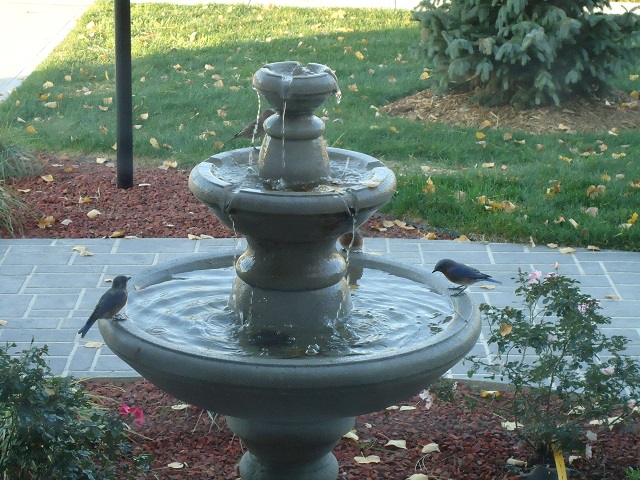
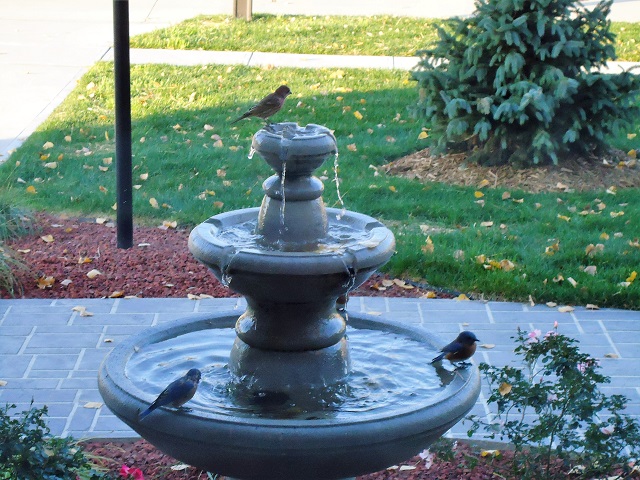
Animals do this. I saw this several years ago when we owned a house with a fountain, which was frequented by more than a couple of species of birds, including Bluebirds. They gradually arrived but were at first tentative about immediately diving in. One would perch on the rim. Another would come along and do the same, maybe drink a little water while watching the other.

Eventually, one would dip its tail feathers in just for a moment. Pretty soon, they would make like ducks.

I guess you could call it the Bathing Bluebird Effect.

Black Psychiatrists in Iowa

It’s funny how a newspaper article can set off a series of remembrances. I read the Psychiatric News article, “Building Community in Professional Organizations: The APA and BPA,” written by Ezra E.H. Griffith, M.D. (published on line April 30, 2019).

The article is about how Black psychiatrists have struggled to become a part of mainstream psychiatry, eventually forming the separate organization Black Psychiatrists of America (BPA) in 1969.

Nowadays it’s difficult to imagine that the American Psychiatric Association (APA) discriminated against Blacks. As an aside, I’m noticing how I’m not using the usual term “African American” in this post. Instead, I’m using the term “Black,” which is what Dr. Griffith did.

This reminds me of a book review I wrote for the American Journal of Psychiatry almost 20 years ago (Amos, J. (2000). Being Black in America Today: A multi perspective review of the problem. Am J Psychiatry, 157(5), 845-846.).

The book was written by Norman Q Brill, M.D. It reminded me of my experience at Huston-Tillotson College (now Huston-Tillotson University, a private school, historically with largely Black enrollment) in Austin, Texas back in the 1970s. I wrote:

“Dr. Brill’s appraisal of many black leaders in chapters such as “Black Leaders in the Black Movement” and “Black Anti-Semitism” may be refreshingly frank in the opinion of some. He tailors his prose so as not to denounce openly those whom many would describe as demagogues. At the same time, it is apparent that his underlying message is that a substantial number of them are not only out of touch with mainstream black America but may even mislead black people into adopting ideological positions that impede rather than foster progress. Dr. Brill’s description of the issue reminded me of my own experience with this phenomenon as a freshman in the mid-1970s at a college of predominantly black enrollment in the southern United States. A guest lecturer (who, as I recall, had also written a book about being black in America) told us that the white man would never allow a black man to be a man in America. He had only three choices: he could be a clown, an athlete, or a noble savage. These corresponded to the prominent and often stereotyped roles that blacks typically held in entertainment, sports, and black churches.” 

I was taken aback by the speaker’s judgment and asked him what my choice should then be. He was equally taken aback, I suspect. He advised me to be a clown. I also remember being aware of why my department asked me to write the review. That leads me to reflect on the upcoming celebration of the 100 Year Anniversary of the Department of Psychiatry where I’ve been a faculty member. It’s in November 2019.

If you read through the web page describing the history of the department, you won’t find anything about Black psychiatrists. In fact, I could be the only Black psychiatrist who has ever been a faculty member here at The University of Iowa Hospitals and Clinics.

And if you look at The 2018 Greater Iowa African American Resource Guide available on the web, you’ll find only one other psychiatrist listed other than me. See Update below about this reference:

Update: I’ve discovered as of May 3, 2022 that the 2018 Greater Iowa African American Resource Guide cannot be found at the link above. There is a link to The 2019 Greater Iowa African American Resource Guide. I’m still listed as the only Black psychiatrist in Iowa City. There was a Black psychiatrist in Sioux City who was in the 2019 guide as well, Dr. Rodney J. Dean, MD at Dr Dean & Associates. I could not find any guides after 2019.

On the other hand, historically, some Blacks have done well in Iowa. George Washington Carver became a faculty member at Iowa State University in the 1890s. I graduated from Iowa State in the 1980s. After World War II, Black Iowans integrated The University of Iowa, Iowa State University, and Drake dormitories in 1946. Dr. Philip Hubbard was the University of Iowa’s first Black vice president.

I am not a clown, an athlete, or a noble savage. I am a man.

Addendum: I read the facts about George Washington Carver and Dr. Philip Hubbard on an Iowa Public TV web page. However, to my dismay the site is marked “Not secure” by Google. The source of the information there is from a respectable reference:

Silag, B. (2001). Outside in: African-American history in Iowa, 1838-2000. Des Moines: State Historical Society of Iowa.

Content information:

“A distinguished group of 36 writers (for no pay or royalties), including community leaders as well as academic historians, has created Outside In: African-American History in Iowa, 1838-2000, a book certain to become the standard work on the African-American experience in Iowa. Each of the book’s 20 chapters focuses on a particular aspect of that experience–legal and political rights, business and professional leadership, clubs and community organizations, churches and schools, and more–from Iowa’s territorial days to the present. Hundreds of photographs (gathered from family albums and scrapbooks, as well as historical archives) accompany the text, which is documented with extensive references. A detailed index is also included. Three themes tie together the enormous amount of historical information contained in Outside In: *The struggle of black Iowans to claim their rights as citizens; *The pursuit of individual opportunity in Iowa’s evolving economy over the years; and *The creation of community institutions to help families and individuals through good times and bad. Outside In provides the big picture and the details of this proud story of African-American initiative in Iowa, from the groundbreaking legal victories of pioneer Alexander Clark up through the present day political triumphs of Preston Daniels and LaMetta Wynn.” –Dust Cover, Front flap. Outside In is the result of a collective effort spanning five years. It is the first in-depth study of the black experience in Iowa in a half-century, and is expected to stand as the definitive work in its field for some time to come. While much of the book’s contents recall hard-fought struggles against prejudice, discrimination, and violence. Outside In also points to proud traditions of understanding and cooperation among black and white Iowans, traditions that go back to before the Civil War and remain vital to this day. –Dust Cover, Back flap.

Spring

I’m coming up on my last 3 days for the academic year and reflecting now that my favorite season is upon us. Spring does that to me, especially now that I’ve been in the phased retirement contract for the last 2 years. I’ll be going into the 3rd and final year as of July.

I just found out that next week I’ll be among those faculty members selected to receive the Excellence in Clinical Coaching Award from the Gradual Medical Education Office at the Leadership Symposium.

I’ve received teaching awards from the residents at graduation time (another sign of spring!) over the years and I’m always grateful for their recognition. The Excellence in Clinical Coaching Award is recognition from my department as a whole, the members of which put together a nomination package including letters from department leaders as well as trainees.

 I’m also humbled by it because I’ve learned a lot from everyone with whom I’ve had the privilege of working, but my favorites are the trainees, including medical students. In fact, I learned from them again in the last week or so. Three talented medical students gave outstanding presentations about issues relevant to all physicians, not just psychiatrists.

They will be excellent physicians. They will teach others. They will lead and it’s a good thing—medicine needs them.

I like the coach idea. I know one of the internal medicine residents thought of me as a mentor. I’m aware of the differences between mentors and coaches as well as the similarities.

Coaches spend relatively less time with learners and the focus of the relationship is usually a set of specific skills which needs to be passed on. Mentors tend to develop longer term relationships and guide learners in broader ways in terms of career goals and more.

However, both mentors and coaches serve as role models, something all teachers do—including trainees.

That’s partly why I feel less troubled about retiring as my time to leave draws nearer. I trust the next generation of doctors and, just like the Supremes song says, “You better make way for the young folks.” It’s my time to leave. It’s their time to live.

Even the birds know that.

My Mother

Sometimes I think about my mother, Ruby, who died 15 years ago. She reared me and my brother Randy. Those were hard times. She had a sense of humor but the years wore on her, making life a burden. She was a lifelong resident of our hometown.

 In early life, she worked as a waitress. She often spoke with great pride of her ability to carry more hot dishes barehanded from kitchen to table than anyone else she knew.

She was an avid card player. If you couldn’t remember what tricks were played in a game of 500 — Ruby had you for lunch.

She lived in the heart of the downtown area on Federal Avenue for decades — and loved every minute of it.

She enjoyed the noise of traffic, the city waking up, the city eating lunch, and the city having a hard time going to sleep at night.

She lived high above the street, and didn’t mind the stairs at all, even late into her seventies.

Ruby loved going out for coffee. She was a great talker, and thoroughly enjoyed hearing a good joke. She knew that sharing troubles and laughter were both healing. In her own way, she reminded us to cherish our blessings wherever we found them. We will remember.

I am very lucky to have some snapshots of my family, and even luckier to find one of her smiling brightly. She suffered to put it simply. Religious faith helped. We went to church regularly for some time. My father never went to church as far as I know, but for some reason, at one time I remember there was some hint that he might attend Sunday service with us. A new pastor had taken over and I remember he said flatly that he would never allow some “Black buccaneer” in his church.

Over the years, I’ve thought about whether the pastor’s emphasis was on my father being black or just a buccaneer. He was both. Anyway, he never showed up and that’s just as well because he surely was not welcome.

At Christmas, we used to get gifts of fruitcake from members of the church. I think that was one of the first times I learned how to lie from my mother who didn’t want to hurt anyone’s feelings who was making a gift to us during the holidays. I hated that fruitcake so much; I can’t even begin to tell you. But I told anyone who gave that stuff to us that I loved it.

Television was about the only entertainment we had. We used to watch Ed Sullivan, Lost in Space, and all those other shows you can see on MeTV nowadays. We used to play Old Maid with a pretty creepy deck of cards.

Mom could climb a lot of stairs without any problems, well into her eighties. I climb a lot of stairs too as a C-L psychiatrist in the general hospital, and I’m well into my sixties. We’re alike in many ways.

One of the differences was that she could play cards better than I ever will. I’m just not so good at remembering what cards have been played. However, I try and my wife and I occasionally play a game called Schnapsen, in which remembering what’s been played is critical to winning. I lose more than my share of games.

Mom was a fast walker. We often walked from our house to Central Park downtown, which was quite a distance. We didn’t have a car, so walking was the only way to get around. I take after her because I’m a pretty good walker. Ask any trainee who rotates through the psychiatry consult service.

When she got very old, her health worsened and her nerves got the best of her more often than not. I remember she made me promise I’d never put her in a nursing home. I did promise—and I eventually had to break it.

Mom and I were very much alike. I treasure our differences.

Mom.

My Brother

Sometimes I think about my brother Randy, who died 19 years ago. His last days were made immeasurably easier by the caring staff at Hospice of North Iowa. He worked at a local artificial ice company for many years. He died when he was 43 of cancer, before either of our parents died.

He will always be remembered for his generosity, kindness, and infectious sense of humor. A sense of humor ran in the family, despite hardships. He had a raw, honest, and often boisterous passion. We treasure everything he gave us.

Even the courageous way he let go of his life was a gift. He died as he lived, in the arms and in the hearts of the people who loved him.

I learned a valuable lesson about that. On his last day in the hospice, I was determined to be with him up to the moment he died, staring down death in his face. I’m still not sure why I wanted to do that.

Then a couple of his long-time friends stopped by to see him. Death watch was interrupted as we visited in his room. I faced them, reluctantly taking my eyes off him. They talked to me, sharing their memories of him while he was alive. I soon became painfully aware that there were many who knew Randy in ways that I did not know. He was a dear friend and even a surrogate father to many.

They talked; I listened and learned. I lost track of the time. When there was a break in their discourse, I quickly turned back to Randy. He was already gone. He had slipped away while his friends, his other family, were sharing something with me far more important than my death watch. I learned more about humility that day than I can recall learning ever since. There is a brick in the driveway of Hospice of North Iowa on which is etched the message, “He ran his race.”

Randy was a track man in school. He could outrun just about anyone. He was also pretty fast on his gold flake Schwinn Stingray bicycle. I notice there are vintage Stingrays going for thousands of dollars these days. He could fishtail and wheelie like nobody’s business.

My father used to say that the only difference between me and Randy was that he could cook and I couldn’t. There were a few other differences.

Jimmy and Randy (I’m in the wagon)

Through an unfortunate circumstance that I still don’t understand, Randy was my patient on our Medical-Psychiatry Unit in the late 1990s, shortly after he was diagnosed with cancer. I would never have done this by choice, but it seemed there was no one else to cover the unit at the time.

He was delirious, probably from an accidental overdose on opioid pain medicines during a difficult stage in his cancer treatment. It’s really not possible to describe the conflict I had about being both his brother and his doctor. It should not have happened—but it did. He didn’t recognize me. He mumbled. He twitched. He drifted in and out of awareness. I knew all the signs; I saw delirium every day in the hospital.

But this was different because this patient was my brother. I will never forget. After that, I had a much better understanding of what families goes through when they witness delirium in a loved one. I will not miss this part of my job when I retire.

Randy was my best man at my wedding in 1977. I bought him a nice pocket watch, which was buried with him. I do not visit his grave not because I don’t love him, but because I would rather remember him as he was.

My Father

Sometimes I think about my father, who died about 17 years ago. He was known in his neighborhood as “Johnny Hots.” He moved to Milwaukee, Wisconsin when he was in high school. He enlisted in the Navy when he was in the 11th grade and served his country during World War II.

His obituary also says he was happiest when he kept busy. After he retired he helped with maintenance of the apartment building where he lived during his last years. He liked working crossword puzzles. He also had a pretty good sense of humor and liked to laugh.

I like working crosswords. I like to clown around and laugh. And I like to keep busy. I was never in the military although I tried to enlist. That didn’t work out.

He talked about the great time he had in Milwaukee. He said it was the best time of his life. My wife and I vacationed there a few years ago. It was fun. One of the residents interviewed for a C-L Psychiatry fellowship at Medical College of Wisconsin recently. She was wondering about places to site-see so I made a little video about it for her.

Milwaukee, Wisconsin

He was a talented carpenter and built our kitchen cabinets. I remember struggling a little in Shop Class to make a wooden dice pencil holder. Mr. Rodomeyer, a man built like a bull, called my class the biggest bunch of characters he’d ever seen.

That was back in the days when the boys went to Shop Class and the girls went to Home Economics (Home Ec). Maybe that’s one of the reasons I don’t do so well in the kitchen. Anyway, that’s what I blame it on.

However, my father was pretty handy in the kitchen and could cook up a tasty barbecued anything.

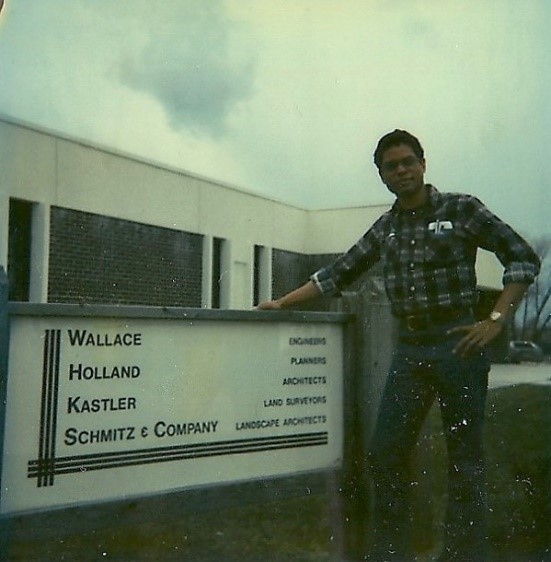
He walked everywhere and he walked more slowly as he got older. I have always walked pretty fast. I think I picked up that habit when I was a young man working for land surveyors. When I walk around the hospital and up and down the stairs, the trainees tend to lag behind me.

I didn’t see much of my father while I was growing up. We have a few things in common. I am thankful for our differences.