A Pair of Cufflinks

My wife and I were watching an episode of Antiques Roadshow this evening and saw a spot about a pair of cufflinks that turned out to be worth a lot of money.

That reminded me of the first and only pair of cufflinks I ever owned. Back when I was an undergraduate in the mid-1970s at the private, historically black Huston-Tillotson College (now H-T University), in Austin, Texas, a wealthy, successful white businessman who was fond of my English professor bought me a suit, dress shoes, tie, and cufflinks.

I was ambivalent about the gift as I was being fitted for the suit at the men’s store in downtown Austin.

I wasn’t sure what cufflinks were supposed to do for me. I suppose I shouldn’t judge the guy too harshly. After all, he was just trying to be generous—and probably trying to impress my English professor.

It was the 1970s and it was not a great time for black people in America. There was violent racism of course. There was also a sort of paternalistic generosity which may have emphasized superficial symbols of economic success.

Anyway, after a while the shoes started to squeak. I outgrew the suit. Despite those losses, I became successful through hard work and good luck.

I lost the cufflinks.

The Retirement Home Search and The Well of Memories

We were out for an adventure today, shopping for a retirement home. That’s what it was, really, although we really didn’t make any hard decisions or commitments.

Nowadays there are considerations for whether to build from the ground up, buy and modify a spec home, buy an older home, go condo, even rent, move to a retirement village, and whatnot.

You have to think about mud rooms, pantries, walkout basements, whether to finish the basement or not, lot size, square footage of the house and the yard, two car or one car garage, Jack and Jill sinks, lawn sprinkler systems, Home Owner Associations (HOAs), fences, ceiling fans, gas fireplaces, whether or not you want to live next door to a high school baseball stadium and more even beyond that.

What you don’t have to think about is whether or not there’s indoor plumbing.

When my brother and I were little boys, our pastor and his family took us on a long drive up to the sticks somewhere in Minnesota in the dead of winter. Man, it was cold up there. The object of the visit was to visit a family who lived out on a farm and they didn’t have indoor plumbing.

There was an outhouse and a well. I remember the pastor’s little girl and his brother and me and my little brother stood by the well and talked about how pure the water was in the well. While we were talking, the pastor’s daughter picked up a rock and, before anyone could stop her, dropped it into the well—just to see how it would float down to a bottom nobody could see.

Her little brother was pretty annoyed. The member of the family we were visiting had just remarked how clear and pure the well water was. After the rock spiraled out of sight into the water, her brother spat out, “Well, it was but now it isn’t!” She just snickered.

Because we were staying the night at the farmhouse, we went to bed. There was a large pan for urinating but if you had to move your bowels, the only option was the outhouse.

I had to go. I waited as long as I could because it was really cold out there. Finally, I just couldn’t hold it any longer, and I had to pull on some clothes and trudge over the frozen ground to this shabby little shed that I could smell long before I got to the rickety door.

There was some paper in there but—it wasn’t real toilet paper. It might have been magazine pages. I was so cold it was impossible to relax enough to let go.

I had problems with constipation after that for a good long while, well after we returned home.

Things have changed a lot—mostly for the better in many ways but you still have to pay a high price in other ways.

Toilet paper is softer.

Thoughts on Paunch

I’ve thought about my weight over the past few days and decided to look at a few pictures. I had not realized that I had lost about 20 pounds over the last several years. This was all intentional and I’ve shed about 7 of those in the last six months—due mainly to daily exercise including planks.

Planks are good

As a consulting psychiatrist, I thought I was getting plenty of exercise running all over the hospital, up and down stairs and whatnot. The trouble is that it’s stop and go, fireman-type activity that often isn’t sustained over much time.

I’ve got a few pictures of me before I lost my paunch. It’s funny that I’m not climbing 20 or 30 steps and getting a couple of miles or so on my smartphone step counter—yet I’m probably a lot more fit off the job than when I was on. That could also partly be from not eating quite as much for lunch when I’m not working.

Retiring has overall been better for my health.

It just occurred to me while writing this post that a couple of the pictures might not make much sense. They were taken during a Psychiatry Department Residents vs Faculty matball match and picnic several years ago. If you don’t know what matball is, you can find out more about it here.

I didn’t play, but I suppose that’s obvious. Maybe it’s also why Faculty lost.

Robin Saga: Start to Finish

Robin saga ended too soon

We’re just a bit on the sad side today. The robin chicks are gone. It’s another empty nest and sort of the story of our yard over the last month or so, what with the loss of the house finch and cardinal chicks before this.

It’s a hard life for every creature. On the other hand, death in our own yard is always counterbalanced by the triumph of life elsewhere on earth.

That doesn’t make it any easier. I’m reminded though of a quote attributed to Sydney Harris:

“When I hear somebody sigh, ‘Life is hard,’ I am always tempted to ask, ‘Compared to what?’”

Sydney J. Harris

I’m pretty sure he never, ever actually asked that question.

Just an Introduction

Hello again

Well, it has been about 3 months since I opened this blog. My YouTube channel needed an updated channel trailer, so I’m posting it here as well. Why not?

I was surprised at how long a minute and a half channel trailer took to make, even with the aid of video editing software (maybe because of it, partly).

In my situation, a channel trailer is sort of a mini biography. It’s hard to compress a career into a short clip that takes about 5 minutes to upload to YouTube–after a few hours of what was essentially cut and paste.

As you can gather, my path is changing. Over the next 12 months, I’ll be half off and half on the consultation-liaison psychiatry service. That’s according to the terms of my phased retirement contract.

This is really a re-introduction, of course. I’m slowly evolving–not in any big way. I’m still a geezer.

On the other hand, I have found that I’m much more comfortable being on some kind of schedule. I still get up early, only by about an hour later. I generally arise between 5:30 and 6:00 a.m. That may seem very early to some.

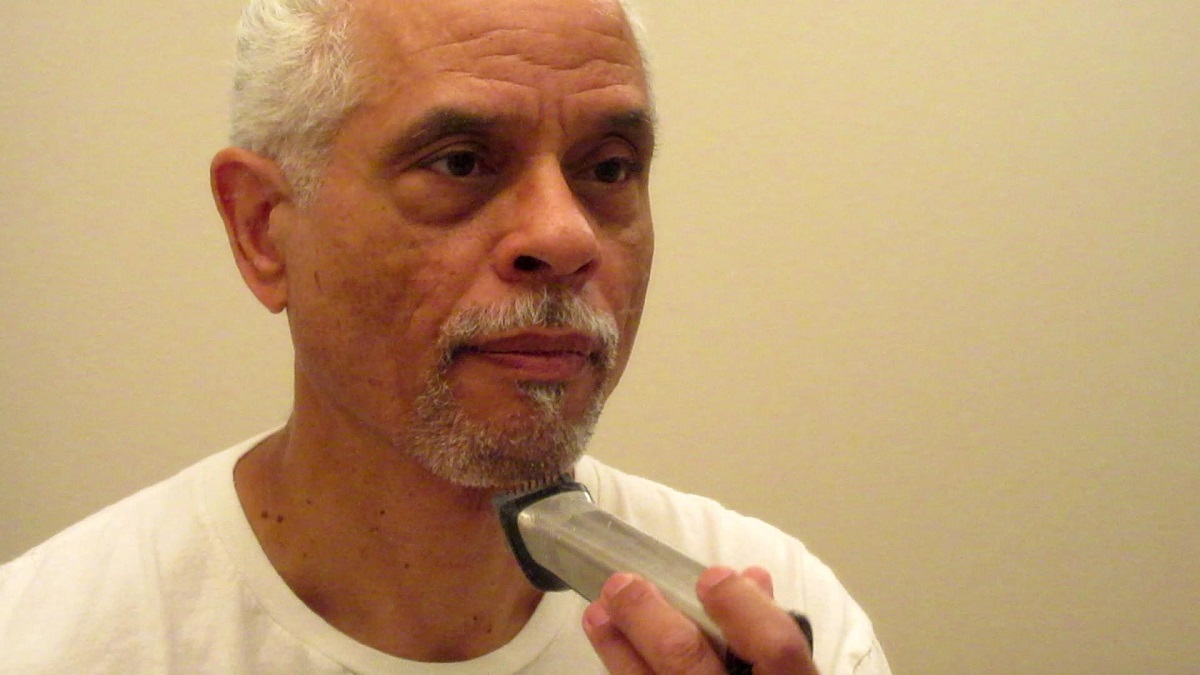
I eat less when I’m off service (which I’ll call “retired” for simplicity). That’s probably why my trousers fit more loosely.

I need to have something to do. I exercise daily, for about 20 minutes. I do mindfulness meditation and yoga. I blog. I photograph and film, mainly birds, which I post to YouTube.

The only reason I ‘m not a disaster in the kitchen is because you generally can’t get me within 10 yards of it unless I need a snack I can immediately eat (like an apple). I still don’t cook–not really. It’s embarrassing.

I trim the lawn and by that, I mean just around the walkway edges and some of the garden margins. I don’t mow the lawn because my wife does a much better job, by mutual agreement.

I’m not a gardener. I’m a garden appreciation expert. That means I watch gardening that is done by others.

I suppose a lot of this adds up to laziness.

Life in the Garden

We were out working hard in the garden today–or at least Sena was. She was very busy planting Black-Eyed Susan and other things the names of which I can never remember.

I usually just take pictures and make videos of her garden. It’s a lot of fun watching her. But that’s not all I do. Sometimes I carry bags of mulch.

She has been devoted to gardening for over 17 years. It began with cultivating our back yard. I labored cutting out weeds by the dozens–until I found out it was Vinca. I think another name for it is creeping myrtle.

She gave me permission to film her usual planting posture. You’re welcome.

Out in the garden

Coming to Terms with Retirement

I’m in the off phase of phased retirement right now. It reminds me of the consuming question, “What are you going to do when you’re retired.” Coming to terms with retirement is not a one-step thing.

It’s probably easier to think of things I’m not going to do. I can think of at least a couple of books I’m probably not going to finish reading: “The Social Transformation of American Medicine” by Paul Starr and another title I rather not type but the picture of which I’m not squeamish about showing.

I’ve already read a new book by Dave Barry, “Lessons from Lucy,” which is about coming to terms with getting older. And I’m going to reread a book I read years ago, “The Ultimate Hitchhiker’s Guide to the Galaxy” by Douglas Adams.

I read the Hitchhiker’s Guide and lost it in one of our many moves. I bought a new hardback copy a few days ago and just restarted it.

I can’t remember when I got The Ultimate Hitchhiker’s Guide. It was published in 1986. Around that time, I had graduated from Iowa State University and could not find employment for about a year. It was a difficult time. Anyone who has been through something like that might understand how hard it could be to retire.

I’m not going to write another work-related book. Editing a multi-author book was too much like herding cats. And as one of my friends put it, once you’ve done that, you ask, “Now what?”

I’m still checking my office email every day. You never know. It’s FOMO, I realize; on the other hand, there are still legitimate work-related things I need to do and some have deadlines.

This makes me think of my YouTube video, “A Day in the Life of a C-L Psychiatrist.” It’s a little tough to come up with something like “A Day in the Life of a Retired C-L Psychiatrist.” Of course, there would be nothing connected with psychiatry in it.

My day in the life after C-L Psychiatry?

I’m reminded of an exchange between Men in Black agents J and K (2nd sequel) after K is deneuralized out of “retirement” to return to the active job of defending this little green planet from aliens.

Agent J: “So what was it like on the outside, not doing this every day?”

Agent K: “It was nice; Sleep late on the weekends, watch the Weather Channel.”

My life is more or less like that, except every day is a weekend day…sort of. And the Weather Channel has gotten way too political for me.

I watch Men in Black reruns. I wait for the garbage truck. How does that guy know exactly where to brake in order to operate the automated side load mechanical arm grabber? I carry my POS camera on my belt. You just never know when an opportunity for great snapshots might arise. I trim and edge the lawn boundaries. I vacuum. I fold the fitted sheets, Hondo. I really don’t cook; I stick frozen pizzas in the oven and make microwave popcorn—not very often, Slick. I exercise and do mindfulness meditation and yoga. I take clothes out of the dryer and put away. I dry the dishes and put away. No, we do not use the dishwasher, pal. It’s about coordination and timing.

I realize that I might sound like Agent K. But I’m more like Agent J—still a rookie around the house and in the yard. This is going to take a while.

I Wonder

There are now 3 eggs in the robins’ nest. I saw a big turkey vulture soaring close by. I wonder if that’s what got the House Finch chicks. The bird that made a noise with it’s wings that was as loud as a big sheet flapping on a line in the wind, and looked too big to be a crow or even a raven–I wonder.

I wonder if I somehow was partly to blame for the murder of the baby birds, always messing around the tree. Still, I take pictures–and maybe draw death nearer.

And that leads to other strange thoughts. It’s odd that the nearer I get to retirement, the more I think about my life way before I ever even thought about medical school.

Jimmy

I remember the first time I ever heard about death was when I was in kindergarten. My mother woke me up early one morning to tell me that Steven, one of my schoolmates, was killed the evening before. He was playing around the railroad yard just a few blocks from our house. A train ran over him.

I remember my mother talking about it but I didn’t make any sense out of it. I was too young. I only wondered what it meant.

James

When I was a difficult teenager and made a conscious effort not to smile for pictures, I remember hitchhiking along a lonely highway in a bad rainstorm. I was glad when the man pulled over. I was not glad when he began to rub the back of my neck and asked, “How about a ride for trade?” I was not too young to know what he meant. When I said, “Let me out,” he did. I was too young to know that was miraculous.

I sometimes catch myself wondering if my life has been a grand illusion since then, only to protect my fragile soul from knowing the true horror. Maybe the driver really didn’t let me out. Why should I wonder that?

Jim

I remember a man who taught me how to do the work of a land surveyor. I looked up to him. He committed suicide by shooting himself in the chest over a failed relationship. I couldn’t help wondering why.

Of course, death visited me several times after I became a physician. They sometimes led to decisions I would rather I had not made about the direction of my career. I always wonder.

The Groundhog Effect

Last year, we noticed a groundhog waking up and bulldozing our back yard, even though snow was forecast that day. It’s pretty good at just putting its head down and pushing through almost anything in its path including leaves, sticks, small rocks, flowers, and so on.

Their single-minded digging has helped uncover bones and pottery of old civilizations and aided medical researchers study a lot of things including the role of viral hepatitis in liver cancer.

I can compare them to those who bury themselves in the single-minded study of medicine in the transformative path to medical practice. I can recall my medical school classmates and their clicker pens taking notes in class. They weren’t called “gunners” for nothing. Call it the Groundhog Effect.

Even if you weren’t a gunner, you had to apply yourself just like a groundhog to your studies. It could lead to another characteristic common among these creatures. They tend to be loners.

The analogy is far from perfect, of course. Groundhogs aren’t lonely. People can be, which is why medical students and residents are often advised to always remember H.A.L.T.

H.A.L.T. refers to trying to avoid letting oneself get too hungry, angry, lonely, or tired. It’s probably a warning about incipient burnout, a problem that affects at least half of physicians and which is the hot topic these days.

I’m always a little puzzled that so many physician wellness programs and meetings seem to devote a lot of time trying to teach doctors how to improve their resilience. It’s as though we’re somehow to blame for getting burned out.

I’m not saying learning things like mindfulness are not important for promoting physician wellness. I have my own daily mindfulness practice and it is certainly helpful.

It would also be nice to spend more time addressing the systems issues contributing to physician burnout, such as very full clinic schedules, overly complicated electronic health records requiring hours of data input that create the need for “pajama time,” which is bringing your job home with you, board certification busywork, managed care rules that marginalize physicians, and so on.

This is a continuation of the hassle factors that can lead to physicians just learning to put their heads down and dig through the mess—sort of like the groundhog, and often in isolation from each other.

Transformative processes can also occur at the end of a physician’s career. I’ve spent a long time learning to be a physician and now that I’m in phased retirement, I’m finding out how hard that can be. It would be helpful to know that others are passing through this stage as well, and that I’m not alone.

Could it be that one way to counter the Groundhog Effect is to come together and share this retirement experience? There will always be those who work well into their nineties and that’s great. Statistically, though, most of us will retire in our mid-sixties.

The graying out of the psychiatrist population is contributing to the shortage, to be sure. But we could still be useful to the next generation of doctors acting as role models for how to navigate the other transformative process—reflecting on the task of becoming somebody other than a physician. I think it would be easier if several doctors did this.

Animals do this. I saw this several years ago when we owned a house with a fountain, which was frequented by more than a couple of species of birds, including Bluebirds. They gradually arrived but were at first tentative about immediately diving in. One would perch on the rim. Another would come along and do the same, maybe drink a little water while watching the other.

Eventually, one would dip its tail feathers in just for a moment. Pretty soon, they would make like ducks.

I guess you could call it the Bathing Bluebird Effect.

Black Psychiatrists in Iowa

It’s funny how a newspaper article can set off a series of remembrances. I read the Psychiatric News article, “Building Community in Professional Organizations: The APA and BPA,” written by Ezra E.H. Griffith, M.D. (published on line April 30, 2019).

The article is about how Black psychiatrists have struggled to become a part of mainstream psychiatry, eventually forming the separate organization Black Psychiatrists of America (BPA) in 1969.

Nowadays it’s difficult to imagine that the American Psychiatric Association (APA) discriminated against Blacks. As an aside, I’m noticing how I’m not using the usual term “African American” in this post. Instead, I’m using the term “Black,” which is what Dr. Griffith did.

This reminds me of a book review I wrote for the American Journal of Psychiatry almost 20 years ago (Amos, J. (2000). Being Black in America Today: A multi perspective review of the problem. Am J Psychiatry, 157(5), 845-846.).

The book was written by Norman Q Brill, M.D. It reminded me of my experience at Huston-Tillotson College (now Huston-Tillotson University, a private school, historically with largely Black enrollment) in Austin, Texas back in the 1970s. I wrote:

“Dr. Brill’s appraisal of many black leaders in chapters such as “Black Leaders in the Black Movement” and “Black Anti-Semitism” may be refreshingly frank in the opinion of some. He tailors his prose so as not to denounce openly those whom many would describe as demagogues. At the same time, it is apparent that his underlying message is that a substantial number of them are not only out of touch with mainstream black America but may even mislead black people into adopting ideological positions that impede rather than foster progress. Dr. Brill’s description of the issue reminded me of my own experience with this phenomenon as a freshman in the mid-1970s at a college of predominantly black enrollment in the southern United States. A guest lecturer (who, as I recall, had also written a book about being black in America) told us that the white man would never allow a black man to be a man in America. He had only three choices: he could be a clown, an athlete, or a noble savage. These corresponded to the prominent and often stereotyped roles that blacks typically held in entertainment, sports, and black churches.” 

I was taken aback by the speaker’s judgment and asked him what my choice should then be. He was equally taken aback, I suspect. He advised me to be a clown. I also remember being aware of why my department asked me to write the review. That leads me to reflect on the upcoming celebration of the 100 Year Anniversary of the Department of Psychiatry where I’ve been a faculty member. It’s in November 2019.

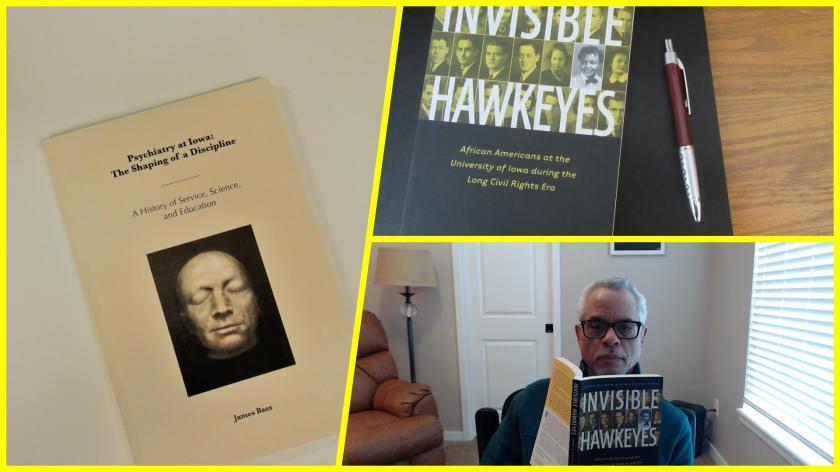
If you read through the web page describing the history of the department, you won’t find anything about Black psychiatrists. In fact, I could be the only Black psychiatrist who has ever been a faculty member here at The University of Iowa Hospitals and Clinics.

And if you look at The 2018 Greater Iowa African American Resource Guide available on the web, you’ll find only one other psychiatrist listed other than me. See Update below about this reference:

Update: I’ve discovered as of May 3, 2022 that the 2018 Greater Iowa African American Resource Guide cannot be found at the link above. There is a link to The 2019 Greater Iowa African American Resource Guide. I’m still listed as the only Black psychiatrist in Iowa City. There was a Black psychiatrist in Sioux City who was in the 2019 guide as well, Dr. Rodney J. Dean, MD at Dr Dean & Associates. I could not find any guides after 2019.

On the other hand, historically, some Blacks have done well in Iowa. George Washington Carver became a faculty member at Iowa State University in the 1890s. I graduated from Iowa State in the 1980s. After World War II, Black Iowans integrated The University of Iowa, Iowa State University, and Drake dormitories in 1946. Dr. Philip Hubbard was the University of Iowa’s first Black vice president.

I am not a clown, an athlete, or a noble savage. I am a man.

Addendum: I read the facts about George Washington Carver and Dr. Philip Hubbard on an Iowa Public TV web page. However, to my dismay the site is marked “Not secure” by Google. The source of the information there is from a respectable reference:

Silag, B. (2001). Outside in: African-American history in Iowa, 1838-2000. Des Moines: State Historical Society of Iowa.

Content information:

“A distinguished group of 36 writers (for no pay or royalties), including community leaders as well as academic historians, has created Outside In: African-American History in Iowa, 1838-2000, a book certain to become the standard work on the African-American experience in Iowa. Each of the book’s 20 chapters focuses on a particular aspect of that experience–legal and political rights, business and professional leadership, clubs and community organizations, churches and schools, and more–from Iowa’s territorial days to the present. Hundreds of photographs (gathered from family albums and scrapbooks, as well as historical archives) accompany the text, which is documented with extensive references. A detailed index is also included. Three themes tie together the enormous amount of historical information contained in Outside In: *The struggle of black Iowans to claim their rights as citizens; *The pursuit of individual opportunity in Iowa’s evolving economy over the years; and *The creation of community institutions to help families and individuals through good times and bad. Outside In provides the big picture and the details of this proud story of African-American initiative in Iowa, from the groundbreaking legal victories of pioneer Alexander Clark up through the present day political triumphs of Preston Daniels and LaMetta Wynn.” –Dust Cover, Front flap. Outside In is the result of a collective effort spanning five years. It is the first in-depth study of the black experience in Iowa in a half-century, and is expected to stand as the definitive work in its field for some time to come. While much of the book’s contents recall hard-fought struggles against prejudice, discrimination, and violence. Outside In also points to proud traditions of understanding and cooperation among black and white Iowans, traditions that go back to before the Civil War and remain vital to this day. –Dust Cover, Back flap.