


The FDA announced today that the meeting to discuss Pfizer’s request for authorization of Pfizer-BioNTech COVID-19 Vaccine for children 6 months through 4 years of age, originally scheduled February 15, 2022, will be postponed. This will give Pfizer time to evaluate a third dose of the vaccine in this age group.
Category: Covid-19
Brief Reflections on N95 Masks

The free N95 masks are here. It’s 3M Model Aura 9205+and they’re available in many stores, including Hy-Vee and Walgreens.
I occasionally failed the fit test using this type of mask when I was working at the hospital; however, you can still get a pretty effective seal to make it protective in the community (see my video below). I was one of the few psychiatrists who had to fit test for a mask because I worked on the med-surg side of the hospital in a consult-liaison role.
The N95 flat type mask is probably no more difficult to don and doff than the surgical mask, for which the Slip Knot and Tuck method helps you achieve a pretty good seal (see my video for this).
At times, I had to use an alternative N95 mask, similar to 3M Model 1860, which is a cup-shaped mask. One year I failed the fit test for that one and I had to wear a Powered Air Purifying Respirator (PAPR). I had to wear it only once in the hospital. It was very cumbersome. Following that, I passed the fit test for the 1870+, which is similar to the 9205+.
When you search the web for more information about the N95 masks, you’ll find that there is disagreement about how to interpret eyeglass fogging pertaining to the seal. Some say that if you get any eyeglass fogging at all, you have an inadequate seal and need to fix that or “check with your supervisor.” On the other hand, others will discount that. Even the CDC says that eyeglass fogging indicates a poor seal that means that you have an inadequate seal and this should prompt the user to try another N95 model. On the other hand, others will discount that.
I did only a quick search, but found one open access article on a pilot study which concluded that “Fogging of eyeglasses is neither a sensitive nor a specific predictor for a poor fit of N95 respirators.” (Kyaw S, Johns M, Lim R, Stewart WC, Rojas N, Thambiraj SR, et al. Prediction of N95 Respirator Fit from Fogging of Eyeglasses: A Pilot Study. Indian J Crit Care Med 2021;25(9):976–980).
On balance, since no one who is not a health care professional will ever have to fit test for any N95 mask, the seal you’ll get is probably adequate. If you wear eyeglasses, remove them before donning and doffing the mask. You can get the bows caught in the straps, which can flip them off your face and into the toilet (although this has never happened to me personally). Always do hand hygiene before and after use of the mask.
I’ve read news items indicating that CDC guidelines say you should reuse the N95 only 5 times before disposing of it. It was difficult to find the source, but it’s mentioned here, under the heading “Decrease in N95 FFR fit and filtration performance” (FFR stands for Filtering Facepiece Respirator)”:
CDC recommends limiting the number of donnings for an N95 FFR to no more than five per device. It may be possible to don some models of FFRs more than five times [2]. One study reported that fit performance decreased over multiple, consecutive donnings and fit varied among the different models of FFRs examined [3]. If manufacturer guidance on how many times a particular FFR can be donned is not available, the CDC recommends limiting the number of uses to no more than five per device based on published data on changes in FFR fit from a limited number of FFR models over multiple donnings.
A recent observational study conducted in a hospital emergency room during the COVID-19 pandemic found that extended use and reuse of N95 FFRs as measured by the total hours and shifts the mask was worn and the number of donnings and doffings was associated with an increase in the fit failure of the respirators. This study also showed that it may be possible to don some models of FFRs more than five times [2]. Fit performance during limited reuse should be monitored by the respiratory protection program manager or appropriate safety personnel.
Reference 2 is a research letter published in JAMA Network, June 4, 2020, a time when there were shortages of PPE (Degesys NF, Wang RC, Kwan E, Fahimi J, Noble JA, Raven MC. Correlation Between N95 Extended Use and Reuse and Fit Failure in an Emergency Department. JAMA. 2020;324(1):94–96. doi:10.1001/jama.2020.9843).
Further on in the CDC guidance is a section entitled “NIOSH recommends limiting the number of donnings to five for a filtering facepiece respirator. What is the science behind that recommendation?”
You can read all of this if you’re interested. I think it’s helpful to note that some experts say you can reuse them until they’re visibly dirty, which I think probably applies to users in the general community.
Free N95 Masks Available
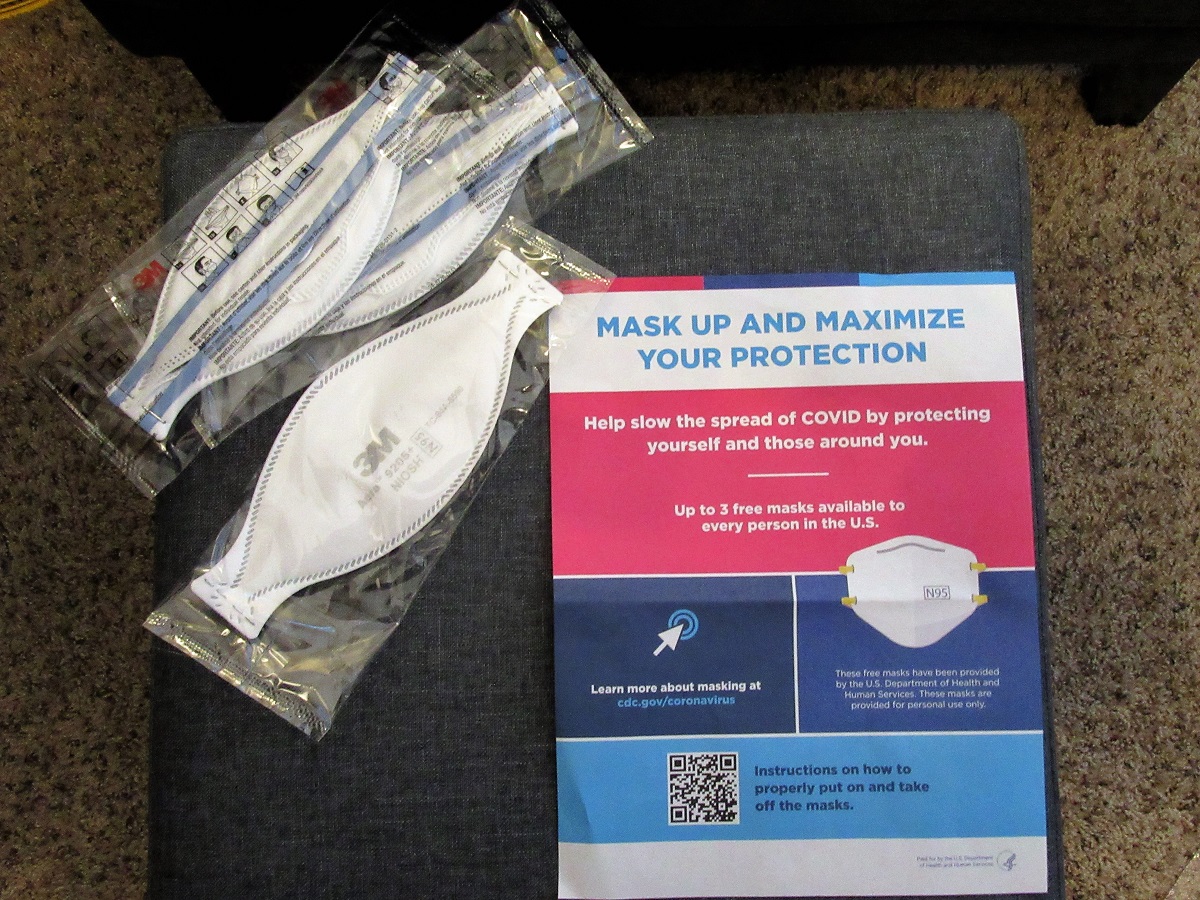
Sena picked up 3 of the free N95 masks today at Hy-Vee. It turns out that it’s the same one I always used to fail the quantitative fit test for at Employee Health. I could never get a decent seal with it. I would get an alternative cup-shaped mask which worked pretty well. Fit testing includes maneuvers you have to do to make sure the mask stays where it’s supposed to on your face while moving your head up and down, side to side, or bending at the waist, doing back flips, moon-walking, and so on. You also have to read a short story as well, called the Rainbow Passage:
When the sunlight strikes raindrops in the air, they hit you in the face, which makes you jerk your neck so hard you get a charley horse and can’t move your head, which hinders your vision and makes you fall through the glass door of a doughnut shop. The owner yells at you because you get blood all over the chocolate frosted doughnuts. As you reel out of the shop, you trip over a chair which knocks over a display of N95 masks, which scatter the shards of broken glass, splitting the white light into a rainbow. You follow it until it leads you to a boiling pot of gold, which you trip and fall into, sustaining burns that send you to the hospital emergency room where all of the doctors and nurses are wearing Hazmat suits. That’s why they say if you know where the pot of gold is, don’t stop off at the doughnut shop.
If you can read the Rainbow Passage without interrupting the seal of this version of the N95 mask, you pass, which I never did.
I don’t think anyone expects you to pass a quantitative fit test for the free N95 masks. There is a self-test of the seal which involves holding a strong-smelling substance up to your face (such as Bigfoot turds) to see how long it takes before you pass out. If you don’t pass out, you’re eligible to become a Bigfoot personal trainer.
There’s a limit of 3 N95 masks per person per household. A store employee hands them to you from a bin full of alligators. When the employee gets eaten, management shuts down the whole operation. You can’t just go in there and grab up an armful of them and expect not to get chased out into the parking lot. However, that doesn’t stop some people from heading to every store all over town to get the 3-mask limit, ending up with more than a dozen. The same strategy worked early in the pandemic when stores were rationing toilet paper.
It would be a waste of time for me to try to demonstrate how to don the N95 mask when there’s a perfectly good video demonstration (see below). If you’re wondering about the real Rainbow Passage, the link is here.
Slip Knot and Tuck Mask Fit
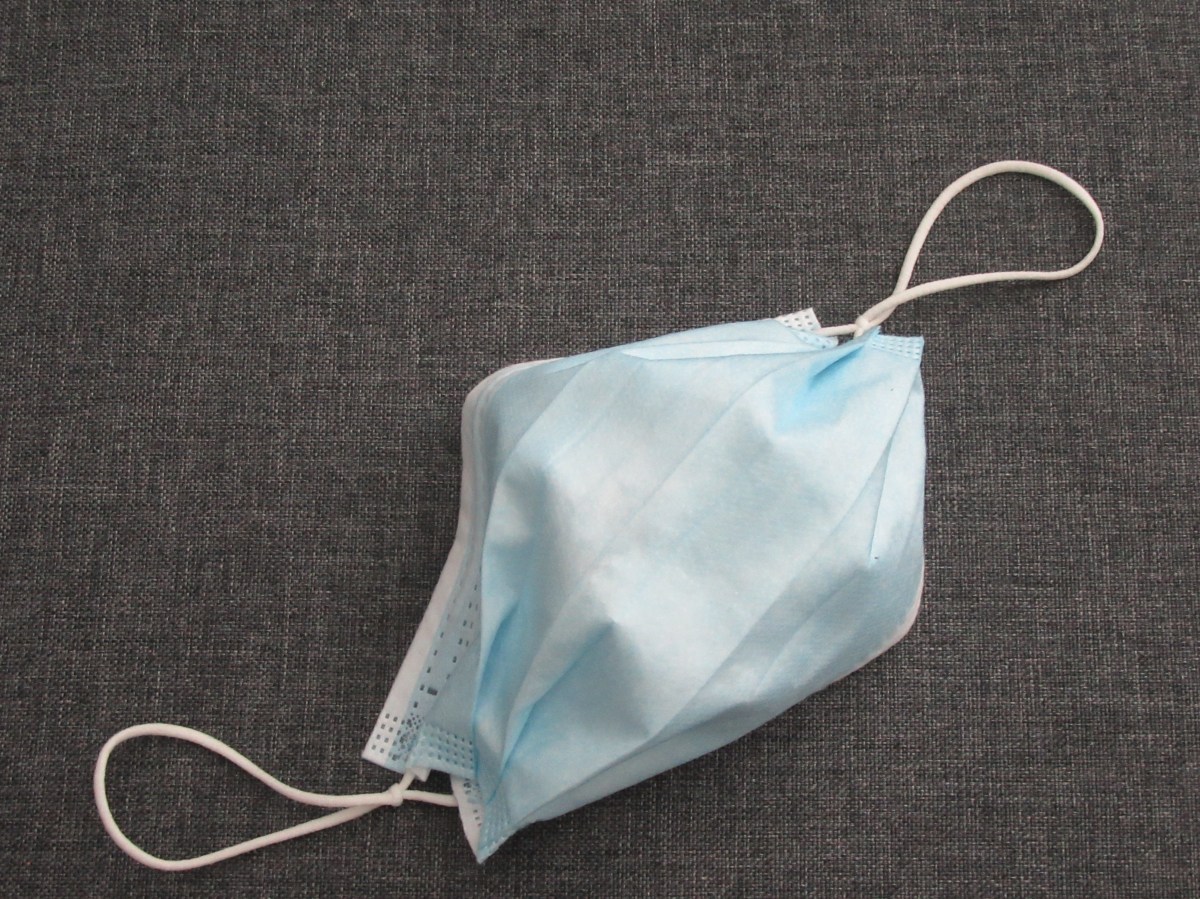
I saw the video the CDC suggested for getting a closer fit using a surgical mask. I had a tough time following how to tie the knot in the loops. Either the demonstrator went too fast or I was too slow (probably the latter.) I found a couple of videos on slip knots and crochet knots (another name for slip knot, evidently). There are probably dozens of YouTubes on how to do the Knot and Tuck.
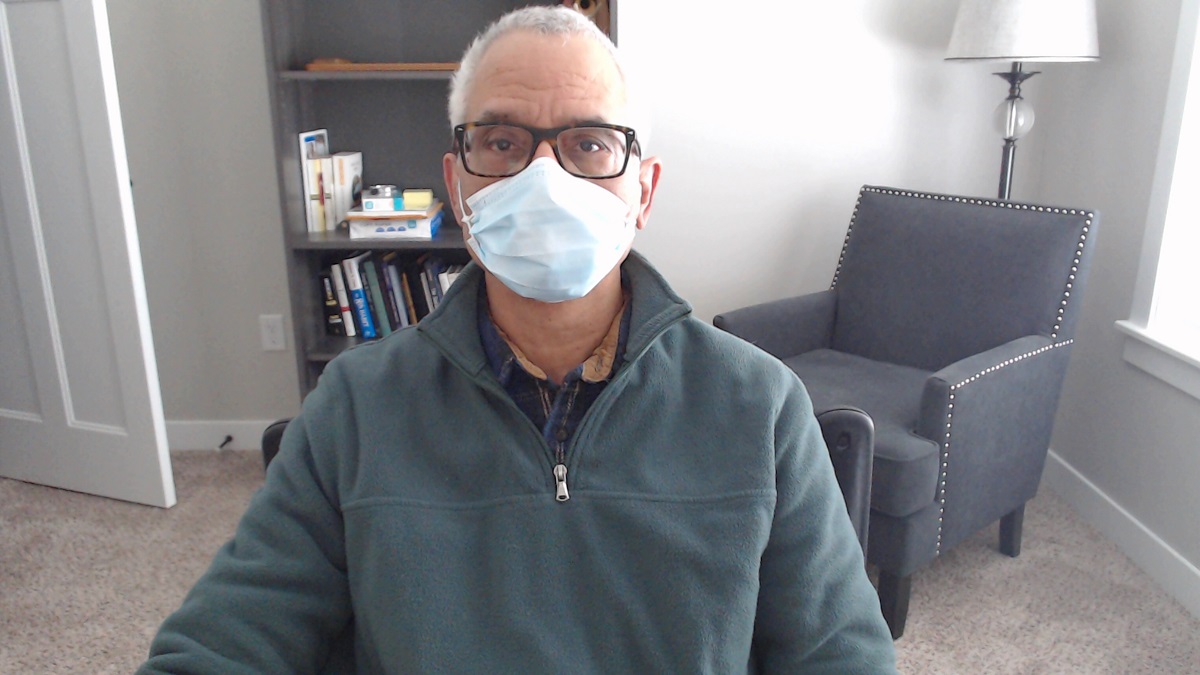
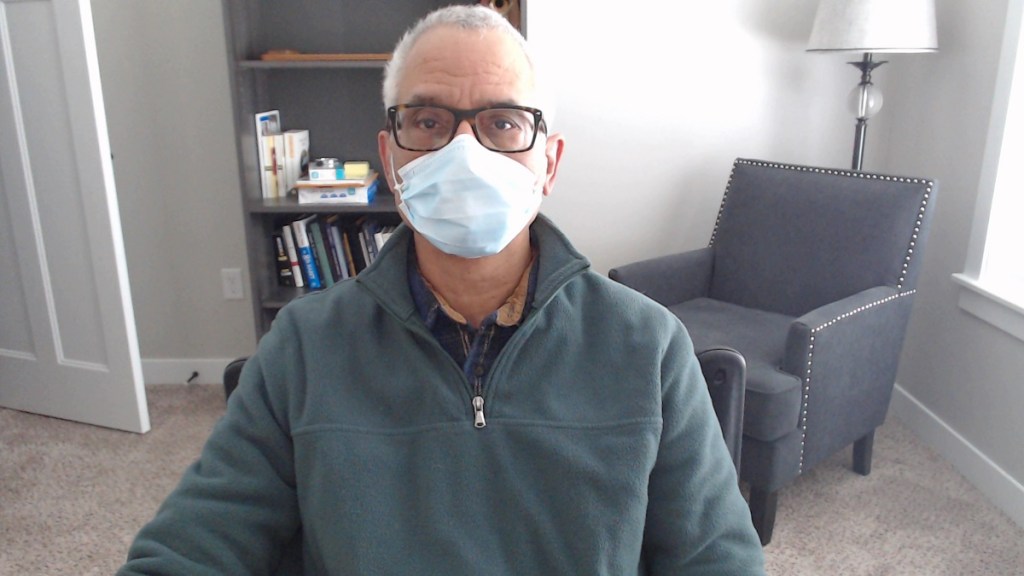
Since the toughest part of the Knot and Tuck method is tying and adjusting the knot to hug the edge of the mask as closely as possible, I practiced a little. See what you think of the slip knot and tuck in my YouTube video below. Using a slip knot allows you to easily move the knot closer to the side of the mask, allowing a tighter fit. Tucking also helps. It also helps prevent my glasses from fogging up. It’ll never be perfect but it’s better than letting the sides flop open.


My Definitive Journey Revisited

A couple of days ago, I got my retirement gift from The University of Iowa. It’s a about a year and a half late because of the Covid-19 pandemic, but it’s welcome nonetheless. Normally there is an Annual Faculty Retirement Dinner, but it had to be cancelled. It’s a stunningly beautiful engraved crystal bowl with the University logo on it. It came with a wonderful letter of appreciation. It reminded me of my blog post in 2019, “My Definitive Journey.”
It’s a definitive symbol of the next part of my journey in life. For years I’d been a fireman of sorts, which is what a general hospital psychiatric consultant really is. The other symbols have been the fireman’s helmet and the little chair I carried around so that I could sit with my patients. I have changed a little.

I still have my work email access, which I’m ambivalent about, naturally. I check it every day, partly because of Fear of Missing Out (FOMO), but also to delete the junk mail. I still get a lot of it. I get a rare message from former trainees, one of whom said it “pained” her to learn I’m now Professor Emeritus.

I have not seriously considered returning to work. That doesn’t mean I have not been occasionally nostalgic for some aspects of my former life.
The poem, “El Viaje Definitivo” by Juan Ramon Jimenez evokes mixed feelings and thoughts now. I have gone away. But in looking back at the past, I now see now that the birds didn’t always sing. The tree was not always green.
I don’t miss my former home, the hospital, as keenly now, which is now a much harder place to work since the Covid-19 pandemic began.
And there is little that is definitive about my journey forward from where I now stand. I’m a little less afraid than I was over a year and a half ago. And the birds sing where I am now, sometimes more clearly than before.
El Viaje Definitivo (The Final Journey)
… and I will go away.
And the birds will stay, singing
And my garden will stay
With its green tree
And white water well.
And every afternoon the sky will be blue and peaceful
And the pealing of bells will be like this afternoon’s
Peal of the bell of the high campanile.
They will die, all those who loved me
And every year the town will be revived, again
And in my circle of green white-limed flowering garden
My spirit will dwell nostalgic from tree to well.
And I will go away
And I will be lonely without my home
And without my tree with its green foliage
Without my white water well
Without the blue peaceful sky
And the birds will stay
Singing
–Juan Ramon Jimenez
 Go Retire Psychiatrist