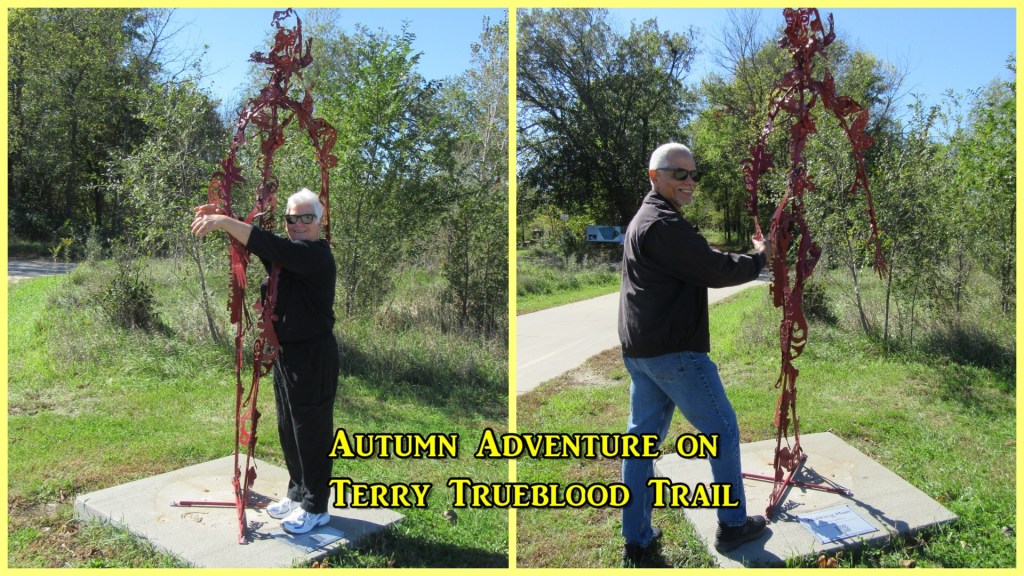
Autumn is a great time to take a stroll on the Terry Trueblood Trail in Iowa City. Weirdly, hardly anyone was out there. It was like we had the park mostly to ourselves. A carpet of dry leaves turned the walking trail into a regal boulevard—which reminded me of the path to the merry old land of Oz.
As usual, there were plenty of marvelous sights to behold. Something in the air changes how every plant and animal looks. They glow.
And they also glide, like the bullsnake that surprised us and which I mistakenly called a garter snake until we got home and I looked more carefully at the blotches on the reptile. Garter snakes have linear stripes. They’re also smaller than bullsnakes. And when bullsnakes feel threatened, they wiggle their tails like a rattler, which probably sounds more convincing when they slither through dry leaves. Mimicry is ubiquitous in nature, even among humans.
Walking along the trail, Sena mimicked the falling leaves. I mimicked v. Skip Willits’ sculpture, Walking Man.
Colors are muted in the fall. Even the goldfinches were less bright, probably because they were juveniles or females. But the light danced off the little waves on Sand Lake and glittered like diamonds across Sand Lake.
As usual, this time of year, brown grasshoppers were bouncing all over the place, making us backboards. They seemed desperate, knowing their time is short—as the broken bodies of their comrades smashed on the trail brutally attested. There is no escape.
But the cycle of life is evident in the milkweed pods, crawling with the bright red bugs. The color is a warning they are poisonous to critters who might want to eat them. But they don’t harm the plants. Buckeye butterflies and their larvae have complicated life cycles which intersect with their predators in ways that may balance life and death.
And the Woolly Bear caterpillar’s brown and black color bands do not signal how long or short the winters will be—but it makes for a good story.






Leave a Reply