

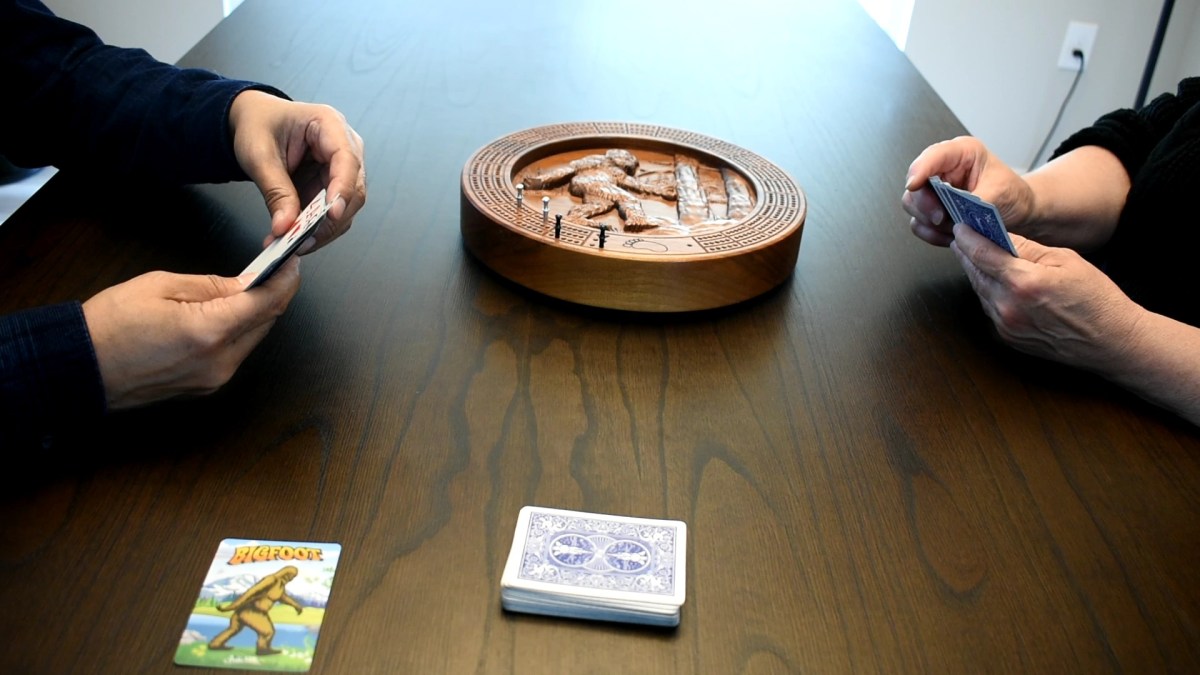
Today we played cribbage under pressure—time pressure that is. We tried it because we wondered about why, in tournament games, you always hear you should be able to play a game in 15 minutes. The American Cribbage Congress (ACC) has over 200 local grassroots cribbage clubs across North America. If you join one of them, you generally have to learn how to play a cribbage game in 15 minutes.
Most clubs have you play 9 other players during regular meetings, which typically last about two and a half to three hours. I’m sure the practical time range is closer to somewhere between 15-20 minutes, but the driver to keep it shorter is that tournament organizers have to accommodate a large number of entrants. I’m not sure how much you can socialize during meetings. We had to cut the chit chat and focus on the cards.
We’re used to playing at a leisurely pace, chatting and dawdling. Usually, we take about 25 minutes to play a game—sometimes longer. But under time pressure, all phases of the game got more difficult to manage.
We kept getting stuck on certain phases of the game. We probably didn’t throw to the crib as well as we’d like because we felt so pressured to stay under the time limit. I’m sure we made counting and scoring mistakes in both the pegging and scoring phases.
We played 4 games and could play in 15 minutes and 36 seconds in only one of them. It seems like the average for us was somewhere in between 15 and 20 minutes. I used the stopwatch on my cell phone.
Oddly, the second time we tried to play faster led to the fastest time, which was just over 15 minutes as noted above. But each time we played, the longer times got; the first game was around 20 minutes, the next one after that was about 15 minutes; the next was a little over 16 and the next one after that was closer to 17 minutes.
I think fatigue from the pressure got to us. However, I wonder if we just practiced a little more, whether the jitteriness from the sense of pressure would ease because we’d eventually get better at scoring the less common hand and crib scores. Would an expert tell us that? By the way, do you know what the definition of an expert is? A retired drip under pressure.
I gave up on the idea of shuffling 2-3 times each hand and just did it once—which didn’t really seem to improve our times. We’re supposed to get our card shuffling machine tomorrow. I wonder if using that would speed things up or slow us down.
The other point to make is that we usually help each other score and count when we play cribbage. Well, that’s not what tournament players do. You sweat it out and if you make a mistake, your opponent can’t help you. And don’t get me started on the muggins rule. Talk about pressure.
Maybe the answer is to have a fresh deck of cards which don’t stick to each other from the snack foods you eat while playing cribbage just for fun. And don’t talk, joke, laugh, or shuffle too many times, and remember luck is part of the game. Skill can take you just so far. It’s kind of like life. Somebody called cribbage a “finicky game.” OK, so it was Barry Rigal, who’s famous for being a bridge player and edited the book Card Games for Dummies.
So, explain why cribbage players, who I’m guessing are among the most finicky people on the planet, can deal with the pressure of a card game with a lot of finicky rules but manage to play a cribbage game in 15 minutes?
If you’re a cribbage player, we’d love to hear your answers. No pressure.

 Go Retire Psychiatrist