

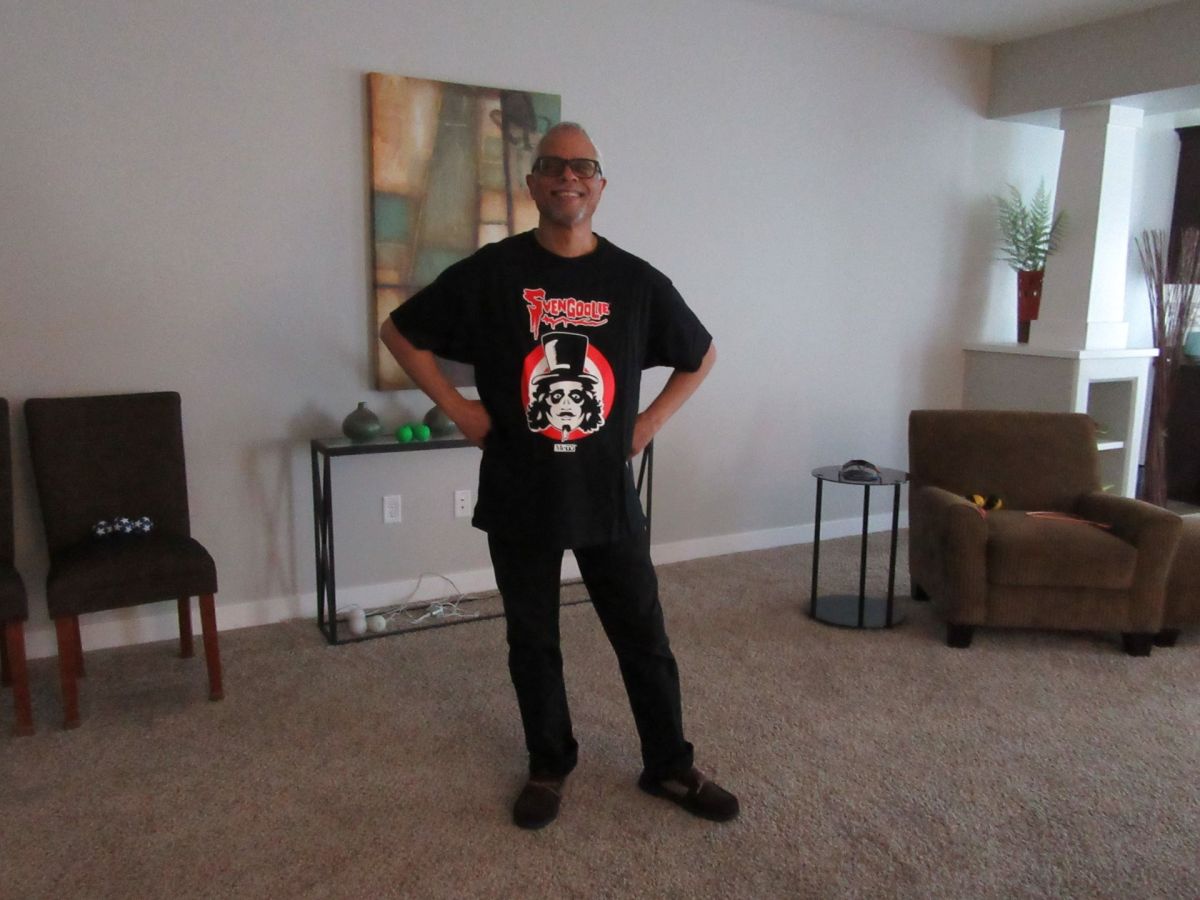
Last Saturday we watched the movie Trilogy of Terror on the Svengoolie show. Well, we tried anyway. There were a lot of interruptions from severe weather warnings. We didn’t mind them because you ignore them at your peril. It’s hard to forget the 2020 derecho in Iowa, which affected a lot of Iowans, including us.
Trilogy of Terror had some psychiatric aspects to it that reminded me how Hollywood frequently gets it wrong when portraying them in films—but sometimes hits the nail on the head.
Although we missed parts of the first and second parts of the movie, it wasn’t difficult to figure out the psychological angle. Both “Julie” and “Millicent and Therese” made me think of antisocial personality disorder (ASPD). The male college graduate student was a pretty good example of a predatory guy lacking any conscience and feeling no remorse for his bad behavior against his apparently meek and defenseless teacher, Julie.
But then the tables were turned and it was Julie who was actually the convincing, coldly calculating and remorseless psychopathic serial killer. She kept a scrapbook of the newspaper stories about her many victims.
One of my colleagues wrote the book about ASPD. Dr. Donald Black, MD, is the author of Bad Boys, Bad Men: Confronting Antisocial Personality Disorder (Sociopathy). In it he recounts the story of serial killer John Gacy. He was diagnosed with ASPD at the University of Iowa. He collected a great deal of data about antisocial men and also acknowledges that women can be diagnosed with ASPD. He has also co-edited and published the Textbook of Antisocial Personality Disorder.


The “Millicent and Therese” part of the movie displayed how a woman can be diagnosed with ASPD. This was the character Therese—who was also Millicent, a very strait-laced alter personality, which makes this also a case of what you could call dissociative identity disorder (DID), which may be related to severe trauma. This used to be called multiple personality disorder. What was interesting about this part of the movie was that both identities were being managed somehow by a family physician, not a psychiatrist—which is not at all plausible.
The last part of Trilogy of Terror is “Amelia,” in which Amelia buys a Zuni fetish doll (named “He Who Kills”) which she intends to give to her boyfriend. However, she’s in a hostile, dependent relationship with her mother who controls her and interferes with every aspect of her life. Of course, the doll comes to life and tries to kill her.
The struggle between Amelia and the doll makes me think about her internal struggle with angry and probably murderous feelings about her controlling mother. Amelia finally internalizes the doll’s rage (actually her own) when he emerges from the oven where she shoved him in an apparently futile attempt to burn him to a crisp. What it looks like is that she inhaled the smoke, finally owning her own rage by internalizing the doll’s smoky remains. This transforms her into a vengeful killer (now grinning with the sharp teeth of the doll) who calls her mother to invite her over to her apartment with the obvious plan to cut her to pieces with a large knife.
This is probably not a movie for kids or sensitive adults, which Svengoolie acknowledges several times during the show. This is why I like the segment with Kerwyn, the dad joke telling chicken with teeth who is voiced by Rich Koz, who also plays Svengoolie. Usually during that segment he tells a series of jokes, repeating the lines a couple of times, seemingly in an effort to teach you how to tell dad jokes. There’s also a Kerwyn joke of the week event, in which he tells a joke submitted by a fan. The joke video takes a few seconds to load, so be patient.
 Go Retire Psychiatrist