

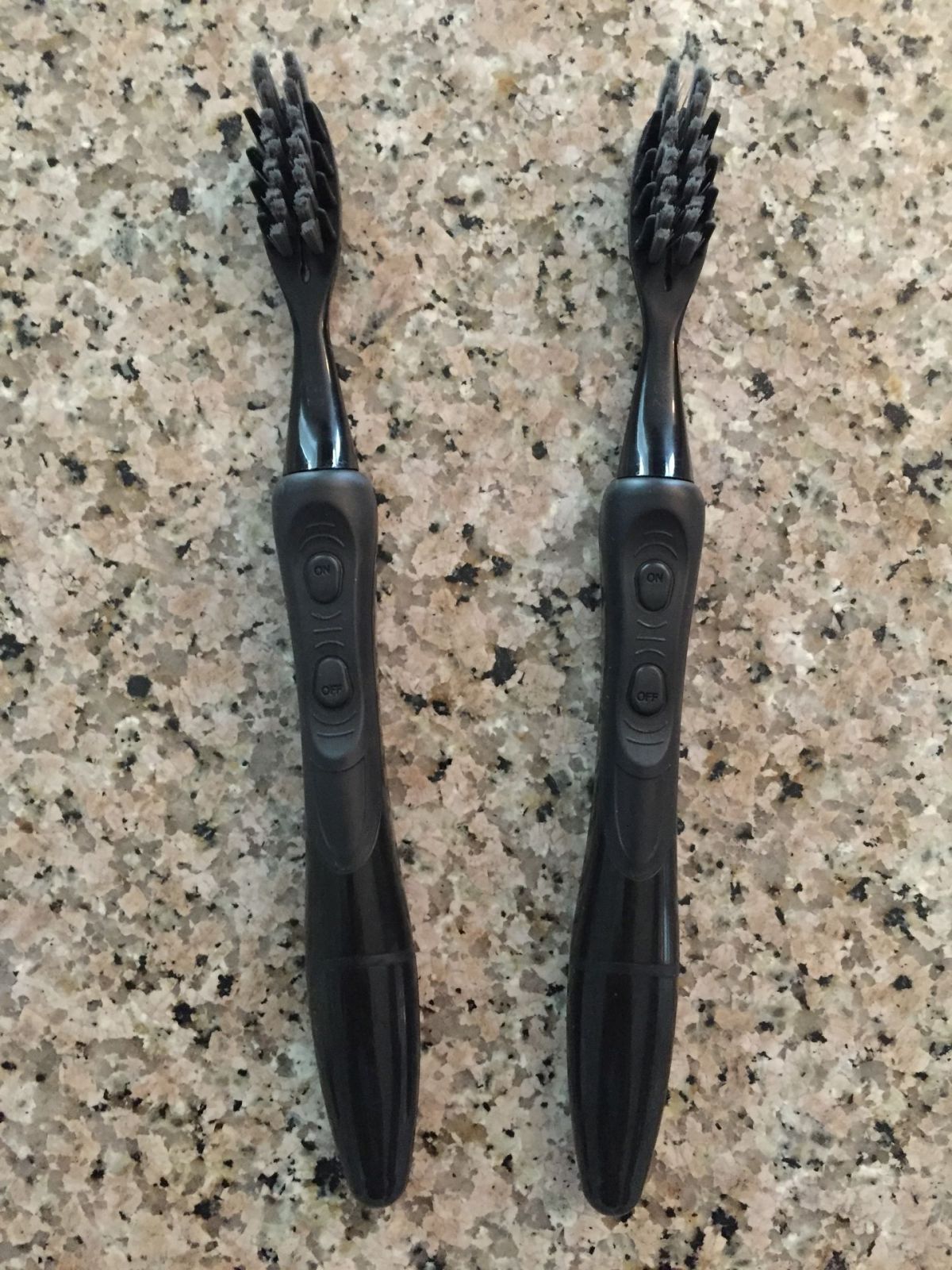
Sena bought a couple of Equate Polaris Vibraclean non-replaceable battery-powered toothbrushes with charcoal bristles (see below for remarks on charcoal) for us. When the battery dies, you just throw the brushes away. We had a rechargeable electric toothbrush a long time ago, but getting replacement parts for it was too expensive. We went back to manual toothbrushes.
You just press the on button and you’re buzzing. You press the off button when you’re done. It’s a little tough to refrain from trying to manually brush, but the internet entries say you should do that anyway.
Sena says the battery-powered toothbrush feels weird rumbling in her mouth. I think it does a good job of massaging the gums and tongue as well as cleaning teeth.
I found a couple of studies published about twenty years ago that compared electric and battery-powered toothbrushes. They didn’t find any difference. The few studies that have been done generally find the battery-powered toothbrushes are superior to manual brushing.
The American Dental Association (ADA) says either manual or electric brushing works fine—compared to not brushing at all, I guess. The ADA web site has list of the organization’s preferred electric products. The Equate brand of battery powered brushes apparently didn’t make the cut.
Some brushes (including ours) have charcoal bristles, which supposedly whiten teeth. After looking on the internet, I’m not so sure that’ll work. In fact, the ADA has a low opinion of charcoal-containing dental care products. There’s no evidence that they’re effective or even safe, according to the September 2017 issue of The Journal of the American Dental Association. They might even wear away the enamel.
Hmmm. Maybe charcoal is not the best thing?
The brushes were a bargain—oh well, back to manual brushing. On the other hand, there’s plenty of evidence that regular brushing with toothpaste along with flossing is good practice.

 Go Retire Psychiatrist
Price has come way down on ADA approved battery powered tooth brushes. The last one I bought only cost $18. There is a dentist (probably more than one) that makes videos on how to use them. Suggested angle of the brush to the tooth is 45 degrees. Mine also has a 2 minute timer to limit excessive use on teeth. It is easier to find replacement brushes for the widely available inexpensive brands and I bought my replacement to fit existing spares. I also use rechargeable batteries (AA) because I think they may last longer than a battery sealed in the brush.
LikeLiked by 1 person
Great suggestions, George.
LikeLiked by 1 person