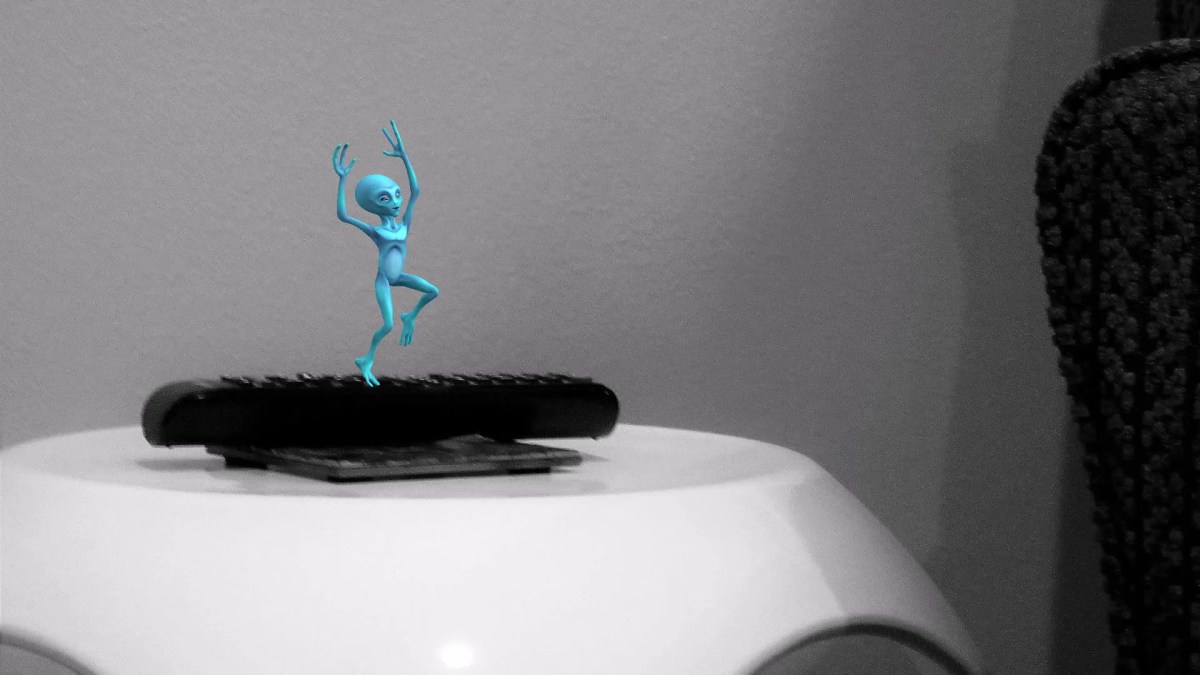
I was watching a TV show about UFOs and aliens the other night when I heard my remote control make clicking noises all by itself. Nothing happened on the set; neither the volume nor the channels changed. This has been happening for months and I usually just ignore it. Maybe it was because of the program I was watching. Get this, hundreds of people witnessed UFOs one night several years ago, even called the local radio station about it—yet no one took a single picture or video.
Before you tell me to adjust the gain on my tin foil hat, let me just say I’ve never seen aliens or UFOs—or Bigfoot. But the night I heard the remote control click away by itself, I got off the couch and searched the internet. It turns out I’m not the only one who has ever experienced this. However, Sena has never heard it.
Obviously, I’m not that anxious about it, but I’m curious. I also found an article on the web about alkaline batteries that pop, hiss, whistle Dixie, etc., especially when they go bad and leak.
I checked the batteries (the remote control takes two alkaline AAs) and noticed they were a brand we’d never bought before Universal Electronics (UEI). They have a website, which didn’t look suspicious. Where did we get them and how did they get into the TV remote control? They don’t have an expiration date on them. They’re made in China, which doesn’t bother me. They looked OK, but I replaced them with Ray-O-Vac batteries yesterday and I’m going to wait and see what happens. Maybe it clicked once on its own last night, but I was napping part of the time and watching Men in Black too. In fact, the remote control is on the table next to me as I’m writing this.
But you know, I can see how this might make other people anxious. This kind of anxiety might fuel the development of conspiracy theories in one person. Somebody else might think about poltergeist activity or interference by aliens practicing interdimensional moon-walking or making you order onion rings when you really want French fries.
It got me thinking about how anxious people can be about getting the COVID-19 vaccine. About a month ago, there were news reports of people having puzzling episodes of fainting, breathlessness, sweating, and other symptoms after getting one of the vaccines. The CDC investigated it and discovered that most of those vaccinated had experienced similar reactions in the past after getting vaccination shots. The upshot of it was they were having anxiety attacks, some of which were in the context of needle phobia.
Shortly after that, I noticed there were more internet articles about needle phobia (trypanophobia) which might be part of the cause of recent vaccine hesitancy. There’s a lot of reassurance and advice out there now about the whole thing. There is even a beer commercial (“your cousin from Boston gets vaccinated”) about a guy fainting when he sees the needle.
I suppose you could try using a Neuralyzer, which was used in all the Men in Black movies. You could flash someone in line for the vaccine who is showing signs of anxiety about getting the shot. The idea is to erase his memory of being needle phobic and replace it with a new one (You love getting vaccines!). You can find a slew of DIY projects on line to make one of your own. Several include 3-D printers, which on average can set you back about $700. You have to know how to use a soldering iron (amongst other skills). I flunked soldering in grade school when I soldered my ear lobe to a tin foil hat, back when they were actually made of tin before the switch to aluminum.
There’s just one problem with Neuralyzers—they don’t actually work. And by the way, tin foil hats can backfire, making it easier for the government to keep tabs on you at certain frequencies. Making tin foil hats is a waste of Reynolds Wrap.
There is some helpful guidance for how to cope with needle phobia, which by the way occurs even in some health care professionals. We’ll get through this somehow. There has not been a peep out of my remote control the whole time I was writing this post.



 Go Retire Psychiatrist