Retiring Takes Practice

Retiring takes practice, like a great many skills. I know it’s puzzling to think of retiring as a skill. Skill building feels awkward at first and with time, managing the transition slowly feels more natural. At least that’s what I hope about this retirement thing.

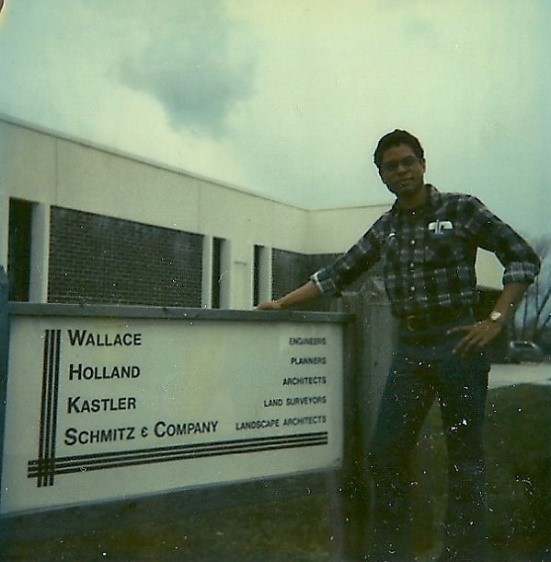
I remember way back in the day of the dinosaurs when I was working for consulting engineers. It was my first real job. I had to learn many new skills in my role as a land surveyor assistant. I started out mainly as a rear chain man and a rod man. These are special tools to measure distance and elevation.

Throwing a chain is a term for wrapping a 100-foot chain. This skill is almost impossible to describe just by writing about it. I could find only one fairly straightforward video about it which shows the proper technique.

Throwing a chain

The last part of it, which is collapsing the figure 8 shape of the chain into a circle is done almost by feel and was easier when I didn’t think about it. Overthinking a technique or skill can get in the way of just doing it.

I did those kinds of things every day for years. I gradually learned other skills until I felt like I fit in with land surveyors. I got a lot of satisfaction out of this kind of work when I was a young man.

But when it was time to move on to college, I found it difficult to adjust initially. I was used to doing work with my hands more than my head. It felt awkward to be in a class with a lot of students who were much younger than I was.

I made the transition and moved on eventually to medical school. That was another difficult transition in which I needed to develop new skill sets. It felt so unnatural that I thought of going back to working for consulting engineers.

But I hung in there and finally settled on being a consultation-liaison psychiatrist. I’ve gone from a consulting engineer world to a consulting psychiatrist world. They both involve consulting. The WHKS company I used to work for has a vision, purpose, and values that are arguably similar to consultation psychiatry in some ways.

I try to listen carefully to my patients and help them shape a better understanding of themselves and their relationships.

I try to provide consultation that ultimately benefits patients, sustains a healthy interpersonal environment for them and clarifies their values, the things that mean the most to them.

I value listening; communicating; being of service to both patients and their physicians, nurses, and other health care professionals; being practical (I used to write the blog The Practical C-L Psychiatrist after all); and I like to think I’m sometimes innovative in my approach to psychiatric assessment, patient care, and teaching the next generation of doctors.

I’ve been a physician for over 26 years counting residency. And of course I spent 4 years in medical school. Retirement is a little jarring and doesn’t yet feel completely natural, frankly. I keep waiting for the chain to just fall into place.

I’m probably overthinking it.

Can Jim Learn to Cook?

First, thanks so much for the Likes from the cooks out there on yesterday’s post “Back on the Wards”! I have not yet had a chance to really dig into your recipes, but I’m definitely interested. There was also a Like on a previous post (“Mindfully Retiring from Psychiatry”) from someone who devotes a part of her website to great cooking as well. Thank you!

I used to know how to do at least a little cooking. I got a recipe for Shoo-Fly cake from a guy I used to work with eons ago when I was working for consulting engineers as a land survey assistant and drafting technician. I lost that recipe a long time ago.

Anyway, moving right along to how my second day went back on the wards—it was busy. My step counter logged 2.4 miles and 21 floors. I did sitting meditation this morning and didn’t fall asleep. And when I got home, I exercised. So far, so good.

My exercise routine is about 20 minutes every day, and I modified it from something I found on line. It’s based on the latest recommendation calling for about 150 minutes of moderate exercise a week, which works out to about 22 minutes a day. I do about 2 minutes of deep breaths, pass out briefly, and then 20 minutes of thumb wrestling (see the fitted sheet folding video in my post “Back in the Saddle—So Soon?”).

The residents asked me the dreaded retirement question today. What are you going to do? I can’t just keep saying “I don’t know” or “I’m working on it” or “I’ll be finding exciting new adventures in my unstructured time.” I think I got that last one from a retirement web site. I guess there’s a rumor that after I retire, I’ll end up just coming back to work. That happens to a lot of retirees, although right now I don’t think that’s going to be my path.

I could look for a good Shoo-Fly recipe or somebody could just send me one.

What Happens When I Retire?

I’m still trying to find more information in the literature about retirement for psychiatrists. What happens to psychiatrists who retire? In fact, there is an article published several years ago with an interesting title: “A psychiatrist retires: the happening.” It was written by Dr. Norman A. Clemens, MD, a psychiatrist who was a psychoanalyst for many decades and retired in his mid-seventies. Dr. Clemens writes from the psychoanalyst’s perspective. He had many psychotherapy patients with whom he had developed long term therapeutic relationships. He was in private practice. His situation is vastly different from mine in those respects.

As a consulting psychiatrist in the general hospital exclusively, I have no long-term relationships with patients. I am so busy that I have no time for an outpatient clinic practice in the academic medical center where I work. I see my patients in the general medical wards, the critical care units, and, less often, in the specialty medical clinics.

My role is to, above all, understand the interaction of medical illness with psychiatric symptoms and to find some way to ameliorate them. My time is limited because I’m paged from all over the hospital throughout the day. Often, I see patients for only one or two visits—and never see them again. The C-L Psychiatrist is the fireman of psychiatry. My colleagues in medicine and surgery call me for help in putting out fires: suicide statements or attempts, the terror and agitation of delirium, the medically unexplained physical symptoms, the depressed and demoralized.

I don’t conduct formal psychotherapy like Dr. Clemens did. I do my best to sit and listen to the patient. It’s the main part of supportive psychotherapy, which underpins all others. My main prop is a chair (not a couch), any chair I can find in the room. If there are none, either I or a medical student or resident trots out to the hallway and fetches one for me. A few years ago, a colleague gave me a folding camp stool that I now carry around, slung around my shoulder. It’s very handy.

After a consultation, I then speak with the physicians who called me for my help. Frequently, nurses, social workers, medical students, residents, and other learners are present. I often sit down for that, too. I teach them and they teach me.

And also, I think about the larger perspective, which is the shortage of psychiatrists generally. About 60% of psychiatrists are over the age of 55 and many of them, including me, will soon retire. This will augment the need to replace us.

So, what happened finally to Dr. Clemens? How did he cope with retiring? Did he really retire? At the end of the paper, he confesses that he mourned for the patient relationships but relished the freedom. And he frankly admitted he’s not “totally retired,” still engaged in teaching. He says he doesn’t know if he could ever fully retire from being a psychiatrist or a psychoanalyst.

I spend a lot of time ruminating about how retirement will affect me. Dr. Clemens’ practice and mine differ in many ways.

However, there is this similarity. My retirement will no doubt affect many others.

Clemens, N. A. (2011). “A psychiatrist retires: the happening.” J Psychiatr Pract 17(6): 425-428.

            The author uses his own recent experience as a basis for discussing the actualities of retiring and closing a private, solo, psychiatric practice of psychotherapy and psychoanalysis. The extended process includes a personal decision about whether, when, and how to retire; preparation of patients and arrangements for their ongoing care; dealing with legal requirements and professional obligations; and the mechanics of closing an office one has occupied for decades. Not the least of concerns is one’s own personal transitions in lifestyle, professional persona, attachments to patients, and engagement in psychotherapeutic or psychoanalytic treatment relationships.

Mindfully Retiring from Psychiatry

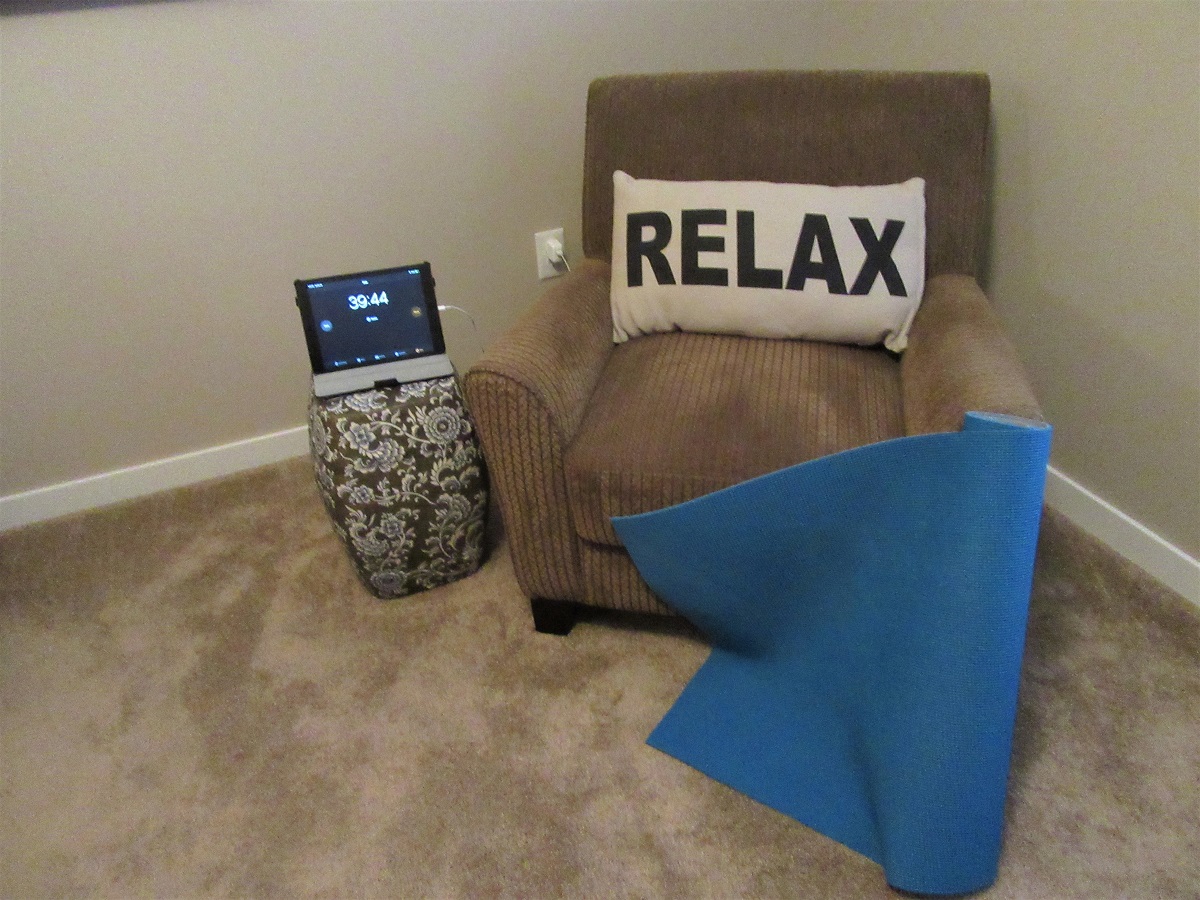
I’ve been off service for months and I’ll return to staff the general hospital psychiatry consultation service on Monday. It can be a stressful role and I’m “mindful” of how helpful mindfulness meditation has been. The featured image above shows my yoga mat and some might say a much too comfortable chair for sitting meditation. And of course, mindfulness is not really about relaxation; that’s just an old pillow.

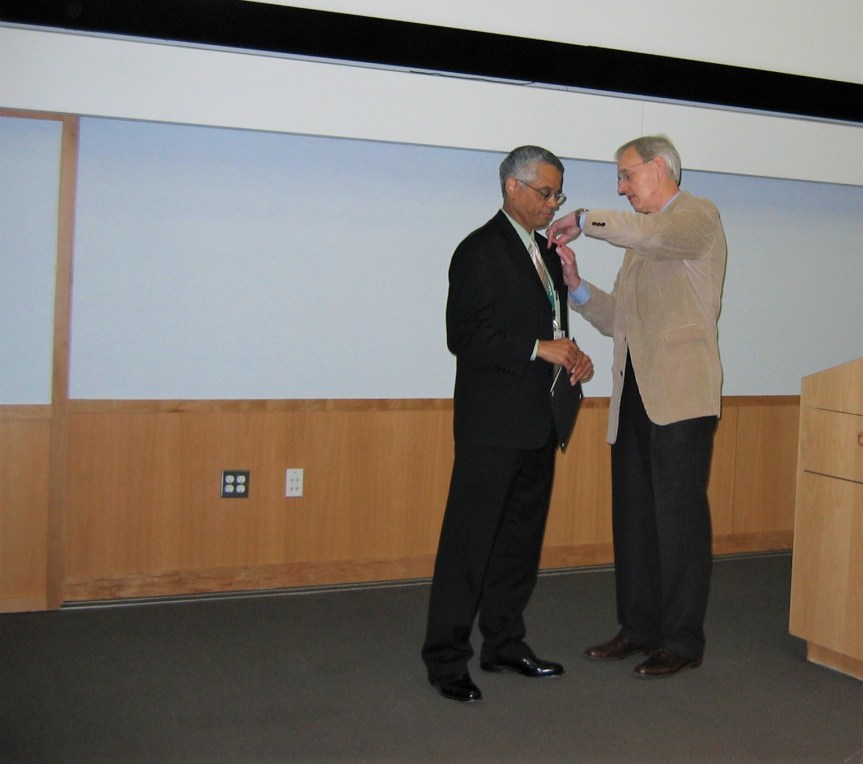
 About 5 years ago the editors of the Arnold P. Gold Foundation Humanism in Medicine Blog saw one of my blog posts (from a previous blog) describing my path to mindfulness practice, which included burnout, a problem for nearly half of all physicians, the causes of which include the health care system itself as well as physician vulnerabilities. It was posted under the title “How I left the walking dead for the walking dead meditation.” I was also the recipient of what was called in 2007 the Leonard Tow Humanism in Medicine Award, sponsored by the Gold Foundation.

Leonard Tow Humanism in Medicine pin
Getting the Humanism in Medicine Pin

This has me thinking about my motivations for retiring and what I’m going to do after I’m fully retired. Interestingly, the phased retirement program I’ve been in has given me a strong sense of how difficult this transition from full-time doctor to retired doctor entails. The meaning and purpose gap require more than a bridge made of recreational pastimes. The breath of relief after the great escape from work can soon become the sigh of boredom. On the other hand, my work as a psychiatric consultant has also been an enormous source of personal satisfaction. The video below gives a sort of Pecha Kucha account of what a Consultation-Liaison Psychiatrist does.

What C-L Psychiatry is about

It can get pretty hectic. Over the last two years of the phased retirement schedule, I’ve struggled to craft a daily routine at home that replaces the sense of accomplishment my work schedule provided—despite the pressures it exerted on my sense of well-being. Only now, in my third and final year am I starting to wonder the opposite.

For example, I’ve been exercising daily as well as practicing my mindfulness meditation. I’ve actually lost a little weight and my wife has noticed my shrinking paunch. I’m not laboring on my workouts by any means; my quads are not flopping over my knees. But I used to think that by climbing all those stairs and running all over the hospital I was staying in pretty good shape. It looked pretty impressive that my smartphone step counter logged around 20 floors and 2-3 miles a day. However, the consult service work demand can run hot and cold. It just doesn’t beat daily exercise.

How do I keep my daily exercise routine? I can hear myself saying that I won’t have time for it. I think my mindfulness teacher would probably remind me that my response could be to make time for it—just as I learned how to make time for mindfulness.

I’m looking for guidance in the literature on retiring psychiatrists, especially C-L specialists, and it’s pretty scant. So far, the best summary of it I’ve found were a couple of blog posts by H. Steven Moffic, MD on the Psychiatric Times web site. You can easily view them for free. In the first one, “Mental Bootcamp: Today is the First Day of Your Retirement,” published in 2012, he highlights the difficulty of psychological adjustment to retirement for psychiatrists. He advises, “Plan how to replace financial, personal, social, and generative needs that work has fulfilled.” There is no doubt I could do a better planning job.

In the second one, “Reviewing Retirement,” which was posted in 2014 (two years after he retired), he advises “Retire, even if you are not retired. Take enough time off periodically, and completely, with no connections to work, so that you can feel emotionally free from concerns about patients and practice.”

That speaks to me. In fact, the title of my blog site, Go Retire Psychiatrist, actually echoes this suggestion, although I never made the title with that connection in mind. I wish it were that easy to follow. You would be very lucky in today’s work environment to pull that off, even in academia. Phased retirement programs are one approach to preparing for retirement and could be effective for preventing burnout.

Go retire, psychiatrist.

The Retiring Consultation-Liaison Psychiatrist

I’m a retiring Consultation-Liaison (C-L) Psychiatrist and this blog is a chronicle about my transition from being a physician to–what? I’m not exactly sure, but I’ll find out. I won’t be offering financial advice about how to prepare for retirement. There are plenty of experts out there for that; I’m not one of them. I’m just evolving like anyone else.

I’ve been a doctor for long enough that I’m a bit rusty about doing much of anything else. Just ask my wife. No, wait; don’t do that. I know a lot about being a C-L psychiatrist. In fact, I’m not done with it. I’m in a phased retirement contract with my employer. This is my final year. I’ll be fully retired as of June 30, 2020. For the next year, my days will be a lot like what they’ve been for years. After that–who knows?

That’s really what my days are like in the hospital, believe it or not. It has some good points. I get pretty regular exercise, running all over the hospital, climbing the stairs and whatnot. I see a lot of interesting people and I have loved teaching medical students and residents.

There may be some out there who remember that I used to have another WordPress blog called The Practical C-L Psychiatrist. It’s gone. It didn’t fit my life anymore since retirement is coming up fast on the horizon.

Anyway, I’ll be posting about my changing life for the next year. I’m still not sure if I’ll keep the site after I fully retire. I’m just hoping that, for now, this public journal will help me adjust to the life change and that some of you come along for the ride.