

Update on “Endless Innovation: An R1 Research Institution (1948-1997)”

Last night’s webinar on Uncovering Hawkeye History, “Endless Innovation: An R1 Research Institution (1948-1997) was fascinating for us.

Dr. Bruce Gantz kicked off the first presentation about his work in cochlear implant surgery. Business picked up for him as far as these procedures in the last year and a half partly because of the pandemic. We were stunned to learn that the demand was driven because so many people were wearing masks—which prevented the deaf from lip-reading.

Kevin Washburn was next up and highlighted the great performance of the UI Law school’s stunning list of 4 student-led law review journals. They rank extremely high in the country, up there in the company of Yale and Harvard. I’m off on a tangent here, but Washburn’s status as a citizen of the Chickasaw Nation (which is based in Oklahoma; there are no Chickasaw tribal members in Iowa despite there being a Chickasaw County, by the way) reminded me of a guy who was a year behind my class in medical school. His name is Orrenzo Snyder and he’s a urologist in Oklahoma. Orrenzo and several other fellow students founded the American Indian Student Association (AISA) in 1989, which was later renamed the Native American Student Association (NASA). The University of Iowa Pow Wow was established in 1990. The 26th Annual Pow Wow is scheduled for April 2, 2022. Give it up for Orrenzo!

Anyway, Washburn mentioned one of the many stars in the UI Boyd Law school: Willard (Sandy) Boyd (for whom the college is named) who became one of the youngest University of Iowa presidents to take office and did so during a rowdy time of student unrest—in 1969. He raised a lot of money for the institution and was an advocate of human rights. He was appointed first chair of the University of Iowa’s Human Rights Committee.

You can also discover other facts, such as in 1839 the Iowa Territorial Supreme Court ruled that Ralph, a slave brought into free territory, must be released from slavery, in 1846; Iowa was admitted to the Union as a “Free State;” and in 1868 In Clark v. Board of Directors the Iowa Supreme Court ruled that the Iowa Constitution guarantees the right to public education to all citizens. The plaintiff parent was Alexander Clark, Sr., who later graduated from the Iowa Law School (possibly the first African American to do so at UI). Justice Chester C. Cole wrote the opinion for the case.

University Archivist David McCartney also mentioned 1969 as a noteworthy year because that was the year of the Apollo 11 moon landing. There’s an Iowa connection to the Apollo 11 mission and that is State University of Iowa professor James A. van Allen in the Department of Physics, who warned of the danger to astronauts of the radiation belts encircling the earth (these were later renamed the Van Allen belts).
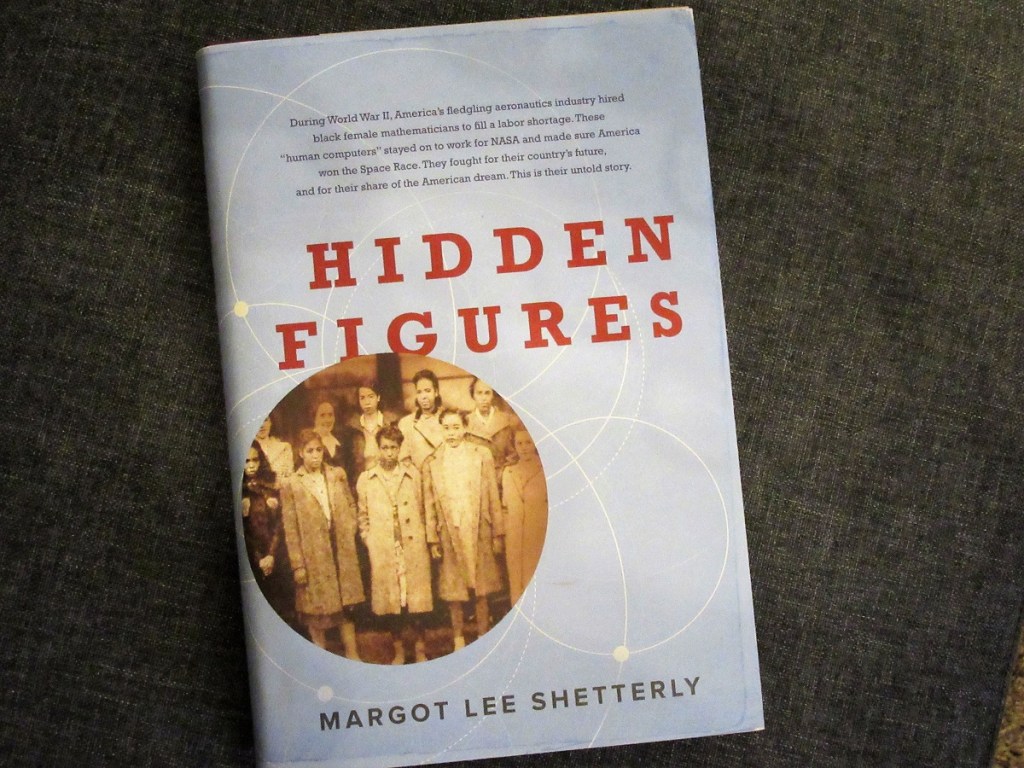
And I would add that African American women helped put astronauts on the moon in 1969.

Ed Wasserman expounded on his scientific work with pigeons and humans, comparing them on how they use their brains to solve problems. Are we better than pigeons? Maybe. Wasserman also gave many examples of how trial and error led to some surprising advances and innovations: the Ponseti method for treating clubfoot, the butterfly stroke in swimming, and Field of Dreams. His point is that the 3 Cs: consequence, context, and coincidence, play the larger role in many great achievements.

In other words, just keep pecking away at it.

Next Episode of Uncovering Hawkeye History Today

Get ready for the next episode of The University of Iowa’s virtual event of Uncovering Hawkeye History this evening from 4:30-6:00 PM. The title for this one is “Endless Innovation: An R1 Research Institution (1948–1997).” According to the official announcement, “This event series is designed to highlight notable elements of UI’s 175-year history and includes readings you can do in advance, notable guest speakers during each class, and the opportunity to ask questions each week.” You can register here.

Today’s zoom class again features university archivist David McCarty and 3 of the UI’s most talented innovators:

Bruce Gantz: 68BS, 74MD, 80MS, 80R), otolaryngology professor, the world’s first doctor to perform a robot-assisted cochlear implant surgery

Kevin Washburn: N. William Hines dean, College of Law

Ed Wasserman: experiential psychology professor

Sena and I plan to join the event this evening. I’m looking forward to hearing from Ed Wasserman, who has been studying the origins of innovation for decades. He studies pigeons to find out what really goes on in the ability of humans to come up with new ideas. Wasserman thinks it may have more to do with simple processes like trial and error then eureka type flashes of genius. In other words, we’re a lot like pigeons.

For some reason, this reminds me of an essay by James Thurber, “There’s an Owl in My Room.” It’s published in a book entitled The Thurber Carnival. The essay is all about Thurber’s impatience with a poem about pigeons written by Gertrude Stein. He thought it made pigeons way too complicated. I realized that I had never read the poem, so I went hunting for it on the web. I found a lot of comments about how ridiculous many people think “pigeons on the grass” is:

“Pigeons on the grass, alas. Pigeons on the grass, alas. Short longer grass short longer, longer shorter yellow grass. Pigeons, large pigeons on the shorter longer yellow grass, alas, pigeons on the grass.”—Gertrude Stein.

I had no trouble finding a short excerpt of Thurber’s scathing essay about it on the web.

Thurber’s closing sentence is “No other thing in the world falls so far short being able to do what it cannot do as a pigeon does. Of being unable to do what it can do, too, as far as that goes.”

You can see why some people might be offended by being compared to pigeons. On the other hand, he has written a book about the origin of the notion of creative genius, As If by Design: How Creative Behaviors Really Evolve (2021, Cambridge University Press).

I read an article on the web claiming that, scientifically speaking, there’s no difference between doves and pigeons. Sena and I have observed pigeons/doves with missing toes. That might indicate the trial and error of attempts to make nests with string, which gets wound around their feet, leading to auto-amputation. Some call it stringfoot, although it might just be bad judgment (see my YouTube description).

I can imagine what he might think about Ancient Aliens theories about how humans might come up with innovative inventions. Aliens seem to be particularly prone to crashing their space ships on our planet, making it easier for us to reverse engineer the working parts left strewn all over the ground. There’s something ironical about that. How can they be smart enough to manipulate our DNA and leave us clues about how to create inventions that advance our civilization when they can’t even stop falling out of the sky? On the other hand, maybe we just stole their technology right out from under their very small noses and slapped patents on them. So much for genius.

I’m sure Wasserman thought of all that.