I get a big kick of this video every time I see it. It’s a
YouTube about people who are 100 years old who are funny, wise, and talented. It’s
included on the SSM Health St. Mary’s Hospital YouTube channel. St. Mary’s
Hospital is in Madison, Wisconsin. I worked as a psychiatrist there very
briefly a long time ago.
However, the other thing this video brings to mind is
something sad. I see patients half my age (nowhere near 100) almost every day
in the hospital who are delirious, sometimes for prolonged periods of time.
According to the medical literature, they will be at risk for developing
dementia and not infrequently do. In fact, research tends to show that for
every day someone spends delirious, the risk for developing dementia goes up
35%. That makes delirium a life-limiting condition which can happen to anyone
at any age.
I got delirious after a routine colonoscopy, a procedure to
screen for colon cancer and other pre-cancerous tumors that used to be
routinely recommended for those who reach 50. It was the worst 50th birthday
present a guy could ever get.
I was delirious probably because I got sedated with a
combination of Versed and Demerol. The worst part of the condition probably
lasted only a couple of hours at most following the procedure. But I was sure
wiped out the rest of the day.
I would have a tough time picking out the worst part of the
whole process, the bowel prep (guzzling a big jug of GoLytely which should be
called GoHeavily) or enduring the post-procedure delirium. It was probably the
latter.
I don’t remember much. My wife tells me that I kept
repeating something about not taking NSAIDs. I think there was something about
that in the informed consent and education materials that got sort of stuck in
one of my neurons. I kept sliding down in bed while I was in the recovery room,
which I was in for a little while longer than is usually expected.
Preventing delirium is a vital job for health care
professionals everywhere. We can’t prevent each and every case, but there are
definitely things we can do to mitigate the problem. One of the most important
goals is to try to minimize or avoid the use of certain offending drugs such as
anticholinergic and sedative-hypnotic agents.
It’s also good to remember that the population at highest
risk for getting delirious is the elderly and those who already may have
cognitive impairment.
Preventing delirium, based on current literature, means first implementing non-pharmacologic multicomponent interventions. These may require a large cadre of volunteers. The best example is the Hospital Elder Life Program (HELP) at Yale, which is copyrighted by Dr. Sharon Inouye. Six of the most important features to address:
–Normalizing electrolytes such as sodium and keeping
patients well-hydrated
–Mobilizing patients as much as possible, including getting
immobilizing devices such as foley catheters removed as early as you can
–Making sure sensory aids such as eyeglasses and hearing
aids are available
–Ensuring that medications are monitored so as to minimize exposure to drugs that are anticholinergic or sedating.
Anyway, working on preventing delirium and minimizing its
impact is an ongoing challenge. Keep the goal in mind: We want as many people
as possible to live well to 100.
Big day on the psychiatry consult service. So, this is a short post today because I’m pooped. I logged 2.8 miles and 35 floors on the step counter and here’s a picture to prove it.
Step counter log today. I’m feeling it tonight.
The other bit of news is that the cardinal hatchlings are here—at least two of them anyway. One egg is still unhatched. The house finches are still in their eggs. And there are no eggs in the robin’s nest yet.
baby cardinals and one egg to hatch…
We were a little surprised. We weren’t expecting them to
hatch for about another week.
I’m back in the saddle again after a brief hiatus according
to the terms of my phased retirement contract. During my time away, I thought
about what a short introduction to Consultation-Liaison (C-L) Psychiatry might
include to give medical students and other trainees a snapshot look at what CL
psychiatrists encounter in their work in a busy general hospital.
As I considered what to include, it occurred to me that
common consult questions typically could be classified into three basic groups:
Manage Crises:
This often involves assessment of medically ill patients for whom there are
concerns about suicide or violence toward others, including health care
professionals.
Manage Medications:
Frequently, I get questions about how to manage psychiatric medications, often
in patients who are being treated with multiple medications; or need
authorization for clozapine (an atypical antipsychotic which usually must be
authorized initially by a psychiatrist); or need adjustment of medications in
the setting of medical problems like cardiac disease or bowel resection (in
which absorption might be affected).
Manage Behavior:
This doesn’t always involve violent behavior but may include challenging and
potentially disruptive acting out in the setting of delirium, or associated
with patients who might have personality disorders or abnormal illness
affirming disorders.
These broad categories make up the biggest share of the concerns my colleagues in general medicine hospitalists and surgery have about a significant proportion of patients in a large hospital.
Short video illustrating the Dirty Dozen in broad overview.
I’m back on my soap box about Maintenance of Certification (MOC) again. Sidney Weissman, M.D. remarked in a letter to the editor of Psychiatric News (April 19, 2019 issue, Vol. 54, No. 8) on the rising numbers of graduating medical students who match in psychiatry residency slots. Many will graduate from these programs into private practice clinics which will emphasize seeing large numbers of patients primarily for medication management. Psychiatric hospitalists like me are uncommon, which tends to decelerate the movement toward integrating medical and psychiatric care and limits the application of psychotherapy which psychiatrists have historically done but which has been replaced by medication management.
While the match
numbers continue to grow in psychiatry, the dissatisfaction with regulatory
pressures from certification boards like the American Board of Psychiatry and
Neurology (ABPN) also continue to frustrate psychiatrists who are compelled to
oppose the Maintenance of Certification (MOC). Indeed, another prominent story
in the psychiatric news is the class action lawsuit against the ABPN filed by
two psychiatrists, alleging that the MOC requirements are illegal and
anticompetitive. See the story in the April issues of Clinical Psychiatry News
and Psychiatric News.
Along with the
increasing numbers of psychiatrists who are retiring (more than 60% of
psychiatrists are over the age of 55), and I interpret the increasing
Psychiatry match numbers with cautious optimism at best.
I have always
advocated for the principle of life-long learning for physicians and opposed
MOC because, in my opinion, it’s a drag on the progress of fulfilling the
principle. The reason is that there is very little evidence supporting the
certification boards’ assertions that MOC makes better physicians.
I have supported the position of Dr. Paul Teirstein, MD, one of the leading physicians spearheading the National Board of Physicians and Surgeons (NBPAS), and I’ve recommended that the University of Iowa Hospitals and Clinics (UIHC) consider accepting NBPAS as an alternative to the American Board of Medical Specialties (ABMS) MOC. Three Iowa hospitals already do so.
I’ve been in phased retirement and expect to be fully retired by 2020. Because of that, I decided not to seek continued certification through either NBPAS or ABMS. I chose not to pay the fee required by the American Board of Psychiatry and Neurology (ABPN) to sit for the recertification examination. Consequently, that resulted in my being identified as “Certified” although “Not Meeting MOC Requirements.” This was data about me as a physician which was readily available to the public and other organizations. I think it’s unfortunate that this practice tends to convey the impression some physicians are less qualified than others based on their certification status alone.
My current listing on the ABPN web site.
Now I’m listed on the ABPN as “Not Certified” of course. Ironically, my Performance in Practice (PIP) module on delirium, the Delirium Clinical Module is still there. You can find it just by typing the word “delirium” in the search field. In my previous blog, The Practical C-L Psychiatrist, there was virtually no interest in such a module, at least judging from my far from scientific poll about 6 years ago. Yet it’s one of the few modules available on the ABPN website that C-L psychiatrists would welcome.
Low interest in an ABPN MOC Delirium PIP activity in 2013
I’m aware that
declining to sit for what would have been the last MOC recertification
examination in my career might not be viewed as much of a protest, especially
since I’m retiring.
I’m also aware that
many physicians are not in a position to decline participation in MOC. Some
organizations and health insurers demand it, prompting several physicians and
state legislators to collaborate toward adopting or consider adopting laws to
discourage it.
To be fair, MOC is
often not the only criterion that organizations use to ensure patients are
getting the best health care available. And there are many who work diligently
to improve the MOC process and believe it works. Enhancing the motivation for
physicians to participate in MOC is complicated and we need to consider
different practice environments, physician burnout, and financial incentive
programs which have typically attracted few physicians overall.
It’s difficult to
find much information on PubMed about MOC, whether you search using the Most
Recent or the Best Match filter. In both, I found a paper by a doctor which
appeals to my sense of humor as well as to my sense of fair play. It was
written by a Singapore physician, for whom the dollar cost of recertification
was over $10,000. His nerves took a beating as well as his bank account.
Speaking of banking, here is the authors’ final observation:
Physicians
should be able to choose a programme that best fits their scope of practice.
However, it is likely that, besides the efforts put in by physicians themselves
as a commitment to professionalism, the economic price will be borne by
patients in the name of public assurance of medical competence and safety. If
the burden becomes too onerous, one can always become a banker. —
Teo, B. W. and S. Subramanian (2015). “Maintenance of certification: the
price of medical professionalism is $10,108.05, two weeks leave and five white
hairs.” Singapore Med J 56(4): 181-183.
I’m a very busy consultation-liaison
psychiatrist in a large academic medical center. I think there are alternatives
to MOC which don’t waste my time with modules and tests which typically are not
relevant to my practice.
For example, I have
followed the model of the practice-based learning and improvement competency at
the University of Iowa by using what Drs. William R. Yates and Terri Gerdes
called the “problem-based learning” case conference. The abstract for their
paper describes it:
“Problem-based
learning (PBL) is a method of instruction gaining increased attention and
implementation in medical education. In PBL there is increased emphasis on the
development of problem-solving skills, small group dynamics, and self-directed
methods of education. A weekly PBL conference was started by a university
consultation psychiatry team. One active consultation service problem was
identified each week for study. Multiple computerized and library resources
provided access to additional information for problem solving. After 1 year of
the PBL conference, an evaluation was performed to determine the effectiveness
of this approach. We reviewed the content of problems identified, and conducted
a survey of conference participants. The most common types of problem
categories identified for the conference were pharmacology of psychiatric and
medical drugs (28%), mental status effects of medical illnesses (28%),
consultation psychiatry process issues (20%), and diagnostic issues (13%).
Computerized literature searches provided significant assistance for some
problems and less for other problems. The PBL conference was ranked the highest
of all the psychiatry resident educational formats. PBL appears to be a
successful method for assisting in patient management and in resident and
medical student psychiatry education.”
This is now called the Clinical Problems in Consultation-Psychiatry (CPCP) and trainees from medical students to residents participate as presenters. The format is also used as a framework for the Consultation-Liaison Psychiatry Interest Group at Iowa. There are lively discussions at these meetings, to which colleagues from other medical specialty departments are invited. The model for this was adapted from that reported by Puri and colleagues.
Yet these and other
creative practice-based learning efforts which are relevant to our practices
are not on the approved product list for CME and Self-Assessment at the ABPN.
To be sure, one
Performance in Practice (PIP) clinical module (mentioned above) that I and one
of our residents submitted to ABPN was approved. This was the Delirium Clinical
Module, for which we received congratulations from leaders of the Academy of
Consultation-Liaison Psychiatry (ACLP). This is a clinically relevant exercise
which could be useful to many medical specialists, not just psychiatrists. It would
also be important for enhancing patient safety—which is the whole idea of
practice-based learning.
I have worked with the Iowa Medical Society (IMS) to get resolutions adopted as IMS Policy which support the principle of lifelong learning and which oppose both MOC and Maintenance of Licensure (MOL).
The idea that if doctors don’t develop a
system for monitoring continued competence in psychiatry, other groups will do
it for us likely comes from what are essentially cases of medical malpractice.
This was probably what was meant by the ABPN response to my criticisms of the
MOC process several years ago, which was that part of the reason for MOC was
the public’s demand for a way to hold physicians accountable for harming
patients.
One of the papers citing this problem was by
Shaw and colleagues. The authors mention “damaging high-profile cases” one
example of which triggered the Bristol Inquiry in the United Kingdom leading to
the “development of a compulsory integrated regulatory program with oversight
in all levels of medical care from hospital systems to the practice of
individual physicians.
This is the United Kingdom’s revalidation
program, which is similar to MOC or perhaps more properly, MOL.
The irony is that the
American Board of Medical Specialties (ABMS) and member specialty boards
including the ABPN claim the American version of MOC is a voluntary program and
that this is “self-regulation.” It’s not clear who else would “do it for us”
though—some government agency? It’s hardly necessary when, as Dr. Paul Mathews
reported recently, some private insurance payers require participation in MOC.
He’s a voluntary board member of the National Board of Physicians and Surgeons
(NBPAS), which is a newly established alternative to the ABMS which doesn’t
require MOC participation:
“WHAT DO PRIVATE PAYERS GAIN FROM REQUIRING
MOC?
As a volunteer board member of NBPAS (no
compensation or honorarium as opposed to the salaries of ABMS board members,
which can range from $300,000 to greater than $800,000), I have often wondered
why private payers require MOC when Medicare does not require board
certification or MOC. The answer is quite disturbing. Private payers actually
participate in certification, which is issued by the National Committee of Quality
Assurance (NCQA). Margaret E. O’Kane is the founder and president of the NCQA,
and she is also a member of the ABMS Board of Directors. The NCQA requires
private payers to require physicians to participate in MOC in order to be NCQA
certified. Thus, anyone contracting with a private payer will require MOC. In
the conflicted case of Ms. O’Kane, she profits from the NCQA requiring private
payers to require physicians to participate in MOC, and then she profits again
from her ABMS position when said physicians must pay to comply with MOC
requirements”
This raises another concern about MOC, which
is the ever-present cloud of suspicion the ABMS and some of the member
specialty boards are under, especially the American Board of Internal Medicine
(ABIM).
According to Charles
Cutler, M.D., M.A.C.P., in the winter 2016-17 issue of Philadelphia Medicine,
Philadelphia County Medical Society, in an issue entitled “Is The ABIM Too
Broken to Fix?” article “A Message to the ABIM: Reign in Spending and Stop
Turning Staff into Millionaires,” reforms should in fact include doing just
what the title says and much more.
Board executives, especially CEOs, make what
appear to be enormous six-figure incomes from the MOC programs, including Dr.
Larry Faulkner, M.D., the President and CEO of the ABPN who earned over
$900,000 in 2014 according to IRS Form 990.
Those with a low
opinion of the adage about “…the wise old doctor who improves with experience…”
should probably be shared with those board leaders who made the arbitrary
cutoff date for requiring participation in MOC, grandfathering physicians board
certified prior to 1994, thereby exempting them from the program.
Participation in MOC would make more sense if there were credible research evidence that it improves patient outcomes. However, the studies tend not to support this conclusion.
And MOC is not
supported by most physicians, according the results of a Mayo Clinic
Proceedings survey, indicating that “Dissatisfaction with current MOC programs
is pervasive and not localized to specific sectors or specialties. Unresolved
negative perceptions will impede optimal physician engagement in MOC.”
Finally, any
suggestion to sign up right away for MOC probably should be preceded by another
important action, which is to first check with your institution to see if MOC
participation or, indeed, board certification itself, is a condition of
employment. It may not be.
What are the
alternatives to the MOC approach? They depend on one’s level of attachment to
keeping some sort of certification status.
There is the
alternative National Board of Physicians and Surgeons (NBPAS), which was
launched in 2015 and offers board re-certification without MOC or
recertification examination requirements. There is a nominal fee and CME
requirement. A previous ABMS certification is also required, but if that has
lapsed one can still obtain certification by submitting a higher number of CME
credits.
NBPAS leaders are
very much aware that certain private insurance payers require MOC participation.
It was the top priority for NBPAS in 2017. See their website for full details
about their re-certification process.
Physicians could simply forgo MOC or alternative certifications, which would probably raise more anxiety. For example, if one simply stops sending money to the ABPN toward MOC requirements and declines to sit for the recertification examination, then after the general board expires one would be identified as “Certified-not meeting MOC requirements.” But after the examination date passes, you’re Not Certified. The prudent diplomate should first check with ABPN for clarification of specific details and should check their employer’s expectations and insurance payer rules about MOC.
In my opinion, there
ought to be a choice to participate in MOC or some other vehicle for fulfilling
the principle of lifelong learning. Those who want MOC should keep it. Those
who don’t should be allowed to continue using the method they’re most
comfortable with for maintaining their knowledge and clinical skills, including
CME and other creative methods for staying current with the medical literature.
Our patients deserve
at least this much.
“It is far better to light the candle than to curse the darkness”—attributed to William L. Watkinson in a 1907 sermon according to Quote Investigator.
William L. Watkinson
References:
Pato, M. T., et al. (2013). “Journal club
for faculty or residents: A model for lifelong learning and maintenance of
certification.” International Review of Psychiatry 25(3): 276-283.
Brooks, E. M., et al. (2017). “What
Family Physicians Really Think of Maintenance of Certification Part II
Activities.” J Contin Educ Health Prof 37(4): 223-229.
Tieder, J. S., et al. (2017). “A Survey
of Perceived Effectiveness of Part 4 Maintenance of Certification.” Hosp
Pediatr 7(11): 642-648.
Stoff, B. K., et al. (2018). “Maintenance
of Certification: A grandfatherly ethical analysis.” Journal of the
American Academy of Dermatology 78(3): 627-630.
Glover, M., et al. (2017). “Participation
and payments in the PQRS Maintenance of Certification Program: Implications for
future merit based payment programs.” Healthcare.
Teo, B. W. and S. Subramanian (2015).
“Maintenance of certification: the price of medical professionalism is
$10,108.05, two weeks leave and five white hairs.” Singapore Med J 56(4):
181-183.
More References:
1. Boland, R., MD, Maintenance
of Certification, in Psychiatric Times. 2017, UBM Medica.
2. Knoll, J.L., IV, MD;
Cotoman, Dan, MD, Maintenance of Certification and Self-Mortification, in
Psychiatric Times. 2017, UBM Medica.
3. Shanafelt, T.D., L.N.
Dyrbye, and C.P. West, Addressing physician burnout: The way forward. JAMA,
2017. 317(9): p. 901-902.
4. Bright, R.P. and L. Krahn,
Value-added education: enhancing learning on the psychiatry inpatient
consultation service. Acad Psychiatry, 2015. 39(2): p. 212-4.
5. Yates, W.R. and T.T.
Gerdes, Problem-based learning in consultation psychiatry. Gen Hosp Psychiatry,
1996. 18(3): p. 139-44.
6. Puri, N.V., P. Azzam, and
P. Gopalan, Introducing a psychosomatic medicine interest group for psychiatry
residents. Psychosomatics, 2015. 56(3): p. 268-73.
7. Shaw, K., et al., Shared
medical regulation in a time of increasing calls for accountability and
transparency: comparison of recertification in the United States, Canada, and
the United Kingdom. JAMA, 2009. 302(18): p. 2008-14.
8. Mathew, P., MD, MOC and
Physician Burnout: Treating the Cause, Not the Symptoms, in Practical
Neurology. 2016.
9. Cutler, C., MD, MACP, A
Message to the ABIM: Reign in Spending and Stop Turning Staff into Millionaires,
in Philadelphia Medicine: The Official Magazine of the Philadelphia County
Medical Society Philadelphia Medicine 2016, Hoffmann Publishing Group, Inc.
10. Gray, B.M., et al.,
Association between imposition of a Maintenance of Certification requirement
and ambulatory care-sensitive hospitalizations and health care costs. JAMA,
2014. 312(22): p. 2348-57.
11. Hayes, J., et al.,
Association between physician time-unlimited vs time-limited internal medicine
board certification and ambulatory patient care quality. JAMA, 2014. 312(22):
p. 2358-63.
12. Cook, D.A., et al.,
Physician Attitudes About Maintenance of Certification. Mayo Clinic
Proceedings, 2016. 91(10): p. 1336-1345.
Long day on the C-L Psychiatry service. I logged 2.8 miles and 33 floors on my step counter. I barely had time to eat lunch. This post is going to be short.
We were treated to outstanding presentations on fascinating topics over the last couple of days and they were given by top-notch medical students. One of them summarized the literature on mental illness in the population of incarcerated women. The other was a great overview of catatonia.
The students put a lot of work into them. The data search was obviously thorough and their presentations were polished. They had very well organized PowerPoint slides.
They were among the best examples of Clinical Problems in Consultation Psychiatry (CPCP) learning sessions in recent memory. The CPCPs were a frequent feature in my previous blog, The Practical C-L Psychiatrist.
The CPCP was developed by a former teacher of mine, William R. Yates, MD. He was the head of the C-L Psychiatry service years ago before moving on to the University of Oklahoma in Tulsa.
He’s a part time research psychiatrist for the assessment team at the Laureate Institute for Brain Research. They do research diagnostic assessments for a variety of imaging, genetic and biomarkers studies in mood, anxiety and other brain disorders.
The CPCP format is:
A weekly case conference held Wednesdays from 8:00 a.m. to
approximately 8:45 a.m. Each week, a case is selected from the Daily Review
Rounds Records to illustrate a clinical problem for the next week’s
meeting. The residents are assigned dates when they rotate. The medical
students are welcome and even encouraged to participate as well.
This is a practical way to approach teaching the
Practice-Based Learning & Improvement Core Competency. This helps develop
the habit of reflecting on and analyzing one’s practice performance; locating
and applying scientific evidence to the care of patients; critically
appraising the medical literature; using the computer to support learning and
patient care; facilitating the education of other health care professionals.
This is applying principles of evidence-based medicine (EBM) to clinical
practice.
Evidence-based
medicine is a systematic approach to use up to date information in the
practice of medicine
Skills
are needed to integrate the available evidence with clinical experience
and patient concerns
Application
and evaluation of EBM skills will provide a frame-work for life-long
learning.
Self-evaluation is vital to the successful practice of EBM:
Am
I asking answerable clinical questions?
Am
I searching the literature?
Am
I becoming more efficient in my searches?
Am
I integrating my critical appraisals into my practice?
The assigned resident is responsible for searching the
literature and selecting one or two teaching papers for the conference.
Presentations will begin with a review of the case, followed by a summary of
the references with subsequent round table discussion.
Circulate copies of 2-4 pertinent articles to team members
including psychiatric nurses and faculty. A copy machine is available in the
departmental administration office. Consult staff can also assist with
obtaining copies.
Presentations begin with a 5-minute summary of the case with discussion of both psychiatric and medical aspects of evaluation and management. The remaining time is spent summarizing the pertinent data in the articles. Residents and medical students are encouraged to use the case conference material as preparation for submitting a case report or letter to the editor.
Bill and a former chief resident of psychiatry, Dr. Terri Gerdes, published a paper about the CPCP (then called problem-based learning in consultation psychiatry) in 1996:
Yates, W. R. and T. T. Gerdes (1996).
“Problem-based learning in consultation psychiatry.” Gen Hosp
Psychiatry 18(3): 139-144.
Abstract: Problem-based learning (PBL) is a method of instruction gaining increased attention and implementation in medical education. In PBL there is increased emphasis on the development of problem-solving skills, small group dynamics, and self-directed methods of education. A weekly PBL conference was started by a university consultation psychiatry team. One active consultation service problem was identified each week for study. Multiple computerized and library resources provided access to additional information for problem solving. After 1 year of the PBL conference, an evaluation was performed to determine the effectiveness of this approach. We reviewed the content of problems identified, and conducted a survey of conference participants. The most common types of problem categories identified for the conference were pharmacology of psychiatric and medical drugs (28%), mental status effects of medical illnesses (28%), consultation psychiatry process issues (20%), and diagnostic issues (13%). Computerized literature searches provided significant assistance for some problems and less for other problems. The PBL conference was ranked the highest of all the psychiatry resident educational formats. PBL appears to be a successful method for assisting in patient management and in resident and medical student psychiatry education.
The year that was published was the first year of my appointment to the Clinical Track faculty in the department of Psychiatry at The University of Iowa Hospitals and Clinics. I learned a lot from Bill.
And I’m confident that the students who presented their own CPCPs this week will teach many other trainees in their careers.
The cardinal nest is pretty much done—no eggs yet, though. At least we think it’s a cardinal nest. It looks typical according to experts; loosely woven of twigs, leaves, stucco, and ponderosa pine accents. They’re pretty fussy about us snooping around the backyard evergreen tree they chose to build a home in.
Any day now, we’re hoping to see a clutch of eggs, bluish
white with brown markings. Or maybe pale green with brown-lilac spots. Or
possibly whitish to pale bluish or greenish white, marked with brown, purple,
and gray. Or Hawkeye black and gold. It all depends on which guidebook you read,
I guess.
I’m gradually getting back into bird watching and spending
less time with my head at the hospital (“Earth to Jim!”). Doctors learn to
spend all their time either on the wards or in the clinic. It reminds me of a
couple of scenes from Men in Black (MIB) II.
As Agent J walks into the MIB complex at Battery Park, the
elevator dude says “Don’t you ever go home? Agent J says “Nope.”
Later he drops into Zed’s office and asks, “What you got for
me?”
Zed replies, “Look. See those guys in black suits? They work
here. We got it covered.”
That’s how physicians can get after years of acculturation
into the driven doctor model. Often enough, I take most of the work away from
the trainees, when they’re not looking. And I take my work home—that’s called
pajama time.
Hey, those dudes work here too. I have a tendency to see
myself as almost indispensable, which makes it hard to envision retirement at
times.
I have to keep reminding myself that I’m not the only doc who can do my job. The next generation of doctors are eager and ready. They deserve a chance. But I sometimes catch myself telling old war stories about how hard it was when I was a resident or a junior attending.
“I remember when I had to walk 40 miles to work in the driving
blizzard alternating with blazing heat (it’s Iowa) to get to my 6 x10 foot
office in the basement to stoke the fire in the pot-bellied stove for coffee
and grits at 4:00 in the morning, before the damn birds even get up, milk a few
dozen cows in the atrium, chase the pigs out of the operating rooms and then go
see about a hundred or so consultations before 7:00 in the morning I tell you, then
write notes until midnight, be on call until 3:30 the next morning and do it
all over again. What do you guys know about work?”
I may exaggerate a little bit. Usually there weren’t that
many cows in the atrium.
It can be difficult to unwind from the physician’s
treadmill. But as time goes on, I look forward to seeing the birds build nests,
to see the brand-new eggs, the ugly chicks who look like little dinosaurs until
the feathers grow out. I can pay more attention to the world outside the
hospital, where the new doctors are stoking the fire.
I’m a big fan of the Men in Black movies. I’m not going to
tell you how many times I’ve watched them on TV (78 million and if that number
reminds you of a scene from Men in Black, you’re just as much a fan as I am, if
not worse). One of my favorite lines is when Zed says to Edwards, “Edwards.
Let’s put it on.” Edwards asks, “Put what on?” And Zed says, “The last suit
you’ll ever wear.”
Today, I asked my secretary to order some new white coats for me. I went down to the Uniform Shop and checked on it. All they need is the requisition and they’ll get it.
Since I’m retiring after this year, these are the last white coats I’ll ever wear. There’s no Zed to tell me that. The Uniform Shop staff person won’t know it when the coats arrive—unless I tell her, of course.
I found a very long, involved discussion on the web about the meaning of Zed’s “last suit you’ll ever wear” statement. All I got out of it was that some people take that movie way too seriously.
But for me the last white coat I’ll ever wear means exactly that. I’m going to wear the coat until I retire (in about 14 months according to the countdown)—and then I’m never going to wear white coats again.
I can almost hear certain persons snickering in the background. I suspect there may be a few bets about this retirement thing being another temporary leave-taking, like the times I left for private practice and came back, sort of like bringing Agent K back after neuralyzing him at his request. He really did retire—temporarily.
But nobody is going to neuralyze me. I’ll keep a lot of
memories about my time as a Consultation-liaison (C-L) Psychiatrist, even
though some of them are sort of like Agent K’s memories of being swallowed by a
giant interstellar cockroach.
However, that reminds me of a few thoughts I have about institutional memory. I’ve mentioned my concerns about being practically the only C-L Psychiatrist in a pretty big hospital and retiring. I’m a geezer, but I know a lot about the ins and outs and moving parts and what it means to be a one-man hit-and-run fireman psychiatric consultant in a large academic medical center.
Institutional memory…
Institutional memory has been defined as “the collective
knowledge and learned experiences of a group. As turnover occurs among group
members, these concepts must be transitioned. Knowledge management tools aim to
capture and preserve these memories.”
Institutional memory can also be characterized briefly as:
Accumulated knowledge, skills, “this is the way we do things”
Some of it gets hardened into policies and procedures
Much of it “…resides in the heads, hands, and hearts of individual managers and functional experts.”- “How to Preserve Institutional Knowledge” by Ron Ashkenas, Harvard Business Review, 2013
Too much of anything for too long can be bad, including institutional memory
The bullet point that Ron Ashkenas makes above is relevant
to employers of baby boomers like me who know informal procedures, and have the
skills (and they chose us so they recognized the skills, so don’t be calling us
sport, feisty, hon, sweetie, or anything like that) and knowledge that’s in our
heads but may not be stored anywhere else.
That makes the baby boomer retirement phenomenon a real challenge. About 10,000 boomers will reach the age of 65 every day for the next 15 years. And most of us aren’t kidding around. There’s no way to just deneuralyze us to make us come back. You can’t make it happ’n Cap’n.
There are ways to package institutional memory into handy
things like mentoring partnerships, knowledge wikis, snappy videos (just shoot
the damn thing!) and other media that are easily accessible and geared for the
adult learner.
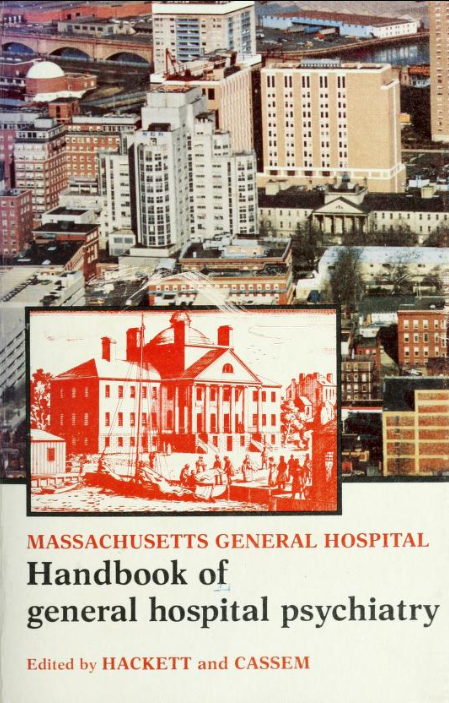
You can’t beat the Internet Archives for history. You can borrow and read the first edition of the Massachusetts General Hospital Handbook of general hospital psychiatry published in 1978, just like checking it out from a public library. Read the chapter, “Beginnings: liaison psychiatry in a general hospital.” You can learn from Dr. Thomas P. Hackett about the difference between a consultation service and a liaison service:
digital institutional memory
“A distinction must be made between a consultation service
and a consultation liaison service. A
consultation service is a rescue squad.
It responds to requests from other services for help with the diagnosis,
treatment, or disposition of perplexing patients. At worst, consultation work is nothing more
than a brief foray into the territory of another service, usually ending with a
note written in the chart outlining a plan of action. The actual intervention is left to the
consultee. Like a volunteer firefighter,
a consultant puts out the blaze and then returns home. Like a volunteer fire brigade, a consultation
service seldom has the time or manpower to set up fire prevention programs or
to educate the citizenry about fireproofing.
A consultation service is the most common type of psychiatric-medical
interface found in departments of psychiatry around the United States today.
A liaison service requires manpower, money, and
motivation. Sufficient personnel are
necessary to allow the psychiatric consultant time to perform services other
than simply interviewing troublesome patients in the area assigned. He must be able to attend rounds, discuss
patients individually with house officers, and hold teaching sessions for
nurses. Liaison work is further distinguished from consultation activity in
that patients are seen at the discretion of the psychiatric consultant as well
as the referring physician. Because the
consultant attends social service rounds with the house officers, he is able to
spot potential psychiatric problems.”—T. P. Hackett, MD.
By the way, have you seen my YouTube Channel? I’ve been beaming me up into educational videos for residents and medical students for a while now.
Next year I’ll be
doffing the white coat for good—but I’ll be on THIS planet.
Reference:
Hackett,
T. P., MD (1978). Beginnings: liaison psychiatry in a general hospital. Massachusetts
General Hospital: Handbook of general hospital psychiatry. T. P. Hackett, MD
and N. H. Cassem, MD. St. Louis, Missouri, The C.V. Mosby Company: 1-14.
OK, it was a long day on the general hospital psychiatry consultation service. This post is going to be short. I put 3.4 miles and 29 floors on my step counter today and I’m feeling every one of them right now. It’s almost 10:30 at night and I’m trying to find a way to end the evening on a high note before I hit the sack .
I found it by listening again to the University of Iowa Shortcoat Podcast (via Radio Public) interview with a former internal medicine resident I had the pleasure of working with, Dr. Keenan Laraway. He’s doing a Nephrology fellowship at the University of Pennsylvania.
The title of the podcast is “Night Float: Finding Mentors, Being a Mentor.” Although I’ve never thought of myself as a mentor, apparently Keenan thought I was one for him.
Dr. Keenan Laraway on mentorship.
Listen to the whole podcast, but just to feed my ego, won’t you please fast forward to about 10 minutes, 50 seconds and hear what Keenan has to say about Dr. Jim Amos?
It made my day. He gave me the highest compliment he can give anybody, which is that I think like an internist. He says that I taught him a whole lot about what it means to be a doctor.
That, more than anything, is going to be the hardest thing to leave when I retire.
I think a sense of humor is a wonderful thing. I was the
class clown in my youth. I remember my English teacher, Miss Piggott, wrote in
my report card that I was “A little too exuberant.”
Actually, I was a great deal too exuberant. My sense of humor tends to fall into the broad category of what author Dave Barry would call “booger jokes.” By the way, I just finished his latest book, Lessons from Lucy: The Simple Joys of an Old, Happy Dog. I highly recommend it. He mixes a little wisdom in with the booger jokes.
Dave Barry can do more than booger jokes.
As a psychiatrist, I’ve learned to look for a sense of
humor, exuberant or not, in the patients I’ve met. I point it out to them when
I think I detect it. They usually like hearing that. Only a very few are
nonplussed.
One of my teachers was George Winokur, MD, who everyone knows was a giant in psychiatric research. Dr. Winokur was the department chair at University of Iowa Hospitals and Clinics from 1971 to 1990 and had a unique and memorable style. I thought he had a fair amount of exuberance. He had a rolling, sort of gravelly laugh, especially during rounds when he would sometimes make a point of reminding trainees like me that we had a lot to learn, “You all don’t know how to diagnose Somatization Disorder!” I made sure I learned how.
When Winokur was department chair, he created a set of
“commandments” regarding personal behavior and comportment that have stood the
test of time. I don’t know if anyone else has tried to ensure that Winokur’s 10
Commandments be remembered, maybe even cast in a pair of stone tablets. Read
them and follow them.
Winokur’s 10 Commandments
Thou shalt not sleep with any UI Psychiatry
Hospital patient unless it be thy spouse.
Thou shalt not accept recompense for patient
care in this center outside thy salary.
Thou shalt be on time for conferences and
meetings.
Thou shalt act toward the staff attending with
courtesy.
Thou shalt write progress notes even if no
progress has been made.
Thou shalt be prompt and on time with thy
letters, admissions and discharge notes.
Thou shalt not moonlight without permission
under threat of excommunication.
Data is thy God. No graven images will be
accepted in its place.
Thou shalt speak thy mind.
Thou
shalt comport thyself with modesty, not omniscience.
More evidence that a sense of humor is prevalent amongst psychiatrists is the work some residents put into making a video (in two parts) about managing violent patients. I realize that the recent news stories about health care professionals often being the victims of violence from patients might make some think this is nothing to joke about. They were not joking. The video makes a good case for a method to manage the violent patient. It just makes it with an exuberant sense of humor.
Violent behavior by patients in the general hospital is often
caused by delirium. The proxy for delirium in the form of violence could be
what is called the “Code Green” here at our hospital.
The Code Green team at our hospital consists of a group of
people specially trained to use non-violent measures to help patients who are
violent get under control in order to minimize the risk of injury to themselves
and others. These events are often intense encounters in patient’s rooms,
hallways, lobbies, and other places in the hospital where patients who are
confused and out of control can wander. First and foremost, we try to contain
the patient to maintain everyone’s safety, and then ascertain why the patient
is confused and at risk for imminent violence or already perpetrating acts of
violent behavior toward themselves and others. This has to be done quickly so
as to minimize injury.
One mnemonic, described in my chapter in our book, Psychosomatic Medicine: An Introduction to Consultation-Liaison Psychiatry is [1]:
1. Amos, J.J., M.D., Assessment and management of the violent patient, in Psychosomatic Medicine: An Introduction to Consultation-Liaison Psychiatry, J.J. Amos, M.D., and R.G. Robinson, M.D., Editors. 2010, Cambridge University Press: New York. p. 58-63.
Containment before
Assessment before
Non-violent
Intervention before
Take down
Shameless plug…
The so-called CAN IT mnemonic is a reference mainly to
containment before all else in order to protect everyone involved in a Code
Green situation. An excerpt from the chapter on the importance of containment
is:
“Containment refers to ensuring that you and the patient both feel relatively safe in the assessment area. Preferably, both of you should have easy access to the door for escape if necessary. At first, it may seem odd to recommend letting the patient escape from the room, but the point is not to force the patient to run over you to get to the door.
Another issue of containment is to ensure that the patient gives up any weapons before you agree to do the evaluation. Sometimes, offering food or drink (not hot enough to injure if hurled in your face) will help set a non-threatening atmosphere. It’s helpful to avoid making intense or prolonged eye contact with the patient, because this may be viewed as threatening.
Always make sure that plenty of other people are available to help you if a take-down situation develops.
Containment under these conditions sometimes is achievable by simply being honest with the patient who is still able to hear you by admitting that he/she is saying or doing things that make you afraid. This may seem counter-intuitive. But, provided it’s delivered calmly as a statement followed by reassurance that you and everyone else involved are committed to maintaining the safety of all persons present (including the patient), this may capitalize on the patient’s own fear of losing control by assuring that you’ll do everything in your power to keep the lid on the situation.”
You can see the exuberant YouTube videos below, illustrating
these principles made by talented trainees in our psychiatry residency program
in 2008.
In 2009, Dr. David Mair, MD was the producer and director of the video. I see he’s now with Innovative Psychological Consultants (IPC) in Maple Grove, MN (they get a lot of snow up there!). Below is his introduction to the videos:
Early in my training, I didn’t quite know how to react with potentially
violent patients. No amount of knowledge
of medicine, physiology, or the DSM provided me the skills to address these
situations. Though we had excellent
training during orientation, I really learned by observing skilled clinicians,
and through my own encounters, both good and bad. This was exemplified during my rotation in
consultation-liaison psychiatry, when working with Dr. Amos, to learn his
logical, step-wise approach, see him in these problematic scenarios, and to
practice what I had learned.
In making this educational video, I wanted to give incoming residents a
quick way to make these observations, and present it to them in a way that was
both useful and entertaining. It helped that I had a cadre of multi-talented
peers and a faculty supervisor who recognized the utility of such a
project. Though managing these patients will
be an eternal source of anxiety for all psychiatrists, my hope is that with
this video, they will feel just a little better prepared. —David Mair, MD.
I’m noticing something about my readiness for retirement.
Certain activities are starting to be at least as interesting as my work as a
consultation-liaison psychiatrist at the hospital—maybe even more so.
For example, my wife and I are hoping that the cardinals
will come back to our backyard evergreen tree. They were building a Hoorah’s
Nest in there a week ago, which I took a picture of and then they left when they
saw us spying on them. This evening, my wife noticed they were back. We rushed
to the window (me with camera in hand) and I swear, they peered at us with
intense suspicion. Pretty soon, they flew off in a huff.
They are among the most stand-offish backyard birds I’ve
ever seen.
Why is this so important? It’s because I am getting so
absorbed in birdwatching again now that I’m in phased retirement that I find it
fascinating enough to look forward to more than going to work. I think that’s a
sign I’m finally beginning to adjust to retirement.
I spent 4 years in medical school, 4 years in residency, and
have worked for more than 23 years as a psychiatrist, mostly as a general
hospital consultant. Nothing used to jazz me as much as running around the
hospital, seeing patients in nearly all specialties, evaluating and helping
treat many fascinating neuropsychiatric syndromes, teaching medical students
and residents, and I even wrote a book.
On the other hand, I don’t want to hang on too long. When
people ask me why I’m retiring so early (“You’re so young!”), I just tell them
most physicians retire at my age, around 65. I also say that I want to leave at
the top of my game—and not nudged out because I’m faltering.
I saw a blog post that identified that reason for retirement. It was entitled “When Physicians Reach Their Use-By Date,” by James Allen, MD. The site is identified as “Not secure” unfortunately, so I’m not giving a link to it. However, the web site is The Hospital Medical Director and it’s sponsored by Ohio State University–so it’s probably safe.
Now if you do read Dr. Allen’s post, you’ll think I’m
flattering myself as a “master clinician.” I don’t think of myself that way. I’m
actually more of a demigod.
I’m just kidding. The descriptions of how physicians finally reach retirement sound fascinating. I’m not sure I could just abruptly stop—that’s why I chose phased retirement. Staying on as a preceptor is not appealing to me because I liked the clinical action too much. I’m actually afraid of becoming someone who knows only medicine. It’s one of the best reasons for me to retire sooner rather than later. You’d think I’d identify with the consultant model; I’ve briefly thought of carrying my resignation letter around with me, although not in my coat pocket and not with malice in my heart.
Although I joined the fraternity of medicine, so to speak, I’m
really not a joiner. In fact, I’ve gradually given up membership in organizations
like the Academy of Consultation-Liaison Psychiatry, the American Psychiatric
Association, and the American Medical Association. I’ve let go of social media
accounts like Doximity and LinkedIn—all of them actually, including Twitter and
Facebook; I just couldn’t get the hang of those.
There’s a National Association of Retired Physicians (NAORP)
that I’ve peeked at. There’s the University of Iowa Retiree Association (UIRA)
that I learned about a couple of years ago when my wife and I attended a
seminar about retiring from the university. I probably won’t join either one.
I’ve been getting invitations from AARP for many years now (who doesn’t?). The tote bags look nice and I am glad that somebody is lobbying for people my age. I haven’t joined so far.
And I joke about my own fictional organization, Retiree On My Own Time (ROMOT). No dues, no meetings, no minutes, no Robert’s Rules of Order. I’m the President, Secretary, Treasurer (Har!), and the only member—for now.
















 Go Retire Psychiatrist