New Calculator Replaces Vintage Model!

Well, Sena ordered a new Sharp calculator and we just got it. It’s a Sharp EL-M335. It has a bigger, easier to see display and larger keys than the vintage Sharp ELSI MATE EL-505. We stuck with the Sharp brand because it’s durable and reliable.

I’ve mentioned the old Sharp EL-505 in previous posts, mainly to highlight the idea that vintage doesn’t necessarily mean useless. It served well for over 30 years believe it or not, and we didn’t change the two double AA batteries for more than a decade. You can call me a liar or demented, but it’s the truth.

I’ll probably use the new one to do things like total up our Scrabble game scores to find out how badly I lose each time we play and to spell words on it. It’ll be used for other tasks.

And an added plus—the words I spell on the new calculator are larger and easier to read than on the old one.

I remember buying the old one shortly before we moved to Ames, Iowa so I could start college at Iowa State University. I got the Sharp ELSI MATE EL-505 because it had special scientific functions on it because I was planning to study engineering.

I quickly found out I didn’t have the head for the mathematics necessary to get through an engineering program. So, I ended up using it for things like—scoring Scrabble games and spelling words.

The Sharp EL-M335 actually uses a solar cell and a backup Alkaline manganese battery. I wouldn’t have been able to tell you that unless I used a magnifying glass to see the operation manual’s tiny print. It’s a good thing the display uses bigger characters.

However, replacing the battery in the new calculator will require using a very tiny screwdriver to remove 6 very tiny screws. It’s a good thing we have a very tiny Kobalt screwdriver set with Phillips and flat head bits that you can store in the handle.

So, there you have it. We have a brand new, modern Sharp calculator. And it looks sharp. But we don’t plan to throw away our vintage calculator. It’s been good to us.

Break The Retirement News Gently to Doctors

I’ve seen several articles on Medscape about how to convince doctors to retire or even force them to retire when they’re too old to practice. The articles are titled, “How Old Is Too Old to Work as a Doctor?”; “Are Aging Physicians a Burden?”; and “When Should Psychiatrists Retire?”

The Great Resignation almost makes the debates about this moot. Doctors, including psychiatrists, are retiring or quitting in droves because of burnout, largely related to the stress of the Covid-19 pandemic in the last two years. However, a lot of physicians were quitting medicine even prior to the pandemic.

The same arguments get trotted out. Doctors often lack insight into their failing cognition and physical health as they age. How do we respectfully assess and inform them of their deficits? Are there gentle ways to move them away from active medical, surgical, and psychiatric practice and into mentoring roles to capitalize on their strengths in judgment and experience?

The decision to persuade some doctors to retire, not so much because of advancing chronological age but because of dwindling cognitive capacity and other essential skills, needs to be handled with empathy and wisdom, especially if this is going to increase the workload for the rest of the doctors holding the fort.

Like the song says, “Break it to Me Gently.”

And speaking of songs, this doctor retirement discussion reminded me of a song I heard on TV when I was a kid. I could remember just one line, “Your Love is Like Butter Gone Rancid.”

I thought I heard it on an episode of an old TV sitcom, The Real McCoys. In fact, it was from a 1968 episode of the Doris Day Show called The Songwriter. Hey, we watched what my mom wanted to watch.

The song’s awful lyrics, which Doris Day “wrote” (only as part of the show; it was actually written by Joseph Bonaduce) were tied to the melody of “My Bonnie Lies Over the Ocean”:

Your love is like butter gone rancid,

It’s no good now, it’s started to turn,

I pray that it’s just like the man said,

You can’t put it back in the churn

Can’t put

Can’t put

Can’t put it back in the churn

Oh, durn!

You can’t put it back…in the churn

The context here is that another character (Leroy) in the show had previously submitted the lyrics of a similarly bad song (“Weeds in the Garden of My Heart”) to a crooked music publishing company that lavishly praised the song and promised to publish it—at Leroy’s expense.

Leroy was clueless about getting cheated. He was too dumb to know how bad the song was, but his feelings would have been badly hurt if the family just flatly told him that. They had to figure out a way to break it to him gently. So, Doris wrote the equally terrible “Your Love is Like Butter Gone Rancid,” and performed it for Leroy and the rest of the family. Leroy thought Doris Day’s song was garbage but didn’t know how to tell her without hurting her feelings.

Doris then told Leroy she was also going to submit her rancid song to the crooked publishing company.

After Doris got the exact same letter the crooked company sent to Leroy—he learned his lesson and felt supported, gosh darn.

Anyway, I was moved to write a short song about the doctor retirement issue, “When Doctors Are Too Old to Practice,” sung to the tune of “My Bonnie Lies Over the Ocean” of course:

When doctors are too old to practice

And can’t tell your elbows from knees

When they sing old songs to distract us

It’s high time we tell them to leave

High time

High time

It’s high time we tell them to leave

Oh, beans!

It’s high time we tell them…to leave

I’ve received hundreds of billions of requests for a sing-a-long version of “My Bonnie Lies Over the Ocean” because you can’t sing the parodies unless you know the original tune.

Here you go!

You’re welcome.

Featured image picture credit: Pixydotorg.

Not Ambivalent I’m A Hawkeye

I searched the web for a picture of ambivalence and had a tough time finding one. The featured image comes close. The reason I’m ambivalent is because of a conflict I have about the Iowa Hawkeye football program, which is currently the subject of a lawsuit by former African American players compared to the University of Iowa asking fans to find a new song to accompany the traditional Hawkeye Wave, in which players and fans wave at the kids watching the game from the UI Stead Family Children’s Hospital.

I think it’s a moving gesture. I’d like to formally nominate a new song. But I’m not sure I could call myself a fan, given the conflict between two principles: honoring the families with sick children, and also wanting a just outcome for the former football players suing the Hawkeye football program, alleging that it created a hostile environment.

I dislike bringing this up, mainly because I want to be fair to both sides. On the one hand, the former Hawkeye players and the Hawkeye football program somehow need to find justice. On the other, I really believe families love the Hawkeye Wave, and so do I. I’m very ambivalent.

I even have a song I’d like to formally vote for. It’s “I Lived” by OneRepublic. It was originally dedicated to children with cystic fibrosis and, when the music video was released in 2014, it featured Bryan Warnecke, a 15-year-old showing how he not only lived with, but triumphed over the disease.

I want the best for both sides of this conflict between ideals. I don’t know if I can count myself as a fan of the Hawkeye football program right now.

But speaking as a retired University of Iowa general hospital psychiatric consultant who once served as a colleague to the pulmonology specialists who called me to help care for the emotional and physical health of their patients with cystic fibrosis, a few of whom were living into young adulthood—they are Hawkeyes and so am I.

So, I’m voting informally for “I Lived” because I think it captures the spirit of what the Hawkeye Wave is really all about—kindness, generosity, and hope.

Featured image picture credit Pixabaydotcom.

Update April 24, 2022: I voted formally today for “I Lived” by OneRepublic. You can submit yours here.

Lucky Spring Birds Are Back!

We finally got a sunny break yesterday and headed out to the Terry Trueblood Trail for a walk. It was good to stretch our legs. The spring birds are back. The Tree Swallow nest boxes are installed, although one of them was upside down. I’m not sure how that happens. A sparrow chased one of the swallows off, probably staking a claim on one of the nest boxes. Lucky break for the sparrow. Lucky for all that the nest boxes were available; unlucky if some are upside down, though.

The great weather was a lucky break, actually. Rain is in the forecast for the next couple of days. Talk about luck. We both got lucky playing cribbage the other day. Sena got a double run of 2 through 5 counting the cut card—and so did I. We both got 12 points. I had the crib, and got 12 more. Neither of us can recall what we threw to my crib.

Luck is important in cribbage. An expert player, Frank Lake, once said that cribbage is 85% luck and 15% skill. Others back him up.

Some say it’s often better to be lucky than good.

Looking Back on Gunslingers and Chess Masters

I was looking at an early version of the handbook of consultation-liaison psychiatry that eventually evolved into what was actually published by Cambridge University Press. I wrote virtually all of the early version and it was mainly for trainees rotating through the consult service. The published book had many talented contributors. I and my department chair, Dr. Robert G. Robinson, co-edited the book.

In the introduction I mention that the manual was designed for gunslingers and chess masters. The gunslingers are the general hospital psychiatric consultants who actually hiked all over the hospital putting out the psychiatric fires that are always smoldering or blazing. The main problems were delirium and neuropsychiatric syndromes that mimic primary psychiatric disorders.

The chess masters were those I admired who actually conducted research into the causes of neuropsychiatric disorders.

Admittedly the dichotomy was romanticized. I saw myself as a gunslinger, often shooting from the hip in an effort to manage confused and violent patients. Looking back on it, I probably seemed pretty unscientific.

But I can tell you that when I followed the recommendations of the scientists about how to reverse catatonia with benzodiazepines, I felt much more competent. After administering lorazepam intravenously to patients who were mute and immobile before the dose to answering questions and wondering why everyone was looking at them after the dose—it looked miraculous.

Later in my career, I usually thought the comparison to a firefighter was a better analogy.

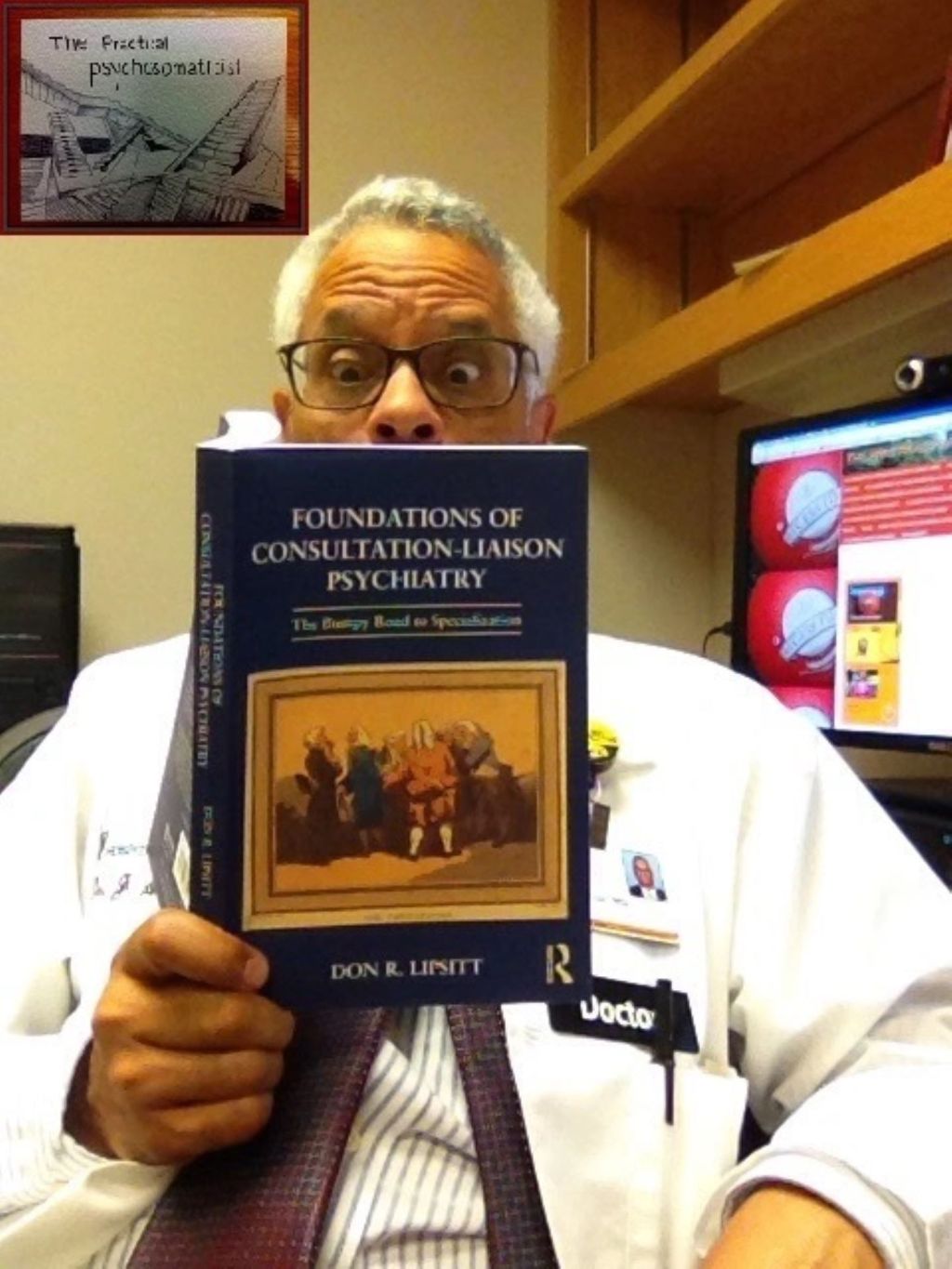
The 2008 working manual was called the Psychosomatic Medicine Handbook for Residents at the time. This was before the name of the specialty was changed back to Consultation-Liaison Psychiatry. I wrote all of it. I’m not sure about the origin of my comment about a Psychosomatic Medicine textbook weighing 7 pounds. It might relate to the picture of several heavy textbooks on which my book sits. I might have weighed one of them.The introduction is below (featured image picture credit pixydotorg):

“In 2003 the American Board of Medical Specialties approved the subspecialty status of Psychiatry now known as Psychosomatic Medicine. Long before that, the field was known as Consultation-Liaison Psychiatry. In 2005, the first certification examination was offered by the American Board of Psychiatry and Neurology. Both I and my co-editor, Dr. Robert G. Robinson, passed that examination along with many other examinees. This important point in the history of psychiatry began many decades ago, probably in the early 19th century, when the word “psychosomatic” was first used by Johann Christian Heinroth when discussing insomnia.

Psychosomatic Medicine began as the study of psychophysiology which in some quarters led to a reductionistic theory of psychogenic causation of disease. However, the evolution of a broader conceptualization of the discipline as the study of mind and body interactions in patients who are ill and the creation of effective treatments for them probably was a parallel development. This was called Consultation-Liaison Psychiatry and was considered the practical application of the principles and discoveries of Psychosomatic Medicine. Two major organizations grew up in the early and middle parts of the 20th century that seemed to formalize the distinction (and possibly the eventual separation) between the two ideas: the American Psychosomatic Society (APS) and the Academy of Psychosomatic Medicine (APM). The name of the subspecialty finally approved in 2003 was the latter largely because of its historic roots in the origin of the interaction of mind and body paradigm.

The impression that the field was dichotomized into research and practical application was shared and lamented by many members of both organizations. At a symposium at the APM annual meeting in Tucson, AZ in 2006, it was remarked that practitioners of “…psychosomatic medicine may well be lost in thought while…C-L psychiatrists are lost in action.”

I think it is ironic how organizations that are both devoted to teaching physicians and patients how to think both/and instead of either/or about medical and psychiatric problems could have become so dichotomized themselves.

My motive for writing this book makes me think of a few quotations about psychiatry in general hospitals:

“Relegating this work entirely to specialists is futile for it is doubtful whether there will ever be a sufficient number of psychiatrists to respond to all the requests for consultations. There is, therefore, no alternative to educating other physicians in the elements of psychiatric methods.”

“All staff conferences in general hospitals should be attended by the psychiatrist so that there might be a mutual exchange of medical experience and frank discussion of those cases in which there are psychiatric problems.”

“The time should not be too long delayed when psychiatrists are required on all our medical and surgical wards and in all our general and surgical clinics.”

The first two quotes, however modern they might sound, are actually from 1929 in one of the first papers ever written about Consultation Psychiatry (now Psychosomatic Medicine), authored by George W. Henry, A.B., M.D. The third is from the mid-1930s by Helen Flanders Dunbar, M.D., in an article about the substantial role psychological factors play in the etiology and course of cardiovascular diseases, diabetes, and fractures in 600 patients. Although few hospital organizations actually practice what these physicians recommended, the recurring theme seems to be the need to improve outcomes and processes in health care by integrating medical and psychiatric delivery care systems. Further, Dr. Roger Kathol has written persuasively of the need for a sea change in the way our health care delivery and insurance systems operate so as to improve the quality of health care in this country so that it compares well with that of other nations (2).

This book is not a textbook. It is not a source for definitive, comprehensive lists of references about all the latest research. It is not a thousand pages long and does not weigh seven pounds. It is a modest contribution to the principle of both/and thinking about psyche and soma; consultants and researchers; — gunslingers and chess masters.

In this field there are chess masters and gunslingers. We need both. You need to be a gunslinger to react quickly and effectively on the wards and in the emergency room during crises. You also need to be a chess master after the smoke has cleared, to reflect on what you did, how you did it—and analyze why you did it and whether that was in accord with the best medical evidence.

This book is for the gunslinger who relies on the chess master. This book is also for the chess master—who needs to be a gunslinger.

“Strategy without tactics is the slowest route to victory. Tactics without strategy is the noise before defeat”—Sun Tzu.”

References:

1.        Kathol, R.G., and Gatteau, S. 2007. Healing body and mind: a critical issue for health care reform. Westport, CT: Praeger Publishers. 190 pp.

2.        Kornfeld, D., and Wharton, R. 2005. The American Psychiatric Publishing Textbook of Psychosomatic Medicine. Psychosomatics 46:95-103.

They Did Learn How to Check for Delirium!

Here’s another oldie but goodie blog post, “It’s Survey Time.” It’s a blast from the past (May of 2011) but it needs a short introduction on why I’m reposting it.

So, I’m about a week out from my surgery for a detached retina. I’m doing pretty well. I keep thinking about a question a nurse asked me right after I was taken to the recovery room from the operating room. I was a little hazy because I’m pretty sure I got some sedation medication, although I was definitely mostly awake for the procedure. The nurse asked me, “Well, can you answer a question for me; will a stone float on water?”

First of all, I gave the right answer, “No.” More importantly, I was momentarily stunned because I recognized the question is from the Confusion Assessment Method for the Intensive Care Unit (CAM-ICU). And I told the nurse that. It reminded me of my early career as a general hospital consultation-liaison psychiatrist.

Most of my old blog posts from The Practical Psychosomaticist are about my frustration over what seemed to be my fruitless efforts to teach nurses and physicians about how to prevent, assess, and manage delirium.

I can’t tell you how happy I was that my recovery room nurse asked me a CAM-ICU delirium screening question.  

I mentioned the American Delirium Society (ADS) in the post and also found a fairly recent article on the CAM ICU. Among the authors were those I met at one of t he first ADS meetings: Malaz Boustani and Babar Kahn.

“It’s Survey Time!”:

“I know, I know, I can hear it out there, “Doesn’t Dr. Amos ever learn? Nobody does surveys and polls!” Hey, that’s OK; I have so much fun doing them anyway. Of course, it would be nice to get some responses… I’ve talked to you and I’ve talked to you, and I’m done talkin’ to you! Come back here, I’m not done talkin’ to you!

Anyway, the new poll for what’s hot and what’s not about delirium screening scales is up on the home page. The original one was partly to help our delirium prevention project committee to decide on which one to use. Well, the original got only 16 responses…but they were great responses! The amazing thing was that, despite the paucity of votes, the results were plausible. See the results:

Recall that at our 7th project meeting we selected the DOSS. What? There is good literature supporting all of these scales and a lot of factors influence selection of any tool, not the least of which is feasibility, which is mainly ease of use. That means it’s quick and doesn’t require a lot of training or additional assessments. And you should use a tool that’s validated for the patient population you want to protect from delirium. I probably got a lot of questioning looks at the screen when this poll came out because the Confusion Assessment Method-Intensive Care Unit (CAM-ICU) was not on the list. Well, you heard it from one of the main dudes on the team that developed the CAM-ICU that it’s probably not appropriate for use on general medical units…Dr. E. Wesley Ely himself (see post April 29, 2011). Hey, as far as the ICU patient population goes, the CAM-ICU is the holy grail. We need to keep looking for a sensitive and specific tool which is quick and easy for nurses to administer on general medical units.

We’re going with the DOSS. And one of my neuropsychologists, John, is offering to run neuropsychology test batteries on the patients that nurses screen with the DOSS. Atta boy, John! Neuropsychologists are going to be indispensable in this area. I remember pushing for the addition of subtests of the Repeatable Battery for the Assessment of Neuropsychological Status (RBANS), especially the Coding test in order to detect delirium early as possible. It didn’t make it, but it was close. This has been advanced by another one of our neuropsychologists here who’s done some delirium research in the bone marrow transplant unit with delirious patients. Hey, I still wonder what we could accomplish if the Coding test were added to the DOSS or even the Nursing Delirium Screening Scale (Nu-DESC). Maybe there’s already somebody out there putting a practical implementation plan for that into the real world.

So why do the poll again? Because I’d like to see if I could persuade nurses from large American and world organizations to put the nickel down and vote. And if I keep shoving this thing out there, maybe somebody will let us know that, hey, we’re not in this alone and offer to collaborate.

And I stole a couple of survey questions from our group to see what physicians and nurses think about how they manage delirium. It’s a way to take a snapshot of the culture of how docs and nurses work together on delirium recognition and interventions. And hey, why am I doing that? Because I’m a thief…no, no, I mean the reason is delirium is a medical emergency and we all need to work together to find ways to understand it better in order to prevent it. The American Delirium Society (ADS) tell you why delirium prevention is critical in the endless search to find ways to deliver high-quality medical care to patients:

Delirium Simple Facts:

  • More than 7 million hospitalized Americans suffer from delirium each year.
  • Among hospitalized patients who survived their delirium episode, the rates of persistent delirium at discharge, 1, 3 and 6 months are 45%, 33%, 26%, and 21% respectively.
  • More than 60% of patients with delirium are not recognized by the health care system.
  • Compared to hospitalized patients with no delirium and after adjusting for age, gender, race, and comorbidity, delirious patients suffer from:
  • Higher mortality rates at one month (14% vs. 5%), at six months (22% vs. 11%), and 23 months (38% vs. 28%);
  • Hospital stay is longer (21 vs. 9 days); Receive more care in long-term care setting at discharge (47% vs. 18%), at 6 months (43% vs. 8%) and at 15 months (33% vs. 11%); and
  • Have higher probability of developing dementia at 48 months (63% vs. 8%).

And have you registered for the ADS inaugural conference on June 5-7 in Indianapolis? Good for you! And are you going to bring back something from that conference for The Practical Psychosomaticist, and I don’t mean doughnuts? That’s the spirit! The surveys have spaces for free-text comments as well, which I want to hear!”

The Chicken Finally Lays An Egg

Below is an old post from a previous blog that I published on June 6, 2010. Although the title in my record is simply PM Handbook Blog, there must have been another title. Maybe it should have been more like The Chicken Has Finally Laid an Egg (you’ll get the joke later).

There are two reasons for posting it today. One is to illustrate how the Windows voice recognition dictation app works. It’s a little better than I thought it would be. The last time I used it, it was ugly. I’m using it now because I thought it might be a little easier than trying to type it since I still have problems with vision in my right eye because of the recent retinal tear injury repair. So, instead of doing copy paste, what you’re seeing is a dictation—for the most part.

On the other hand, I’m still having to proofread what I dictate. And I still find a few mistakes, though much fewer than I expected.

The other reason for this post is to help me reflect on how far the fellowship has come since that time. It did eventually attract the first fellow under a different leader. That was shortly after I retired. It was a great step forward for the department of psychiatry:

“Here is one definition of a classic:

“Classic: A book which people praise but don’t read.” Mark Twain.

When I announced the publishing of our book, Psychosomatic Medicine, An Introduction to Consultation Liaison Psychiatry, someone said that it’s good to finally get a book into print and out of one’s head. The book in earlier years found other ways out of my head, mainly in stapled, paperclipped, spiral bound, dog eared, pages of homemade manuals, for use on our consultation service.

It’s a handbook and meant to be read, of course, but quickly and on the run. As I’ve said in a previous blog, it makes no pretension to being the Tour de Force textbook in America that inspired it. However, any textbook can evolve into an example of Twain’s definition of a classic. The handbook writer is a faithful and humble steward who can keep the spirit of the classic lively.

We must have a textbook as a marker of Psychosomatic Medicine’s place in medicine as a subspecialty. It’s like a Bible, meant to be read reverently, venerated, and quoted by scholars. But the ark of this covenant tends to be a dusty bookshelf that bows under the tome’s weight. A handbook is like the Sunday School lesson plan for spreading the scholar’s wisdom in the big book.

Over the long haul, the goal of any books should mean something other than royalties or an iconic place in history. No preacher ever read a sermon to our congregation straight out of the Bible. It was long ago observed by George Henry that there will never be enough psychiatric consultants. This prompts the question of who will come after me to do this work. My former legacy was to be the Director of a Psychosomatic Medicine Fellowship in an academic department in the not-so-distant past. Ironically, though there will never be enough psychiatric consultants, there were evidently too many fellowships from which to choose. I had to let the fellowship go. My legacy then became this book, not just for Psychosomatic Medicine fellows, but medical students, residents, and maybe even for those who see most of the patients suffering from mental illness—dedicated primary care physicians.

My wife gave me a birthday card once which read: “Getting older: May each year be a feather on the glorious Chicken of Life as it Soars UNTAMED and BEAUTIFUL towards the golden sun.” My gifts included among the obligatory neckties, a couple of books on preparing for retirement.

Before I retire, I would like to do all I can to ensure that the next generation of doctors learn to respect the importance of care for both body and mind of each and every one of their patients. That’s the goal of our book. And may the glorious chicken of life lay a golden egg within its pages to protect it from becoming a classic.”

Chicken picture credit: Pixydotorg.

Going Down Blogging Memory Lane

I’ve been going down the blogging memory lane lately and thought I’d repost what was probably the very first post I published on my first blog, The Practical Psychosomaticist. The title was “Letter from a Pragmatic Idealist.”

While a lot of water has gone under the bridge since mid-December of 2010, some principles remain the same. Some problems still remain, such as the under-recognition of delirium.

Just a few thoughts about words, just because I’m a writer and words are interesting. The word “Psychosomaticist” is clunky and I’ve joked about it. I tried to think of another name for the blog.  I thought “Pragmatic Idealist” was original until I googled it—someone already had coined it. Then I considered “The Practical Idealist”, with the same result. The same thing happened with “The Practical Psychiatrist.” All of the terms had been used and the associations didn’t fit me. I couldn’t find anyone or any group using the term “The Practical Psychosomaticist.” 

Finally, after the Academy of Psychosomatic Medicine (APM) changed its name to the Academy of Consultation-Liaison Psychiatry (ACLP) in 2016, I changed the name of the blog to The Practical C-L Psychiatrist, finally dropping the name “psychosomatic” along with its problematic associations.

I guess the chronicle would be incomplete without an explanation of what happened to that blog. Around 2016, the General Data Protection Regulation (GDPR) was adopted by the European Parliament. WordPress, a popular blogging platform which I use, eventually decided that even hobby bloggers had to come up with a quasi-legal policy document to post on their websites to ensure they were complying with the GDPR regulation and not misusing anyone’s personal data.

I didn’t think that applied to hobby bloggers like me yet it was required. I wasn’t collecting anyone’s personal data and not trying to sell anything. I deleted my blog in July of 2018.  Because I loved to write, I eventually started a new blog around the last year of my phased retirement contract with my hospital in 2019.

Anyway, here’s the December 15, 2010 post, “Letter from a Pragmatic Idealist.”

“I read with interest an article from The Hospitalist, August 2008 discussing the Center for Medicare and Medicaid Services (CMS) requirement for hospitals to submit information on Medicare claims regarding whether a list of specific diagnoses were present on admission (POA)[1]. The topic of the article was whether or not delirium would eventually make the list of diagnoses that CMS will pay hospitals as though that complication did not occur, i.e., not pay for the additional costs associated with managing these complications. At the time this article was published, CMS was seeking public comments on the degree to which the conditions would be reasonably preventable through application of evidence-based guidelines.

I have no idea whether delirium due to any general medical condition made the list or not. But I have a suggestion for a delirium subtype that probably should make the list, and that would be intoxication delirium associated with using beverage alcohol in an effort to treat presumed alcohol withdrawal. There is a disturbing tendency for physicians (primarily surgeons) at academic medical centers to try to manage alcohol withdrawal with beverage alcohol, despite the lack of medical literature evidence to support the practice [2, 3]. At times, in my opinion, the practice has led to intoxication delirium in certain patients who receive both benzodiazepines (a medication that has evidence-based support for treating alcohol withdrawal) combined with beer—which generally does not.

I’ve co-authored a couple of articles for our institution’s pharmacy newsletter and several of my colleagues and pharmacists petitioned the pharmacy subcommittee to remove beverage alcohol from the formulary at our institution, where beer and whiskey have been used by some of our surgeons to manage withdrawal. Although our understanding was that beverage alcohol had been removed last year, it is evidently still available through some sort of palliative care exception. This exception has been misused, as evidenced by cans of Old Style Beer with straws in them on bedside tables of patients who are already stuporous from opioid and benzodiazepine. A surgical co-management team was developed, in my opinion, in part to address the issue by providing expert consultation from surgeons to surgeons about how to apply evidence-based practices to alcohol withdrawal treatment. This has also been a failure.

I think it’s ironic that some professionals feared being sanctioned by CMS for using Haloperidol to manage suffering and dangerous behavior by delirious people as reported by Stoddard in the winter 2009 article in the American Academy of Hospice and Palliative Medicine (AAHPM) Bulletin[4]. Apparently, CMS in fact did have a problem with using PRN Haloperidol (not FDA approved of course, but commonly used for decades and recommended in American Psychiatric Association practice guidelines for management of delirium), calling it a chemical restraint while having no objection to PRN Lorazepam, which has been identified as an independent predictor of delirium in ICU patients[5]. Would the CMS approve of using beer to treat alcohol withdrawal, which can cause delirium?

As a clinician-educator and Psychosomatic Medicine “supraspecialist” (term coined by Dr. Theodore Stern, MD from Massachusetts General Hospital), I’ve long cherished the notion that we, as physicians, advance our profession and serve our patients best by trying to do the right thing as well as do the thing right. But I wonder if what some of my colleagues and trainees say may be true—that when educational efforts to improve the way we provide humanistic and preventive medical care for certain conditions don’t succeed, not paying physicians and hospitals for them will. I still hold out for a less cynical view of human nature. But if it will improve patient care, then add this letter to the CMS suggestion box, if there is one.”

1.        Hospitalist, D. (2008) Delirium Dilemma. The Hospitalist.

2.        Sarff, M. and J.A. Gold, Alcohol withdrawal syndromes in the intensive care unit. Crit Care Med, 2010. 38(9 Suppl): p. S494-501.

3.        Rosenbaum, M. and T. McCarty, Alcohol prescription by surgeons in the prevention and treatment of delirium tremens: historic and current practice. General Hospital Psychiatry. 24(4): p. 257-259.

4.        Stoddard, J., D.O. (2009) Treating Delirium with Haloperidol: Our Experience with the Center for Medicare and Medicaid Services. Academy of Hospice and Palliative Medicine Bulletin.

5.        Pandharipande, P., et al., Lorazepam is an independent risk factor for transitioning to delirium in intensive care unit patients. Anesthesiology, 2006. 104(1): p. 21-6.

Get Happy Now

I think nearly all of us would agree that the last two years have been especially hard on the human race. It’s tough to be happy. Or would it be better to say it’s tough to find happiness? Or should you say that there are few things to be happy about?

What I’m getting at is the difficulty in defining the term “happiness.” I’m sometimes very unhappy. But the intensity doesn’t last. And I’m happier when I’m writing. I’m one of those who thinks happiness is a byproduct of what we do. But a movement has been under way for years to define happiness scientifically.

What’s new on the horizon? Sena found a news story about a New Jersey college offering the world’s first Master of Arts level online degree program in Happiness Studies. It’ll cost you only $17,700 according to the Centenary University web page about it (accessed March 26, 2022).

The course is four months and worth 30 credits. I’m no judge on whether it’s worth the hefty price tag.

The program will be directed by Dr. Tal Ben-Shahar, a teacher and writer in the areas of leadership and positive psychology. He looks happy. He’s very successful.

The program at Centenary is not the only game in town, though. This is just web clicking research, mind you, but there is The Science of Happiness Course based at Berkeley University of California (of course it’s in California!). It was launched in 2014. Like the Centenary program, it’s led by celebrity star level teachers from the school’s Greater Good Science Center: Emiliana Simon-Thomas, PhD (the director), and founder Dacher Keltner, PhD, author of best-seller Born to be Good (which I’ve never read). There is a free 8-week audit level Science of Happiness course available although you can earn a certificate by working a little harder, taking exams and paying $169.

Positive psychiatry has been championed by psychiatrist, Dr. Dilip Jeste, as he outlined his thoughts on it in Psychiatric Times (Positive Psychiatry: An Interview With Dilip V. Jeste, MD, February 22, 2016, Renato D. Alarcón, MD, MPH, Psychiatric Times, Vol 33 No 2, Volume 33, Issue 2). Some of his interesting comments give the impression you could overdo it:

Currently, there is no substitute for using DSM-5 and ICD-10 diagnoses that are required by Medicare and private health insurers and also for communication with various other health care systems. The positive psychiatry approach involves additional notations about the patient’s level of well-being and perceived stress along with strengths, including resilience, optimism, and social engagement. Validated rating scales for these measures are available and practical. This more complete depiction of a patient’s mental health is of much greater value for holistic management than just a DSM-5 diagnosis. The information obtained from these ratings may be shared with the patient and his or her family, and revisited during subsequent visits to document progress.

Positive psychiatry’s principles can be incorporated in a reformulation of behavioral or psychosocial interventions, whether they are supportive, psychodynamic, cognitive-behavioral, or another type. The goal is to enhance positive psychosocial characteristics to improve well-being, in addition to reducing symptoms and preventing relapse-which are at the core of traditional psychiatry.

There are, however, a few limitations to positive psychiatry-such as the potential social/political and ethical implications of the unbridled promotion of positive psychosocial characteristics. For example, one may appropriately object to the notion that optimism should be universally promoted through biological or other interventions. Therefore, a balanced approach to behavior modification is warranted.

He thought you could object to the idea that optimism should be the overriding goal. “The unbridled promotion of positive psychosocial characters.” Oops, I just noticed my mistake in using the word “characters” instead of “characteristics.” I corrected it and then thought it was probably just a Freudian slip, so I changed it back. What the heck.

That reminded me of a paper I read many years ago about adding a new psychiatric disorder to the Diagnostic and Statistical Manual for Mental Disorders (DSM): Major Affective Disorder, pleasant type. I think some people missed the satire in this article (Bentall RP. A proposal to classify happiness as a psychiatric disorder. J Med Ethics. 1992 Jun;18(2):94-8. doi: 10.1136/jme.18.2.94. PMID: 1619629; PMCID: PMC1376114.)

Bentall was objecting to the methods employed by the committees putting the DSM together, specifically how they decided on what is or is not a disease. I think the DSM-IV was in the preparation stage at the time he wrote the article.

I liked the response of one blogger to Bentall’s paper. The title of the post was “Major Affective Disorder, Pleasant Type” and subtitled “Cancer and Attitude.” She was diagnosed with pancreatic cancer and coping with it, not with unbridled positivity, but with a realistic, balanced outlook:

“But I don’t believe a positive attitude means that I am happy all the time. I like to think of myself as a positive realist. I have accepted that each day I live is an actual gift and I truly may not be here in 6 months or a year.”

“But I’ve also been very angry about it, and many times feel sad and hopeless. Being positive just means you believe in tomorrow. And I do believe I will be here tomorrow.”

I think I’m happy with letting her have the last word here.

Musing on Coincidences

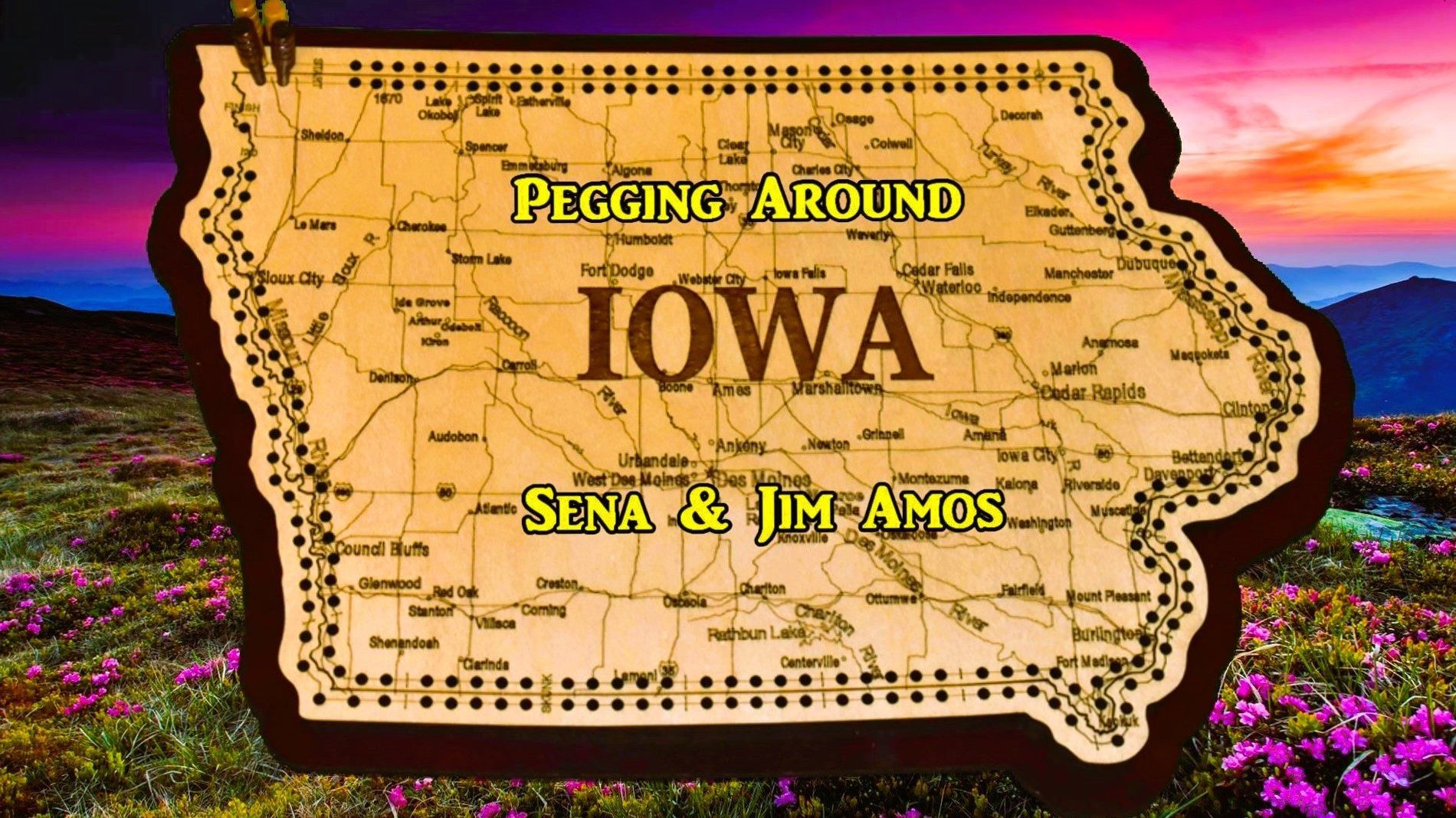
We’re waiting for another state road map cribbage board, this one is Wisconsin. If you’ve seen the cribbage game video we made, “Pegging Around Iowa,” you get the idea.

We’ve been to Wisconsin, briefly. It’s a complicated story. It was roughly 13 years ago. We moved to Madison so I could make another stab at private practice psychiatry.

During the lunch break between interviews, I read The Onion for the first time. It was set up as a college newspaper in which none of the stories were factually accurate—and wildly satirical. I thought it was really funny. It started back in 1988 in Madison, Wisconsin. It’s now based in Chicago. They published a large paperback book entitled The Onion Book of Known Knowledge: A Definitive Encyclopaedia of Existing Information.

I’m pretty sure none of the information was true. I owned a copy, but the print was so small, I couldn’t read it without a magnifying glass. It either got lost in one of our moves or I got rid of it.

Scott Dikkers was one of the originators. Coincidentally, in 1993 he was interviewed by a columnist for The Daily Iowan, the University of Iowa college newspaper. Scott also wrote a cartoon called Jim’s Journal. This is another coincidence because I kept a sort of diary in between blogs for a while a few years ago. I called it Jim’s Journal. Back in 1993 I wasn’t paying attention then to The Onion or much of anything else except surviving my first year of residency in psychiatry at Iowa.

The Onion was one of my favorite reminders of Madison. We loved living there, but unfortunately, I disliked private practice. We moved back to Iowa, but not before doing a lot of fun things in Madison and places nearby.

Another coincidence that is admittedly minor is that, several years ago I accidentally walked into an auditorium ready to present my Grand Rounds lecture to a crowd. The only hitch was that it was the wrong crowd. I had arrived early and the previous group was still in the auditorium. That was embarrassing. When it was time for my performance, I sort of ad libbed a series of jokes about my blunder. This got me an award from the residents—Improvisor of the Year.

I think I also blogged about the experience and used a feature image of myself with the caption, “And now for the juggling of produce,” a reminder of my clownish performance at the Grand Rounds. If you look closely, you can see one of the produce items is—you guessed it, an onion.

Years later, I happened to find a video of older people being interviewed on their 100th birthday. They were in Madison. I left a comment saying I thought it was a gas. I still do. Coincidentally, I worked at St. Mary’s Hospital, albeit briefly. I left that comment in 2012, about 3 years after I returned to Iowa.

And, coincidentally I found another video that sends pretty much the same message, pertinent to our times. It was taken for a January 2021 news story about a lady named Mary Gerber who was celebrating her 100th birthday who had volunteered for 33 years at St. Mary’s Hospital and got her first Covid-19 vaccine. 

These coincidences happen only occasionally, but continue to reverberate in our lives, even to this day. I think of the 2002 alien invasion film, Signs. In it, the lead character is Graham Hess, a local pastor who has given up being a minister because he’s lost his faith related to his wife dying in a car accident. He and his brother Merrill are discussing the many lights in the sky (UFOs) that have been seen recently. I think of what he says,

People break down into two groups. When they experience something lucky, group number one sees it as more than luck, more than coincidence. They see it as a sign, as evidence, that there is someone up there, watching out for them. Group number two sees it as just pure luck. Just a happy turn of chance. I’m sure the people in group number two are looking at those fourteen lights in a very suspicious way. For them, the situation is a fifty-fifty. Could be bad, could be good. But deep down, they feel that whatever happens, they’re on their own. And that fills them fear. Yeah, there are those people. But there’s a whole lot of people in group number one. When they see those fourteen lights, they’re looking at a miracle. And deep down, they feel that whatever’s going to happen, there will be someone there to help them. And that fills them with hope. See what you have to ask yourself is what kind of person are you? Are you the kind that sees signs, that sees miracles? Or do you believe that people just get lucky? Or, look at the question this way: Is it possible that there are no coincidences?

Merrill answers “I’m a miracle man.”

I’m not sure yet what group I fall into. Things happen sometimes that make me hope there are miracles.