Earth Day 2023: Water What We Want to Grow

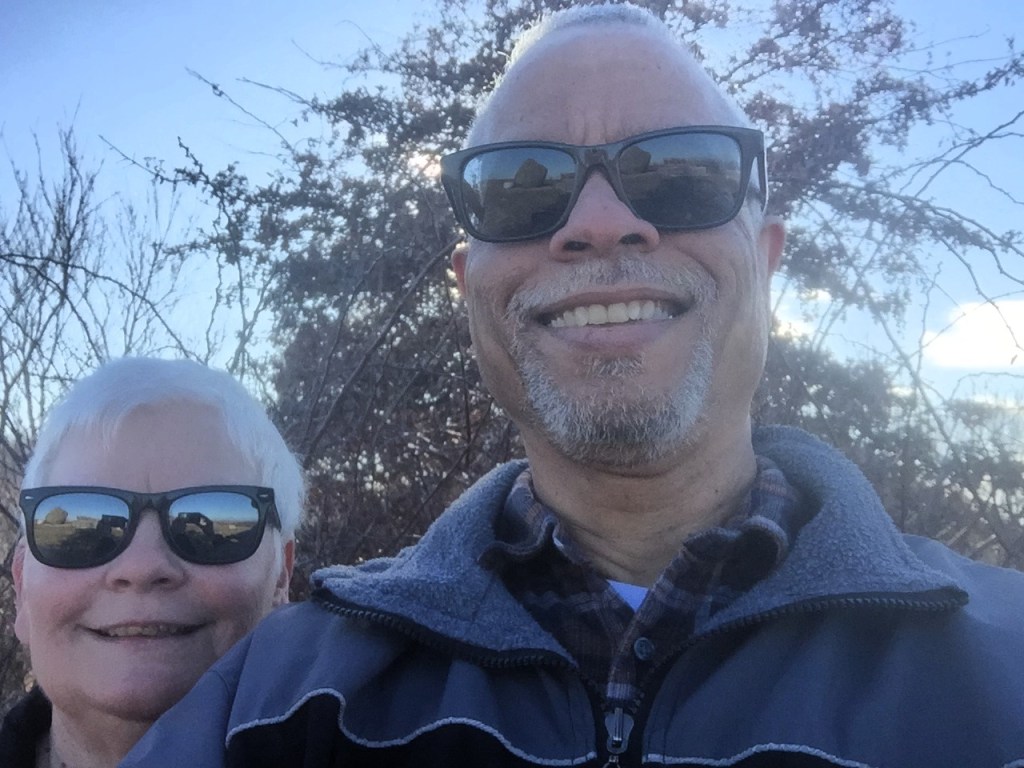
Happy Earth Day! Yesterday, Sena worked pretty hard out in the garden spaces. She has planted ten river birch trees. I did my usual spring lawn edging, which followed the first mow of the season a couple of days before by the lawn mowing service.

The vinca is coming up in the garden circle in our back yard. It reminds me of a time many years ago when I chopped a bunch of vinca out of a substantial portion of the back yard of a previous house. This became Sena’s first big garden. We’ve moved several times since then and there have been a number of other gardens.

True, vinca is invasive and I think it’s also called creeping myrtle or periwinkle. I found out later after I chopped out a few bushels of it that the plant has organic compounds called alkaloids which inhibit the growth of certain cancers. Vincristine and vinblastine are approved for use in the United States.

The reason I’m mentioning vinca is that way back early in my career as a consultation-liaison (C-L) psychiatrist at The University of Iowa Hospitals & Clinics, I dimly recall giving a short acceptance speech for winning a Leonard Tow Humanism in Medicine award from the Arnold P. Gold Foundation in 2006. I was nominated for it by one of the psychiatry residents and another faculty member.

Getting the Leonard Tow Humanism in Medicine pin

In my speech I mentioned cutting out all of the vinca (which I thought was a weed) in the back yard. I was pretty proud of getting that job done—until Sena got home and found out. She was less than thrilled about my accomplishment and explained that vinca was not a weed. In fact, she wanted it to grow.

Vinca

I still have the speech and one of the points I made was, “…we water what we want to grow.” The speech is below:

Good morning distinguished guests including graduating medical students, Dean______.

Today we gather to reward a sort of irony.  We reward this quality of humanism by giving special recognition to those who might wonder why we make this special effort. Those we honor in this fashion are often abashed and puzzled. They often don’t appear to be making any special effort at being compassionate, respectful, honest, and empathic. And rewards in society are frequently reserved for those who appear to be intensely competitive, even driven.

There is an irony inherent in giving special recognition to those who are not seeking self-aggrandizement. For these, altruism is its own reward. This is often learned only after many years—but our honorees are young. They learned the reward of giving, of service, of sacrifice. The irony is that after one has given up the self in order to give back to others (family, patients, society), after all the ultimate reward—some duty for one to accept thanks in a tangible way remains.

One may ask, why do this? One answer might be that we water what we want to grow. We say to the honorees that we know that what we cherish and respect here today—was not natural for you. You are always giving up something to gain and regain this measure of equanimity, altruism, trust. You mourn the loss privately and no one can deny that to grieve is to suffer.

But what others see is how well you choose.

I didn’t write down the anecdote about the vinca. I think I was also trying to make the point that vinca can be thought of as an invasive “weed” as well as a pretty garden plant. Furthermore, while the vinca alkaloid (for example, vinblastine) can be an effective treatment for some cancers, it can also cause neuropsychiatric side effects, which can mimic depression. That’s where a C-L psychiatrist could be helpful, showing how medicine and psychiatry can integrate to move humanism in medicine forward.

Anyway, ever since then, vinca has often been a part of Sena’s garden, including the one where we live now. And, whenever we walk on any of the trails in Iowa City or Coralville, we always notice it carpeting the woods.

We can probably apply the little law “we water what we want to grow” to many things in life. We can choose to apply it to the world in which we live by creating a safe home to shelter a happy family, doing useful work in the garden while practicing kindness, gratitude, and patience.

We can start by planting an idea like a tree.

Thoughts on Gullibility and Artificial Intelligence

I watched an episode of Mysteries at the Museum the other night and attributed a clever prank that fooled thousands of people to a comedian named Buck Henry who persuaded thousands of people into believing that naked animals were destroying the morality of Americans. The show’s host rightly claimed that Buck Henry posed as a man named G. Clifford Prout, a man on a mission to save morality by creating a bogus identity and organization called The Society for Indecency to Naked Animals (SINA). In 1959, Buck Henry fooled about 50,000 people into joining the organization.

However, last night I found out that the real mastermind of the ruse was a guy named Alan Abel, a genius prankster and satirist whose complicated and hilarious hoaxes were so outlandish, I can’t imagine why I had never heard of him.

Abel was brilliant at skewering the gullibility of people. This is where I reveal my own opinion of the passing off of Artificial Intelligence (AI) as the solution to all of society’s problems. I have seen for myself that the Google Bard AI is not even very smart, failing basic geography. I pointed out its errors in a few posts earlier this month. Then, I read a news item in which a prominent tech company CEO mentioned that Bard is a simple version of AI and that waiting in the wings is a much more powerful model. Did the CEO write this because many users are finding out that Bard is dumb?

Or is the situation more complicated than that? Is the incompetent and comical Bard being passed off to the general public in an effort to throw business competitors off the scent? Are there powerful organizations manipulating our gullibility—and not for laughs?

My wife, Sena, and I are both skeptical about what to believe in the news. In fact, I think many of the news stories might even be made by AI writers. I didn’t suspect this when I wrote the post “Viral Story Rabbit Holes on the Web” in December of 2022. After trying to converse with Bard, it makes more sense that some of the news stories on the web may be written by AI. In fact, when I googled the idea, several articles popped up which seemed to verify that it has been going on, probably for a long time.

All of this reminds me of an X-Files episode, “Ghost in the Machine” The main idea is that an evil AI has started killing humans in order to protect itself from being shut down. The AI is called the Central Operating System. The episode got poor reviews, partly because it wasn’t funny and partly because it too closely resembled 2001: A Space Odyssey.

But the fear of AI is obvious. The idea of weaponizing it in a drive to rule the world probably underlies the anxiety expressed by many.

And we still can’t get rid of the Bing Chatbot.

Palm Sunday

Today is Palm Sunday, the beginning of Jesus’ last week on earth. The palm tree reminds me of the time we spent in Hawaii. We saw a lot of coconut palms. The featured image is from 1997, when we were there.

I remember seeing a picture in a storybook of Jesus riding into Jerusalem on a donkey. The road was strewn with palm leaves. I was just a child.

Palm Sunday is a day to get along with others.

The Easter Lily is already beginning to open.

Eyes of a Child

Sena wonders if I’m ever going to use Patsy Cline’s tune “If I Could See the World (Through the Eyes of a Child) in a blog post. She also brought home a potted plant she bought, an Easter Lily, ahead of Easter Sunday on April 9th next week. I thought of a couple of things, and of course one is a quote from Men in Black 3:

Agent O: “Agent K is dead!”

Agent J: “Well, I just talked to him last night!”

Agent O: “You are imagining things.”

Agent J: “I’m not imagining anything. Aqua Velva after shave! I didn’t imagine that. Where every stakeout, endless hours of cowboy music.

Agent J and I have a few things in common. One of them is a mild dislike for country western (cowboy by extension) music. I can’t help it OK; the Patsy Cline tune is one of those.

I’m the first to admit I’m not a Bible scholar, but I’m going to talk a little bit about the apparent contradictions between being childish and childlike in the Bible. The reason is that the lyrics in “If I Could See the World” is either an obvious or accidental reference to the seeming contradiction between being like a child in one sense and in another sense, growing up and putting away childish things.

There’s no contradiction if you remember the scripture quotes are in different contexts. In childhood, we’re innocent, trusting, and open. Being open to the kingdom of heaven is the context for that. On the other hand, another context is when we grow up and recognize the duplicity in other people and the inevitable push to learn how to lie. If you don’t tell Aunt Clara that you love her gift of fruitcake at Christmas, you will be grounded for a week.

OK, so that’s the extent of my Bible scholarship.

I’m not a credible music critic either. But it’s easy to see the connection of the Patsy Cline song “If I Could See the World (Through the Eyes of a Child) to the book of Matthew. At the same time, the lyrics ignore the book of Corinthians, which tells how important it is to give up being childish. You need to lie to get by sometimes, although Agent J has trouble telling just where and when to stop lying. Much of MIB 3 is about the conflict over telling the truth and lying.

Come to think of it, that conflict could be much of what life is about.

Agent J after finally telling young Agent K that Boris the Animal will kill him when he goes to Florida to stop Boris, and that’s what Agent J wants to prevent: “I know I told you everything but…”

Young Agent K punches him in the nose: “That’s for lying to me! He punches Agent J again and says, “And that’s for telling me the truth!”

The Patsy Cline song is about seeing all of the good and none of the bad, all of the right and none of the wrong—and how wonderful that would be. Could it be ironic? On the other hand, in the real world of grownups, maybe Griffin has the idea:

Griffin: “The bitterest truth is better than the sweetest lie.” Well, sometimes.

Whitetail Deer Think Your Lawn is a Salad Bar

We have a small herd of whitetail deer who regularly visit our lawn because they think it’s a salad bar. They’re all over the neighborhood because the city apparently doesn’t have a consistent deer population management plan. I don’t know anything about the animals, other than what I care to look up on the internet.

We saw several bucks the yesterday. One of them was missing an antler. It might have been lost in a fight with another buck.

As far as we could tell, most of the deer seemed pretty healthy, although I guess you can’t really tell which ones might have chronic wasting disease just by looking at them.

One animal looked like it might have suffered an injury, possibly from a buck. The lesions looked like they might be healing.

I guess this time of year, they would be molting. That probably explains why some of them look scraggly.

Sena taps on the windows and orders them off the property. That doesn’t work. Sometimes they look up at you like they know you’re staring at them—but they usually ignore you and go back to munching on your lawn.

I wonder if I’d feel differently about culling the whitetail deer if I watched hunters actually cull them—or kill them. The word “culling” actually sounds like a nicer version of “killing.” The definition of culling is the reduction in the population of wild animals by “selective slaughtering.”

The origin of the word “cull” is interesting. It comes from the Latin verb colligere, meaning “to gather.” In general, it means to collect a group of animals into separate groups: one to keep and one to kill. Usually, it’s about killing the weak and sick ones.

On the other hand, the origin of the word “kill” seems to be obscure. Of course, it means to strike, hit, put to death. It might derive from an Old English word, “cwellan,” which means to murder, or execute.

Cwellan, cull, kill. I think it’s a coincidence they sound similar. None of them sound like “Bambi.” When me and my brother were little, we had a toy record player that played a simplified version of the Disney classic movie, Bambi. It had either a little storybook that came with it or a little slide show. It got a lot of use. One slide showed a shadowy image of a big stag. Eventually the record got stuck on a place that cried over and over, “Man!”

Maybe that’s why the city doesn’t have a whitetail deer culling plan.

“Stink, Stank, Stunk!”

I’m just puzzled lately over what seems like a contradiction between two ideas I’ve seen in the news and in TV commercials. It’s all about body odor.

There is this study that was recently published about stinky armpit odor possibly making the practice of mindfulness meditation more effective.

This contrasts with the usual meaning of body odor, which is that it’s to be avoided and prevented at all costs. And, the newest total body odor eliminator product is getting heavy rotation in TV commercials and its name rhymes, (possibly fittingly) with “looney.” I’m just going to frankly admit that I can’t stand watching the commercial.

There is this old timer product called Ex-Odor that was marketed in the early 1900s by a company called Gordon Gordon, Ltd. The label said it “Removes All Body Odors.” It was touted as “safe, sure, lasting” and it cost only ten cents. The original label actually did italicize the word “All.” On the other hand, Looney is a lot more expensive—just sayin’.

The armpit odor study and Looney definitely send opposite messages about body odor.

In fact, there is a psychiatric disorder marked by an intense preoccupation with smelling bad. I think it’s still called Olfactory Reference Disorder (ORD). Almost any part of the body could stink and could lead to showering several times a day or visits to ENT doctors to get “infected” and therefore smelly tonsils removed. The disorder not uncommonly gets requests for consultation-liaison psychiatrists to get involved.

Olfactory Reference Disorder can lead to severe, even disabling, social anxiety. It can lead to beliefs that have delusional intensity.

Often, those with ORD firmly believe they emit a foul odor, often from armpits, or inguinal, anal, and oral areas. Some seek surgical treatment. There are many other disorders which consultation-liaison psychiatrists need to remember in order to distinguish ORD from them. Combined cognitive behavioral therapy, possibly along with medication can be recommended as treatment.

Suggested screening questions include:

  • “Are you very worried or concerned about your body odor in any way?
  • Do you believe that other people are also aware of the way you smell (your body odor) and take special notice of it (e.g., make comments about the smell)?
  • Is there anything you feel an urge to do often and repeatedly in order to lessen your worries about your body odor? (e.g., repeatedly brush your teeth, wash or change clothes frequently, smell self or ask others for reassurance)
  • Do you avoid any situations or activities (e.g., sport/dating) because of this body odor?
  • Do these worries about the way you smell negatively affect your mood (e.g., cause shame, depression, anxiety, suicidal thoughts) or your daily life (e.g., relationships, work, school, social)?”

I’m not trying to make any value judgments about either the study or the Looney product. Well, maybe a little. It does remind me of a few lines from the Grinch song:

You’re a foul one, Mr. Grinch,
You’re a nasty wasty skunk,
Your heart is full of unwashed socks,
Your soul is full of gunk, Mr. Grinch.

The three words that best describe you are, and I quote, “Stink, stank, stunk”!

References:

  • Thomas, E., et al. (2015). “Olfactory Reference Disorder: Diagnosis, Epidemiology and Management.” CNS Drugs 29(12): 999-1007.
  • Lim, L. and Y. M. Wan (2015). “Jikoshu-kyofu in Singapore.” Australasian Psychiatry 23(3): 300-302.
  • McKenna, P. J. (1984). “Disorders with overvalued ideas.” Br J Psychiatry145: 579-585.
  • Santin, J. M. and F. M. Galvez (2011). “Overvalued ideas: psychopathologic issues.” Actas Esp Psiquiatr 39(1): 70-74.
  • Mullen, R. and R. J. Linscott (2010). “A comparison of delusions and overvalued ideas.” J Nerv Ment Dis 198(1): 35-38.
  • Miranda-Sivelo, A., et al. (2013). “Unnecessary surgical treatment in a case of olfactory reference syndrome.” General Hospital Psychiatry 35(6): 683.e683-683.e684.

Hello, I’m Dr. James Caramel Brown

I read Dr. Moffic’s article, “The United States Psychiatric Association: Social Psychiatric Prediction #4”. I think the rationale for renaming the American Psychiatric Association makes sense.

However, it also got me thinking about the names of other associations connected to the APA (here meaning American Psychiatric Association). One of them is the Black Psychiatrists of America, Inc. We make up about 2% of psychiatrists in the United States.

It also reminded me to once again do a web search for the term “Black psychiatrists in Iowa.” It turns out the results would lead to a repeat of my previous post “Black Psychiatrists in Iowa” on May 7, 2019. Nothing has changed. My colleague Dr. Donald Black, MD is still coming up in the search. Just as a reminder, he’s not black.

It probably comes as no surprise to readers of my blog that this also reminds me of a couple of Men in Black scenes.

Video of Men in Black scene, Dr. Black and Dr. White quotes.

And my post still appears high up in the list of web sites. There has also not been published a more recent edition of the Greater Iowa African American Resource Guide than the one in 2019. You can still find my name and that of Dr. Rodney J. Dean listed in the 2019 edition as the only black psychiatrists in Iowa.

In case you haven’t noticed, I’m retired. I have never considered changing my name and title to Dr. James Caramel Brown. If you noticed that the “Caramel Brown” part is from Men in Black 3 (Agent J talking about what Agent K should say about his skin color in his eulogy for him), give yourself a pat on the back.

Agent J: Can you promise me something, if I go first, you’ll do better than that at my funeral? Yeah, something like, uh: “J was a friend. Now there’s a big part of me that’s gone. Oh, J, all the things I should have said, except I was too old and craggy and surly and just tight. I was too tight. Now, I’m gonna just miss your caramel-brown skin.”

Agent K: I’ll wing something.

Anyway, I’m not sure what to do about renaming the American Psychiatric Association. But I think whoever is in charge of google search results for the term “black psychiatrists in Iowa” could improve on the current situation.

Feisty and So On

There’s this dialogue in Men in Black II between Serleena and Zed:

Serleena: Zed, look at you, 25 years and you’re still just such a looker.

Zed: Cut out the meat dairy. And you, still a pile of squirmy crap in a different wrapper.

Serleena: So feisty.

I’m becoming more aware of the use of the word “feisty” in reference to so-called “older” persons. That’s because I’m getting older.

I noticed an article on the use of patronizing words for older persons. A couple of other such words are “spry” and “sharp.”

“Sharp” as in sharp as a tack (for his age, of course). Also, as in sharp enough to know today’s date.

“Spry” as in he is spry enough to get into and out of a chair.

I’m also spry enough on most days to do under the leg and behind the back juggling tricks.

I’m still sharp enough to know the difference between respectful and patronizing.

I guess that makes me feisty.

Random Connections

Today, I read Dr. George Dawson’s blog post, “How I ended up in a high-risk pancreatic cancer risk screening clinic.” As usual I was impressed with his erudition, scientific literacy, and rigorous objectivity, even as it pertained to a deadly disease which runs in his family genetic history. I couldn’t help admiring his courage.

And, whether this is a random connection or not, this somehow led to my remembering Dr. George Winokur, a giant in the scientific study (including genetics) of psychiatric diseases, especially mood disorders. He died of pancreatic cancer shortly after he was diagnosed with it in the spring of 1996.

Dr. Winokur was chair of the University of Iowa Department of Psychiatry from 1971 to 1990. He remained on faculty, actively involved in research and teaching up until the day of his death in October of 1996.

I was a resident in psychiatry at University of Iowa from 1992-1996 and I have a clear recollection of meeting with Dr. Winokur in his office during my last year, when I was preparing for job interviews. I knew he had been diagnosed with pancreatic cancer.

He had been actively recruiting me to accept a position in the department and did so even as we spoke briefly. I remember noticing that he gripped an electrical conduit on the wall next to his desk so tightly that I wondered if he were in pain.

He was the main reason I stayed in Iowa. He had a great sense of humor. All of us residents loved him. There was even a list of his “commandments” all new residents received when they began their residencies at Iowa.

Winokur’s 10 Commandments

  1. Thou shalt not sleep with any UI Psychiatry Hospital patient unless it be thy spouse.
  2. Thou shalt not accept recompense for patient care in this center outside thy salary.
  3. Thou shalt be on time for conferences and meetings.
  4. Thou shalt act toward the staff attending with courtesy.
  5. Thou shalt write progress notes even if no progress has been made.
  6. Thou shalt be prompt and on time with thy letters, admissions and discharge notes.
  7. Thou shalt not moonlight without permission under threat of excommunication.
  8. Data is thy God. No graven images will be accepted in its place.
  9. Thou shalt speak thy mind.
  10. Thou shalt comport thyself with modesty, not omniscience.

I never got the impression that George Winokur recruited me because I was black, although it was pretty obvious to me that I would be the first black University of Iowa psychiatry department faculty member. He had too much class to make that an issue.

I’ve known a few classy psychiatrists. Maybe the connection is not so random.