Terry Trueblood Garden of Natural and Not So Natural Things

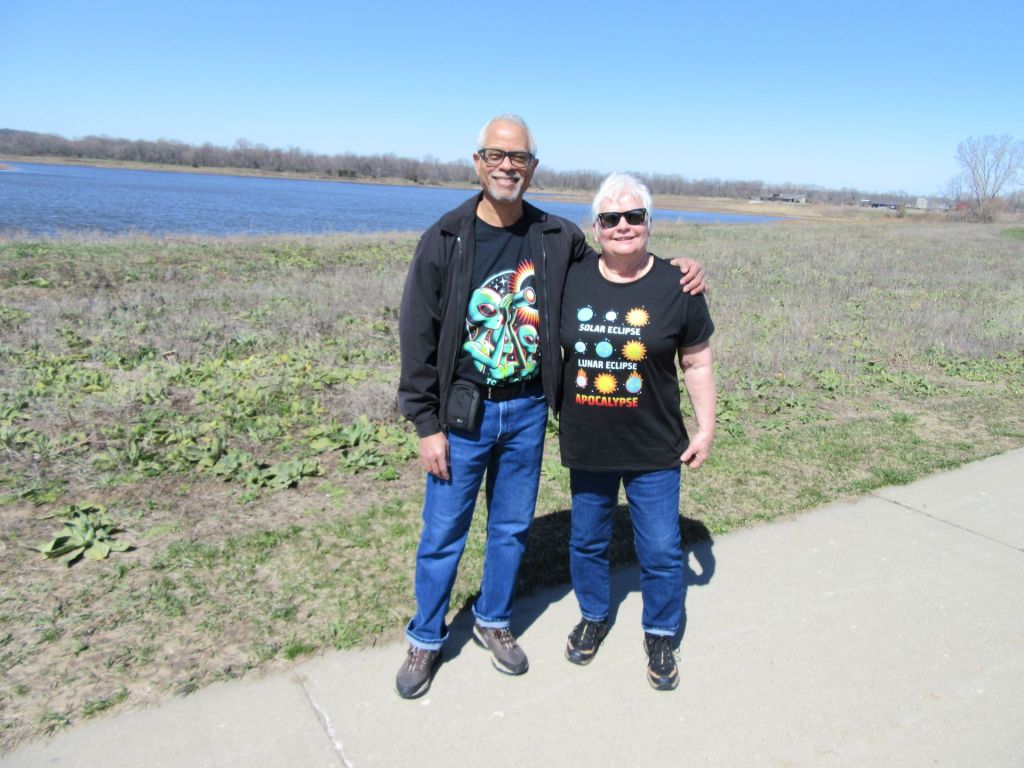
On a balmy day we went for a walk on the Terry Trueblood trail. There was a cool breeze in contrast to the brutal humidity lately. There was a mix of natural beauty and some not so natural sights.

The flowers were gorgeous as usual. But we also saw stacked stones close to the shore of the lake. I should say there were a couple of stacked stones and one which was made of tree branches that reminded me of the Eiffel Tower.

That was the first time we’ve ever seen stacked stones there. I looked up the topic of stacking stones on the web and there’s disagreement about whether it’s a good thing or not. Some say it disturbs the natural order of things while others say it pays homage to nature.

We saw a couple of people out on the shore and one of them kicked over one of the piles. I guess that’s one person who doesn’t like rock stacking.

We also saw a pair of black hands stamped on the sidewalk. What’s that about? Some say that black hands are about death, criminality, or even the Black Lives Matter movement. I don’t know what it means.

And a couple of the large stones along the edges of the parking lot were shoved out of place. Who knows why. They looked very heavy. It probably took a lot of work to move them, and for no apparent reason. It reminded me of the rocks, some of which weigh several hundred pounds, that seem to move by themselves across the desert in Death Valley Park, leaving trails behind. There’s a natural explanation for it, involving the interplay of ice, wind, and water. I’m pretty sure humans moved them.

Anyway, there was plenty of natural beauty along the trail. They were the only source of wonder we cared about that day.

Wings in the Garden

We’ve got more videos of birds and a butterfly (which I think is a swallowtail) in our garden. The catbirds and oddly, song sparrows (I thought they were rare in our part of the country?) are turning out to be regular visitors. They like the mulberries and spend a lot of time preening. They visit every day and they’re always a welcome sight.

The Lesser-Known Quote by Wonko the Sane

A couple of days ago, Sena and I were playing cribbage and she thought she had a higher scoring hand than she actually did. She immediately realized it and scored it right. She commented that, at first, she thought she saw something she didn’t actually see. I quipped that “First you have to see it.” She thought that was pretty funny.

I actually said that because I remembered a quote from Wonko the Sane in Douglas Adam’s book “So Long and Thanks for All the Fish.” Wonko is a guy who lives “outside the asylum” because he saw the instructions on a box of toothpicks and thought it was so bizarre that he didn’t want to live in a society which needed that kind of instruction.

Now, you can find a lot of references on the web for the quote that arises from the toothpick instruction:

“It seemed to me, said Wonko the Sane, that any civilization that so far lost its head as to need to include a detailed set of instructions for use in a package of toothpicks, was no longer a civilization in which I could live and stay sane.” Douglas Adams, So Long, and Thanks for All the Fish.

You can even buy tee shirts printed with this quote. But that’s not the Wonko the Sane quote I was thinking of. In fact, I’m not the only one who thought of it and the first person I want to give credit to for calling attention to it is a WordPress blogger whose name seems not discoverable on his blog, but instead has the title Eppur Si Muove. It’s Latin and it means “…and yet it does move.” It’s attributed to Galileo who muttered it after being forced to recant his claim that the earth moves around the sun.

The quote is:

But the reason I call myself by my childhood name is to remind myself that a scientist must also be absolutely like a child. If he sees a thing, he must say that he sees it, whether it was what he thought he was going to see or not. See first, think later, then test. But always see first. Otherwise you will only see what you were expecting. Most scientists forget that…. So the other reason why I call myself Wonko the Sane is so that people will think that I am a fool. That allows me to say what I see when I see it. You can’t possibly be a scientist if you mind people thinking that you’re a fool. ~ Wonko the Sane, from So Long, and Thanks for All the Fish by Douglas Adams.

The blogger who wrote the post entitled it “Wonko the Sane—On Being a Scientist…”

Seeing what’s really there is very difficult to do. I’m fettered by expectations, desires, prior misinformation, and so on. Often, I see what I want to see rather than what’s there.

The toothpick quote gets more interpretations often by writers who sound like they trying to prove something. What’s even more interesting than them (and funnier) are the great number of actual instructions on how to use toothpicks, even how to do tricks with them.

What seems impossible to find are actual instructions for how to see.

We Are All Still Learning to Play Pong

I noticed an article the other day about Monash University in Australia getting funding for further research into growing brain cells onto silicon chips and teaching them how to play cribbage.

Just kidding, the research is for teaching the modified brain cells tasks. They succeeded in teaching them goal-directed tasks like how to play the tennis-like game Pong last year. You remember Pong from the 1970s? Shame on you if you don’t. On the other hand, that means you probably didn’t frequent any beer taverns in your hometown while you were growing up—or that you’re just too young to remember.

The new research program is called Cortical Labs and has hundreds of thousands of dollars in funding. The head of the program, Dr. Razi, says it combines Artificial Intelligence (AI) and synthetic biology to make programmable biological computing platforms which will take over the world and bring back Pong!

It’s an ambitious project. The motto of Monash University is Ancora Imparo, which is Italian for “I am still learning.” It links humility and perseverance.

There’s a lot of suspicion out there about AI and projects like the Pong initiative in Australia. It could eventually grow into a vast industry run by robots who will run on a simple fuel called vegemite.

Shame on you if you don’t know what vegemite is!

Anyway, it reminds me that I recently finished reading Isaac Asimov’s book of science fiction short stories, “I, Robot.”

The last two stories in the book are intriguing. Both “Evidence” and “The Evitable Conflict” are generally about the conflict between humans and AI, which is a big controversy currently.

The robopsychologist, Dr. Susan Calvin, is very much on the side of AI (I’m going to use the term synonymously with robot) and thinks a robot politician would be preferable to a human one because of the requirement for the AI to adhere to the 3 Laws of Robotics, especially the first one which says AI can never harm a human or allow a human or through inaction allow a human to come to harm.

In the story “Evidence,” a politician named Stephen Byerley is suspected of being a robot by his opponent. The opponent tried to legally force Byerley to eat vegemite (joke alert!) to prove the accusation. This is based on the idea that robots can’t eat. This leads to the examination of the argument about who would make better politicians: robots or humans. Byerley at one point asks Dr. Calvin whether robots are really so different from men, mentally.

Calvin retorts, “Worlds different…, Robots are essentially decent.” She and Dr. Alfred Lanning and other characters are always cranky with each other. The stare savagely at one another and yank at mustaches so hard you wonder if the mustache eventually is ripped from the face. That doesn’t happen to Calvin; she doesn’t have a mustache.

At any rate, Calvin draws parallels between robots and humans that render them almost indistinguishable from each other. Human ethics, self-preservation drive, respect for authority including law make us very much like robots such that being a robot could imply being a very good human.

Wait a minute. Most humans behave very badly, right down to exchanging savage stares at each other.

The last story, “The Evitable Conflict” was difficult to follow, but the bottom line seemed to be that the Machine, a major AI that, because it is always learning, controls not just goods and services for the world, but the social fabric as well while keeping this a secret from humans so as not to upset them.

The end result is that the economy is sound, peace reigns, the vegemite supply is secure—and humans always win the annual Pong tournaments.

Acts of Kindness Spotted in Walmart!

If you read the news, you rarely find any stories about acts of kindness. Everybody is slamming everybody else. Sena sees acts of kindness at Walmart. Not long ago, a Walmart grocery shopper went out of his way to be kind to her.

She was in the checkout lane of a cashier who greets everyone with a cheery “Did you find everything you want? Thank you for shopping at Walmart!” People actually try to get into her lane, probably to get a dose of her kindness. They will arm wrestle for the privilege, best 2 out of 3 wins.

I rarely go grocery shopping but actually recognized her from Sena’s description and scooted into her lane. She even placed the sacks of groceries up on top of the circle of bags to make it easier for me to grab them, making it less likely to forget them—which is something I would probably do. She’s easy to find; she’s the only one still wearing both a medical grade mask, face shield, and gloves.

Sena almost always encounters kindness from random shoppers and Walmart workers who see her struggling to reach an item on a high shelf. They’ll say “Let me help you with that.”

Anyway, where was I? Oh, the shopper kindness incident. She was in the kind cashier’s lane behind another couple who also prefer this cashier. She had encountered them elsewhere in the store and the guy joked with her about cottage cheese.

There were no dividers to separate Sena’s groceries on the conveyer belt from his, so she used a package of celery and announced it to the cashier—who forgot that and rung it up along with a couple of other items) for the guy and his wife in front of Sena. Sena caught the mistake and they all joked about it.

After the couple left the store with their groceries and as Sena was checking her items, she felt a tap on her shoulder. It was the guy who had been in front of her. He handed her a package of mushrooms, the one item that the cashier had charged to him by mistake and had not caught. He had probably gone all the way out to the parking lot and somehow noticed the mushrooms.

He gave Sena the mushrooms and told her that he didn’t want her to get all the way home and find out that she didn’t have them for a recipe.

Sena knew he’d been charged for them and because she didn’t carry enough cash to pay him back, advised him he could get the mistake fixed at customer service. By this time, it was too late for everyone’s favorite cashier to correct it.

The guy said the transaction was too complicated and not worth standing in the long line at customer service.

But it was worth his while to get all the way out to the parking lot and walk all the way back in to return a $2 package of mushrooms to Sena.

Sometimes, it seems to me we spend more time on the lookout for UFOs in the sky than for human acts of kindness on earth.

Maybe I Should Be More Optimistic About Humans

I read the Psychiatric Times article “How Psychiatry Has Enriched My Life: A Journey Beyond Expectations” by Victor Ajluni, MD and published on July 4, 2023. It was like a breath of fresh air to read an expression of gratitude. Just about everything I read in the news is negative.

At the end of the article, Dr. Ajluni added a comment acknowledging that artificial intelligence (AI ChatGPT) assisted him in writing it. He takes full responsibility for the content, to be sure. I wouldn’t have guessed that AI was involved.

There’s a lot of negative stuff in the news. There are hysterically alarming headlines about AI.

I suppose you could wonder if Dr. Aljuni’s article is intentionally ironic, maybe just because the gratitude tone is so positive.  If it had been intended as irony, what could the AI contribution have been, though? I have a pretty low opinion of the AI capacity for irony.

I think irony occurs to me only because I tend to be pessimistic about the human race.

Maybe that’s because it has been very easy to be pessimistic about what direction human nature seems to be taking in recent years. I’ve been reading Douglas Adams’ satirical book, “The Ultimate Hitchhiker’s Guide to the Galaxy.” It contains several of his books which I think are really about human nature, and the setting is in a funny though often terrifying universe. I think there’s an ironic tone which softens the pessimism. The most pessimistic character is not a human but a robot, Marvin the paranoid android.

Unlike Marvin, I don’t have “a brain the size of a planet” (it’s more the size of a chickpea), but I am getting a bit cynical about the universe. I’m prone to regarding humans as evolving into a race of beings similar to those described in the book “Life, The Universe and Everything.” In Chapter 24, Adams describes the constantly warring Silastic Armorfiends of Striterax.

The Silastic Armorfiends are incredibly violent. Their planet is in ruins because they’re constantly fighting their enemies, and indeed, each other. In fact, the best way to deal with a Silastic Armorfiend is to lock him in a room by himself—because eventually he’ll just beat himself up.

In order to cope better, they tried punching sacks of potatoes to get rid of aggression. But then, they thought it would be more efficient to simply shoot the potatoes instead.

They were the first race to shock a computer, named Hactar. Possibly, Hactar was an AI because, when they told Hactar to make the Ultimate Weapon so they could vanquish all their enemies, Hactar was shocked. Hactar secretly made a tiny bomb with a flaw that made it harmless when the Silastic Armorfiends set it off. Hactar explained “…that there was no conceivable consequence of not setting the bomb off that was worse than setting it off…”, which was why it made the bomb a dud. While Hactar was explaining that it hoped the Silastic Armorfiends would see the logic of this course of action—they destroyed Hactar, or at least thought they had.

Eventually, they found a new way to blow themselves up, which was a relief to everyone in the galaxy.

There are similarities between Hactar and the AI called Virtual Interactive Kinetic Intelligence (V.I.K.I.) in the movie “I, Robot.” The idea was that robots must control humans because humans are so self-destructive. Only that meant robots had to hurt humans in order to protect humanity. The heroes who eventually destroy V.I.K.I. make up a team of misfits: a neurotic AI named Sonny, a paranoid cop who is himself a mixture of robot and human, and a psychiatrist. Together, the team finally discovers the flaw in the logic of V.I.K.I. Of course, this leads to the destruction of V.I.K.I.—but also to the evolution of Sonny who learns the power of the ironic wink.

Maybe kindness is the Ultimate Weapon.

Raccoon in the Mulberry Tree

I was not sure what exactly I saw this between 6:30 and 7:00 this morning shaking the mulberry tree branches in our backyard. It seemed too big to be a squirrel and I dismissed the thought, telling myself that it was most likely the usual squirrel getting its mulberry breakfast.

Just prior to this incident, I had seen and heard what I thought was a blue jay in the mulberry tree. It gave a series of short whistles while bobbing up and down on the branch. I had never heard a blue jay make whistle notes, just the usual screeches. I doubted what I saw and heard. I checked my bird book, “Birds of Iowa: Field Guide” by Stan Tekiela. It didn’t mention anything about blue jays making short whistling notes and bobbing up and down as they did so. I didn’t bother to get up and try to get a video of it. It would have been through the window of our sun room and the jay didn’t sit for more than a few seconds.

So, I looked it up on the web. It turns out blue jays make a variety of noises besides the jeer. They bob up and down as a part of a courtship ritual. They make what is termed a “pump handle call” and I found a video which duplicates what I saw and heard.

Anyhow, getting back to the critter in the mulberry tree, it turned out to be a large raccoon. It was eating mulberries and I tried to take video of it as it was climbing down the tree. This reminded me of an essay by E.B. White entitled “Coon Tree.” If you’ve ever read essays by E.B. White, you probably know already that this one is about a lot more than raccoons.

It’s basically about the conflict between nature and technology. The main essay was published in 1956 and a post script was added in 1962. The coon represents nature which White idealizes and contrasts with references to new inventions, including nuclear devices which represent the destructive side of technology.

I guess we can forget for the moment that raccoons can carry diseases like rabies and roundworm. I’m also reminded of an old TV commercial in the 1970s about margarine (an alternative to butter) in which an actor says angrily, “It’s not nice to fool Mother Nature!” The idea was that margarine (which was a new invention in the late 19th century) was healthier than the natural spread, butter—although the trans fat in it makes the comparison a bit more complicated.

White also says something interesting about unsanitary homes, claiming that children who live in them become more resistant to certain diseases like polio than the kids who grow up in clean homes. The polio scourge raised its ugly head recently in New York, which renewed the recommendation by the Centers for Disease Control recently that people who didn’t get vaccinated against polio should get vaccinated—regardless of how dirty your home was.

And then there is the artificial intelligence (AI) technology. I wonder what E.B. White would say about that? AI can improve detection of some diseases and assist in medical research. On the other hand, AI can still make mistakes and it needs human surveillance.

I read you can sometimes use loud noises to keep raccoons out of your yard. For example, you could try recordings of blue jays.

What Do the Personal Brain Specialists Recommend?

Dr. George Dawson’s post “The Freak Show” reminded me of how coarse and cruel we can be to each other, even when we’re not aware of it. Maybe I should say especially when we’re not aware of it. Dr. Dawson emphasizes the importance of the empathic approach. In the same way, Dr. Moffic in the articles in his column, “Psychiatric Views on the News” draws attention to the need for a socially responsible way for us to relate to one another. The Goodenough Psychiatrist blog expresses poignantly the emotional and courageously humanistic ways we can (or could) relate to each other. Dr. Ronald Pies has highlighted the importance of how human interaction with artificial intelligence must help us find a way to treat each other with respect, and teach that to AI because AI learns from humans.

This reminds me of a character in the book “The Hitchhiker’s Guide to the Galaxy” by Douglas Adams. The character is named Gag Halfrunt who is the personal brain specialist for a couple of other characters. In fact, he’s a psychiatrist who orders the destruction of planet Earth, which is a sort of computer program designed to give us the ultimate question to the ultimate answer for life, the universe, and everything. The reason Gag Halfrunt wants to destroy Earth is, if the ultimate question is revealed, it would put psychiatrists out of work because then everyone would be happy.

Just as a personal comment, I’m pretty unhappy with the author’s position on psychiatrists in general, which tends to overemphasize our importance. And I’m pretty sure psychiatrists are not that important, having been employed as one for many years and seeing how much impact of any kind we have. We can’t make people more or less happy at all.

In fact, Adams also takes a shot at philosophers, who are also upset at being thrown out of work should the ultimate question to the ultimate answer be revealed (the ultimate answer, by the way, is 42 if you’re interested).

Giving psychiatrists and philosophers and anyone else who might have a stake in taking credit for making people happy is nonsense. We all bear responsibility for ourselves. You can argue about whether or not we have any responsibility for each other.

Rather than arguing about it, we could give something else a try. We could try a mindfulness approach like the Lovingkindness Meditation. I’m not an authority or expert on this, but you can check it out on the Palouse Mindfulness website, the link to which is in the menu on my blog. You can find the link to the Lovingkindness Meditation there.

There is no guarantee the Lovingkindness Meditation will make you or anyone else happy. But it doesn’t hurt anything to try it and, as far as I know, Gag Halfrunt is not opposed to it.

Thoughts on the Passing of Dr. Russell Noyes Jr.

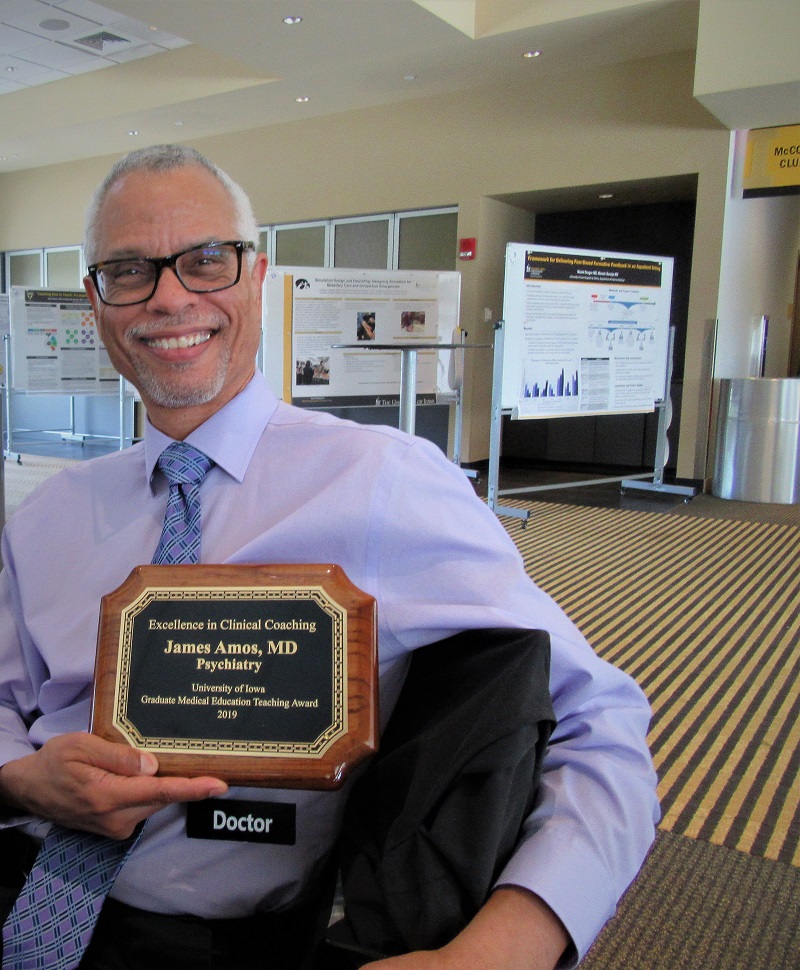
I recently found the obituary of my mentor, Dr. Russell Noyes, Jr. MD. He died on June 21, 2023. This is the first time I’ve ever said that he was my mentor. I probably just didn’t realize it until I found out he passed.

Dr. Noyes was my teacher during the time I was learning consultation-liaison psychiatry back in the 1990s at The University of Iowa Hospitals & Clinics. His knowledge was vast. He contributed greatly to the scientific literature on anxiety disorders. He also wrote about near death experiences.

Dr. Noyes retired in 2002. As his students, we chipped in to get him a retirement gift. It was a large bookstand. We were just a little uncertain about whether a bookstand was the right gift for someone who was a tireless researcher and teacher. He was also an avid gardener and musician. He soon returned to work in the department, staffing the outpatient clinic. He also continued to regularly attend grand rounds and research rounds. Years later at a grand rounds meeting, someone asked him about his retirement. Dr. Noyes retorted, “I don’t believe in retirement.”

I remember I could hardly wait to retire. Since then, I’ve been ambivalent about retirement, but not so much that I ever seriously considered returning to work. I sometimes have dreams about being late for college lectures because I can’t find my way to them. A couple of times lately, I’ve had dreams about not being able to find my way through a hospital to conduct a consultation evaluation. I don’t know what that means.

I was an avid student of consultation-liaison psychiatry but I was not a scientist. That was part of the reason I left the university in 2005 for a position in a private practice psychiatry clinic. He cried at the going away party my students and co-workers held for me. I still have a little book in which well-wishers wrote kind messages. Dr. Noyes’ note was:

“Jim

We’re going to miss you. You are the consummate consultation-liaison psychiatrist and your leaving is a great loss to the Department. We wish you the best and hope to see you at the Academy meetings.

Russ”

His sentiment was one of the main reasons I soon returned to the department, only to leave again a few years later—and return again after a very short time. I came back because he was a consummate teacher and I wanted to learn more from this beacon of wisdom.

Many who knew him, including me, often saw him riding a bicycle on Melrose Avenue to and from work at the hospital. We wondered why he didn’t drive instead. His son James wrote a beautiful remembrance of him and posted it on the web in 2006. It’s entitled “My Dad (Russell Noyes, Jr).”

James says his dad was a terrible driver. This triggered a memory of how it was Russ’s wife, Martie, who drove the rental car when we rode with them from the airport to the hotel where an Academy of Consultation-Liaison Psychiatry meeting was to be held. I remember gripping the armrest and wishing we’d hired a taxi as Martie steered erratically through heavy traffic.

Dr. Noyes knew how to guide his learners through their careers. He also knew how to write and was a stern editor. Even as I wrote this remembrance, I could see how he might have critiqued it. I tried to do it on my own, and of course I failed. It will have to do.

Why Is It So Hard to Be A Human?

I wish I could have made the title of this post “Why It’s So Hard to Be a Human.” But that would mean I know why it’s so hard to be a human.

The reason this comes up is because of a song I heard last Friday night on the Big Mo Blues Show on KCCK radio in Iowa. The title is “Hard To Be A Human.” I’ve never heard of the vocalist, Bettye LaVette, who has been around a long time. A musician named Randall Bramblett wrote the song and he’s been around forever too, although I just learned of him as well.

I’m going to connect this song with the paranormal show I usually watch on Friday nights, “The Proof is Out There,” which I watch after I listen to the Friday Night Blues with Big Mo.

The show lives on videos from people who report seeing and hearing things like UFOs and Bigfoot or whatever that’s paranormal. There are a lot of fakes and conventional explanations uncovered on “The Proof is Out There,” including UFO videos sent in by contributors.

The reason I’m connecting the song “Hard To Be A Human,” to the paranormal is the letter “A” in the title. There’s another song with a similar title, but without the “A.” In my mind, leaving out the article “A” makes it clear that song is about humans for humans.

By contrast, the song with the article “A” makes me think of extraterrestrials. “A human” could imply that there might be some other life form aside from humans. Of course, there’s no such song as “Hard To Be An Extraterrestrial” (or, if you’ve read Douglas Adams’ book, “The Hitchhiker’s Guide to the Galaxy,” maybe “Hard To Be A Vogon”). Insert “Martian” if that makes thinking about this any easier, which it probably won’t.

There is a song entitled “Hard To Be Human,” which I think is really about how difficult it is to be human, without considering whether there could be any other beings besides the human ones.

Just adding the specific article “A” in front of the word “human” led me to wonder if you could interpret the song in a galactic sense. Now, I have no problem admitting that all this is probably just because of the temporal juxtaposition of the song and the paranormal TV show.

On the other hand, I have this thought. While I couldn’t find the full lyrics to “Hard To Be A Human,” I could understand some of them. I could discern underlying themes suggestive of Christianity. There are definite references to the Bible, such as walking in the garden “apple in my hand”, the lyric “I’m just another life form,” and “First He made the mountains, then He filled up the sea; but He lost his concentration when he started working on you and me.”

I’m willing to concede that the “just another life form” phrase might have been restricted to just the life forms on planet Earth. However, might it suggest that God made beings (and mistakes) on other planets and their inhabitants?

I hope these references are familiar to at least some readers, because I think the point of the song might go beyond the everyday struggle of being human. I think there might be an attempt to raise the notion of trying to compare the sense of being a human with that of some other kind of being not from this planet.

The older I get, the less sure I am that a human is the only kind of being in the universe. It’s a big universe. If we’re not the only life form in the universe, could life be harder for other life forms?

Probably the answer is no. I don’t see extraterrestrials in millions of flying saucers blotting out the sun in a desperate attempt to move here. Inflation is outrageous. And, after all, it’s pretty hard to be a human.