A couple of days ago we heard a ballet called The Cigarette Waltz by a French composer, Edouard Lalo, on one of the Iowa Public Radio (IPR) classical music programs. The announcer told a little anecdote (most of which I didn’t hear) about the saying “Smoke‘em if ya got’em” which he traced to the World War II era, reflective of the general idea that you can do what you like if you have the means. I didn’t get the connection, frankly.
I was curious about why the ballet Namouna (Valse de la cigarette) was connected with cigarettes. The first thing I did was to look up the ballet on the web. I found the version done by the Royal Philharmonic Orchestra, conducted by—Yondani Butt. That’s actually a better joke than the one by the IPR radio show host.
At first the only thing I could find out about Lalo was that his name is the answer to a crossword clue, which is “composer of the Cigarette Waltz.” I followed several dead-end leads. There’s no real connection with Lalo himself that I could find, unless you count his “hemiplegic attack” (a stroke from smoking?) which prevented him from finishing the score for the ballet.
I read the Wikipedia article summarizing the ballet, which didn’t mention cigarettes.
And finally, I found a Google book entry after using the search terms “why is Namouna called the cigarette waltz.” The book’s title is “Traveling Sprinkler Deluxe: A Novel,” written by Nicholson Baker, published by Penguin Group in 2013. It might help to read the Wikipedia synopsis of the ballet before you read Baker’s passage, which mentions a cigarette:
“It’s true that there is an opera by Edouard Lalo called The King of Ys about the flooding of Ys, based partly on a forged Breton ballad by Theodore Hersart de la Villemarque, and true that Debussy had wildly applauded Lalo’s ballet Namouna while at the conservatory, and had memorized parts of it, including perhaps the scandalous waltz in which Namouna rolls a cigarette for her paramour…”
It’s still not exactly clear what’s going on with the cigarette, but because the waltz is described as scandalous, I wonder if there was something salacious about the rolling of the cigarette. The slave girl Namouna is, after all, flirting with Ottavio.
Baker’s point is probably that the ballet is not so much about the cigarette as it is about a larger issue, judging from my general sense of his passage. Larger than a cigarette anyway.
There’s a book titled “Cigarette Waltz: Seventeen Short Stories Adaptable for Theater” by Philip-Dimitri Galas” but I was unable to access any inside text.
Sena told me that Wendy’s will now be offering the strawberry Frosty, for which she and many others have been clamoring for years. The media announcements call it historic. Was there ever a strawberry shortage to explain the absence of a strawberry Frosty? It never seemed that way. It was predicted in December 2021, but now sources say we’re all good.
On the other hand, they tell us that my favorite, the vanilla Frosty, will be going away in order to make room for the strawberry. It turns out that vanilla is the base for the strawberry.
I understand the strawberry Frosty will be offered only through July 3. We had thought that it was nothing short of impossible for Wendy’s to make the strawberry dessert. Now we know different. Impossible is nothing.
Impossible quote mural on ICOR Boxing Iowa City, IA
On the other hand, why do they have to sacrifice the vanilla?
There can be no success without sacrifice.
John C. Maxwell
There must be another way. Maybe it involves too much sophisticated chemistry.
After we ordered, the cashier laughed and said she had at first thought the whole thing was a rumor.
It looked pink, tasted good but didn’t have quite as much strawberry flavor as we expected. Are there real strawberries in it? I couldn’t find that out just by googling it.
But even the chocolate Frosty is a combination of vanilla and chocolate. When Wendy’s first opened, it started with the chocolate Frosty, then in 2006, the vanilla was added. There were others that didn’t last (even a pickle Frosty, believe it or not), but the strawberry is finally here.
But it’ll go away July 3. It’s a just a summer fling. And here’s the thing—Sena still likes the chocolate best, and vanilla is still my favorite.
Today is D-Day, which was the largest amphibious invasion in the history of warfare, and there is plenty of history to read about it. It was the Battle of Normandy during World War II, which lasted from June to August of 1944.
There is also the history of African-American soldiers in World War II. Unfortunately, it was marred by segregation. But African American soldiers played important roles nonetheless.
Notably, Waverly Woodson, Jr. served as a medic on Omaha Beach and treated at least 200 men while sustaining injuries himself. By many accounts, he should have won the Medal of Honor, but did not, despite ample evidence demonstrating he deserved it.
His family and the office of General John C. H. Lee are still working to get that corrected. Part of the barrier is a fire that destroyed Woodson’s records, along with those of millions of other veterans. Woodson died in 2005, but his wife is still working to get him recognized.
We are grateful to all of the soldiers who gave their lives at Normandy.
I was thinking yesterday about Ransom’s Cigar Store in Mason City, Iowa. There are actually a couple of reasons why it’s on my mind now.
The first thing about Ransom’s is that it’s an old pool hall on 120 North Federal Avenue. It looks like it has been there for a century. Decades ago, probably in the 1970s, I played a game of eight-ball with Bart Curran. Bart was the host of Bart’s Clubhouse, which I found out has a substantial Facebook following. Bart’s Clubhouse was a popular kids TV show back in my day and it aired on station KGLO (later KIMT) in Mason City.
Anyway, Bart and I played eight-ball (or was it nine-ball?) and drank a short beer. He was shorter than I imagined. He was a real nice guy. I think he asked me what my dad’s name was and when I told him it was John, he looked a little doubtful and said something like “Not the actor John Amos?” I don’t remember who won the pool game. It’s unlikely to have been me.
The second thing is, I searched Ransom’s Cigar Store on the web and found a couple of links to something called Ransom’s Pleazol. I can’t find the word Pleazol in any dictionary, including the Scrabble Dictionary. If anyone knows what that means, please drop a comment.
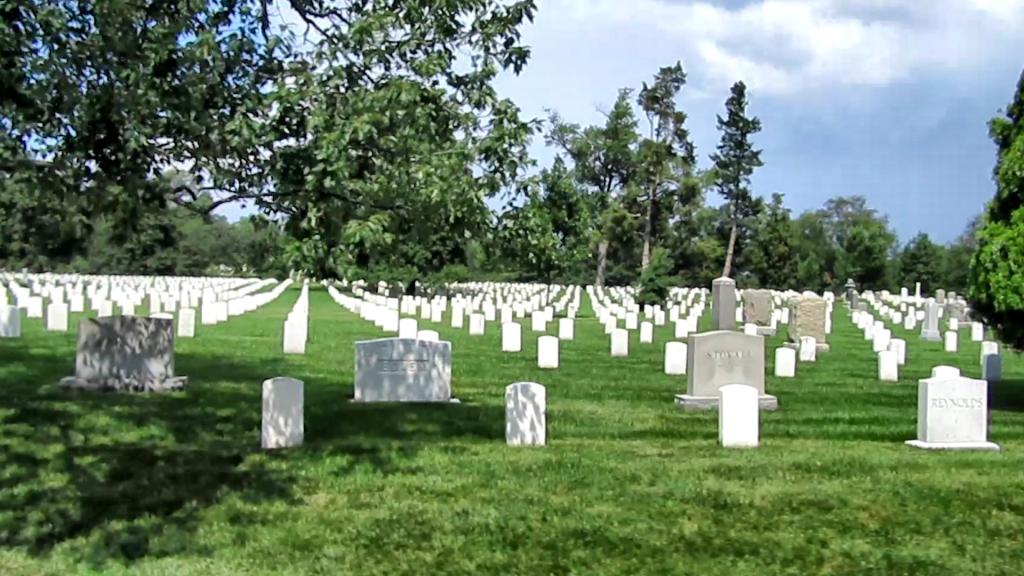
Yesterday, Sena and I drove out to Oak Hill Cemetery to get some snapshots and video clips of the new Coralville Veterans Memorial. It’s still in progress, with plans for stone medallions from each branch of the military. Even now, it’s beautiful and inspiring.
That includes the inscription on the Tribute Walkway: All Gave Some…Some Gave All…
This quote has been attributed to Korean War veteran Howard William Osterkamp. It’s all over the internet that’s it originated with Sergeant Osterkamp, who was the recipient of the Purple Heart from wounds he suffered while in combat.
Because the words “has been attributed” made me curious (is there doubt?), I looked on the internet, which led to many blind alleys and side streets. Sena and I wanted to find out if the quote originated with Osterkamp, we looked for and found a couple of recordings of interviews with him that took place several years ago.
One of the recordings is in the Library of Congress in a collection called the Veterans History Project. It’s an 88-minute audio from an interview in 2008 and he says a lot about his military history between when he was drafted into the Army in 1951 to when he was discharged in 1953.
Osterkamp says a lot that is arguably more interesting than even the quote often said to originate with him. But nowhere in it does he say “All gave some, some gave all.
The other recording is a YouTube interview posted in 2018. Osterkamp died in 2016 and it’s not clear to me when the interview was conducted. But it’s shorter and less punctuated by the details that made the audio recording so much longer, which was probably because it was to be part of the Veterans History Project.
It is in the YouTube version at around 44 minutes into the interview that Osterkamp says after describing the wounds he suffered, “that’s why they say ‘All gave some, some gave all…that’s a great slogan.”
Saying it that way probably means that the quote didn’t originate with him, although he did, indeed, say it.
I’m going to try to summarize the internet lore around this quote and then circle back to say why I think many people believe it originated with him.
If you just type the quote and hit the search button, you’re likely to get a lot of hits. One was in Special Ops web magazine, the author of which says Osterkamp originally said it. However, below the article is a comment from someone who says it probably was probably around before Osterkamp. He included a link to a May, 1952 newspaper article in about a veterans memorial planned progress for Electra, Texas. The article describes the proposed inscription:
“Dedicated to those who rendered service to their Country…all gave some…some gave all.”
I got to thinking about the ellipsis in that quote as well as the one at the new Coralville memorial. The ellipsis usually indicates something that is left out of a quote or passage in writing.
The bread crumbs were spreading out, leading me to a web site that mentioned a lot of different sources for the quote, none of which included Osterkamp. One of them was a book published in 1882, The Nineteenth Century, “Instructions to My Counsel” pg 988. I found this on the Internet Archive as well. The context appears to involve the history of the Egyptian history:
“The Egyptian people have made heavy sacrifices for the sake of (Pg. 989—ed.) securing to their country liberty, justice, and independence; some gave all they possessed, others the half, but all gave some mite to the National cause, as can be proved by letters and telegrams to the War Minister.” (Bold type mine).
The quote used today is in there, albeit with the two phrases switched. You could place ellipses between them and have the quote used today.
The internet lore doesn’t stop there. There is the song by Billy Ray Cyrus (1992), “Some Gave All” in the album of the same name. Cyrus has told the story about meeting a Vietnam veteran who inspired the song. He’s variously called Sand Cane or Kane, and he reportedly said to Cyrus some version of “After we got back from Vietnam, in rehab camp they told us, “All gave some, but some gave all.” The story changes slightly depending on who’s telling it.
There is even a stranger twist to the Kane story. In the comment section following a review of the best soldier songs, there’s an anecdote from someone who says he met a guy named Sandy Cain, a Vietnam vet who was promoting a song very similar to the one Cyrus wrote with the same title. He recorded it on a small label. The commenter evidently was in a band that recorded it for a radio station in Portsmouth Virginia in 1973 and wonders if it’s the same Sandy Kane (or Sandy Cane, the spelling of the name differs depending on who’s telling the story). It’s puzzling that Cyrus says he couldn’t find the veteran despite contacting state police to help look for him in 3 different states.
Okay, to return to why Sena and I think it probably doesn’t matter whether the quote “All gave some, some gave all” originated with Sergeant Howard William Osterkamp. Although in our opinion, based on our trek through internet lore, he did not create the phrase, it’s fair to say he certainly lived it. The recorded interviews are fascinating and we recommend they be used as the main references for Osterkamp and the Korean War.
The title of the post is “Mysteries in History,” and before I chose it, I realized it had a familiar ring to it. It’s from Men in Black II. It’s an imaginary, cheesy, very low budget TV series narrated by Peter Graves in the movie. And it’s actually the perfect title for what my wife and I think about the Mason City, Iowa YWCA not being on the National Register for Historic Places. It’s a mystery in history which is anything but cheesy. I mentioned it in my previous post about the Mason City Ys.
I asked the State Historical Society of Iowa about it. It turns out it has been deemed eligible twice for nomination to the National Register, in 1991 and again in 2003, which was a year after the YMCA was added to the list.
The Mason City YWCA has never been nominated. Why it has never been nominated is the mystery in history.
It’s not a simple matter to get a building on the National Register. The process is outlined on the State Historical Society of Iowa web site. Unless you’re a professional historian, it’s a tough project and can take at least a year to accomplish.
I found a 36-page form on the web which documented the approval of the Mason City YMCA as a historic site fit for the National Register. It’s minutely detailed and I imagine it took a year just to complete the form itself, not to mention all the other hurdles you have to negotiate. The photos bring back memories of when I lived there as a young man. You could actually live in small, single occupancy dormitory rooms. You could do that at the YWCA as well, once upon a time.
There are 2 Artists who bought the YWCA building last year. It’s 100 years old and the place needs a lot of work. There’s a Trulia entry on the web which says it has housed a health spa, an intermediate care facility for people with intellectual and developmental disabilities called One Vision, a Women’s shelter and the list apparently doesn’t stop there.
A couple of articles say that one of the two new owners, Elisha Marin, filmed his music video, “Shining Out,” in an abandoned YWCA. They don’t say which one, but I wonder if it’s the Mason City YWCA. It would fit the long and winding story.
The Mason City Public Library (my favorite place when I was a kid) has a web page with a historical timeline indicating that the YWCA was built in 1918. The YMCA was dedicated in 1927 and placed on the National Register in 2002. I think a lot of the historical documents which helped get the YMCA listed might also prove the YWCA should be listed too.
I found another place called Five College Compass Digital Collections, which also has a ton of documents on microfilm about the Mason City YWCA. It was difficult to navigate and some of the pages were rotated, making them hard to read unless you can bend your head 90 degrees. You can click a button which apparently flips the pages upright, but transforms the text into something that looks like a foreign language.
You can get technical assistance in getting a property listed. The assistant would be available for 24 hours total. You can apply for grants, which can help with some of the expenses. It looks exhausting, though. Hey, I’m the kind of guy who flunked history.
It would sure be nice to solve this mystery in history. Maybe the 2 Artists will consider it. I wish them luck.
We took a walk this weekend on Scott Boulevard and eventually found our way to Fire Station No. 4. At first, we were struck by what looked like a real Dalmatian apparently sitting just inside the door. It was a pretty good sculpture. Just behind it was a large American Flag hanging on the wall. Below it was the title “Flag of Honor.”
One of the firefighters noticed us and welcomed us inside. He talked a long time about the Iowa City Fire Department and what they did. They responded to a lot of medical calls. In fact, those were the most frequent calls, fires not so much. He graciously answered our questions, including the one about The Flag of Honor on the wall. It’s to honor the victims and the heroes of the September 11, 2001 attack on America.
Later, I found out more on the web about the Flag of Honor. Over 800,000 Flags have been distributed across America. They’re in many places: public buildings, private homes, police and EMS stations, and firehouses.
I remember where I was on September 11, 2001. I was running up the stairs from the lower level to the first floor. I think I had just finished a psychiatric consultation and I was probably on my way to another one, or to my office. It was my usual routine. Like most general hospital psychiatric consultants, I was a lot like a firefighter, going from one urgent consultation to another, to the critical care unit, the emergency room, and others. My pager was like a fire alarm and off I would go.
I was on the stair landing just going up to the first floor. The stairs overlooked a lobby and the television on the wall was showing a video of one of New York City’s Twin Towers on fire, smoke all around it.
I stopped in my tracks and watched, not comprehending the scene. I can’t remember if the volume was high enough for me to hear the reporter. I don’t think it was. I just saw the fire and the smoke and at that moment I didn’t know what happened. That news I wouldn’t hear until later.
And then much later, in the summer of 2017, Sena and I took a vacation in New York City. Like many tourists, we saw the reflecting pools and Sena took a snapshot of me by the Callery Pear—the Survivor Tree.
The firefighter finally had to excuse himself, because there was somewhere he had to go, something he had to do.
He had probably been busy when we showed up, remarking on the Dalmatian which looked so lifelike, taking pictures of the Flag of Honor, asking questions about what Fire Station No. 4 does, listening to his answers, admiring his patience, his sense of humor, his sense of duty—and thanking him for all of it.
I ran across this quote the other day: littera scripta manet. The English translation is, I think, “the written word endures.”
Not to dwell too much on the prosaic side of the issue which is that, for me, often the word has been blurred because of problems with my vision. I just had retinal detachment surgery a little over a month ago and I’m making a good recovery. But early on I had a lot of trouble with blurry vision, tearing, and light sensitivity.
Just the other night though, I was able to read a section of a book without having as much blurred vision as I did before the surgery when I looked up from the page at something distant. I’ve been wearing progressive lenses for many years and it probably got worse because of the detached retina, which was chronic or maybe acute on chronic.
Now to get beyond trivialities, I saw the quote above in an issue of the University of Iowa publication, Iowa Magazine. It was in the last Old Gold column of University Archivist, David McCartney. He retired in March of this year. The title was “Old Gold: The Enduring Power of the Written Word.”
He notes the Latin expression is on the seal of the U.S. National Archives and Records Administration. McCartney’s point is that technology can undermine as well as strengthen the power of the written word. He identities Horace as the originator of the expression, “the written word endures.”
I went pecking around the internet and found out that a lot of people think an educator named Neil Postman was the originator of this quote. What makes me doubt this is that the original is in Latin, which suggests a much older origin. He was born in 1931 and died in 2003. Interestingly, Postman criticized the effect of technology on thought and culture.
A website that seems dedicated to explaining English translations of Latin indicates that the quote comes from a longer expression: Vox audita perit, littera scripta manet, which translates to “the spoken word perishes, but the written word remains.” One contributor says the originator was Horace. Another insists that “littera” does not mean word at all, although concedes that the proposed translation is correct, nevertheless.
Further, there is a Wikipedia entry which cites the Latin expression differently, “verba volant, scripta manent,” which in English is “spoken words fly away, written words remain.” The author says the proverb originated from a speech of senator Caius Titus to the Roman Senate.
Anyway, McCartney points out that the world is becoming increasingly digitized and that the average website lasts only a little over two and a half years. Some important digital records have been lost, unreadable (blurred?) because of improper management.
My previous blog survived about 7 years but is lost. Maybe that’s not such a bad thing. My current blog is a little over 3 years old. So far, I’m beating the odds as far as typical longevity, but is it worthwhile?
Both written and digital records have strengths and weaknesses in terms of durability. And deciding what to preserve and how is essential to any society. We need good stewards to help us decide.
Good luck in your retirement, David McCartney. I’m sure the University of Iowa treasures your stewardship. Let the written word endure unblurred.
I read a short article, “The case for pursuing a consultation-liaison psychiatry fellowship” by Samuel P. Greenstein, MD in Current Psychiatry (Vol. 1, No. 5, May 2022). After 3 years as an attending, he found his calling as a C-L psychiatrist, especially after getting teaching awards from trainees. But when he applied to academic institutions for position as a C-L academic psychiatrist, people kept advising him to complete a fellowship training program in the subspecialty first. He gave it careful thought and did so, even he called it going “backwards” in his career.
On the other hand, he believes C-L fellowships will help meet the challenges of addressing rising health care costs and improving access to what most people see as the critically important goal of providing access to integrated mental health and medical care.
I’ve been retired from consultation-liaison psychiatry for two years now. I get an enormous sense of achievement on the rare occasions when I hear from former trainees who say things like “For me you were…one of the most outstanding attendings I had at my time at Iowa.” And “I can at least take comfort that University of Iowa is still at the forefront of psychiatry.”
Several years ago, one of the residents suggested starting a Psychosomatic Medicine Interest Group (PMIG). This was before the name of the subspecialty was formally changed to Consultation-Liaison Psychiatry in 2018. I know many of us were very pleased about that.
I sent a short survey (see the gallery below the slide show) to the faculty and residents in an effort gauge support for the idea and readiness to participate. I used a paper published at the time to guide the effort, (Puri NV, Azzam P, Gopalan P. Introducing a psychosomatic medicine interest group for psychiatry residents. Psychosomatics. 2015 May-Jun;56(3):268-73. doi: 10.1016/j.psym.2013.08.010. Epub 2013 Dec 18. PMID: 25886971.).
You’ll notice on slide 4 one faculty member’s comment, “I think it doesn’t matter whether faculty are certified in PM.” As Dr. Greenstein discovered, it probably does matter, at least if you want to be board certified.
I was initially certified by the American Board of Psychiatry & Neurology (ABPN), but I objected to the whole Maintenance of Certification (MOC) program, as did many other psychiatrists. I eventually declined to continue participating in the MOC process. However, I notice that the Delirium Clinical Module that I and a resident put together is still accessible on the ABPN website.
Although response numbers were low, there was clearly an interest in starting the interest group. There was also an incentive to reapply to the ACGME for approval of a Psychosomatic Medicine (Consultation-Liaison Psychiatry now) fellowship.
My attempt years earlier had been frustrating. While it was approved, I couldn’t attract any fellows, forcing me to withdraw it without prejudice (meaning another application for approval could be attempted). Fortunately, that situation changed later. The Psychiatry Department at The University of Iowa now has an early career C-L psychiatrist who graduated from the reinstated C-L fellowship.
As the saying goes, “What goes around comes around.” Although the origin of that saying might have originated in the 1970s, at least one person thought his grandmother had her own version in the 1950s: “You get what you give.”
This is just a reminiscence. I know the word “wherefores” in the title is old-fashioned, but I’m an old guy and so what? When I was a young guy living in Mason City, Iowa where I grew up, I could not afford to rent an apartment. Shortly after I became an emancipated minor, I was lucky to be able to rent a dormitory room at the YMCA at 15 North Pennsylvania Avenue. The building was placed on the National Register of Historic Places in 2002.
Reference: M, Ben and Clio Admin. “Mason City YMCA (1926-200).” Clio: Your Guide to History. September 30, 2021. Accessed May 10, 2022. https://theclio.com/entry/140366
I guess that makes me sort of historic too. It was built in 1926. I think it rents out apartments now. I recently read a Globe Gazette article about the beginnings of the YWCA on 2 South Adams and it was built in 1918. The current Mason City Family YMCA is located on 1840 S Monroe Avenue.
There is a local legend that bank robber John Dillinger and his gang stayed at the YMCA while planning their robbery of the First National Bank in 1934. Track star Jesse Owens stayed there briefly in 1937, starring for a basketball exhibition.
I recently read a Globe Gazette article on the web about the beginnings of the YWCA on 2 South Adams. As I said, it was built in 1918, but I don’t know when it closed. The YWCA sat empty for years until a couple of artists got a loan from a local realtor. They’re renovating it. (Zachary DuPont. “Old YWCA building takes strides toward renovation,” Globe Gazette on line, 10/29, 2021, updated 1/18/2022).
They plan to build artist studios on the 2nd floor, performance space where a basketball court is presently, a community area and art gallery on the first floor, and make single apartment/dormitory rooms cheaper than regular apartments (maybe similar to what the YMCA had many years ago, up to 12 units on 3rd floor). My wife, Sena, stayed there briefly and that was very helpful.
The YWCA is not on the National Register of Historic Places. It’s not clear why. The artists have raised some money with a GoFundMe campaign toward the renovation project. The website is titled “Save the Historic Mason City YWCA.” So why is it not on the National Register of Historic Places?
Anyway, I moved into a very cramped room at the YMCA on either the 3rd floor in my teens. I was working as a draftsman and surveyor’s assistant for WHKS & Co., a consulting engineering company. It was mainly a place to sleep. Most of the time I was traveling, working on out-of-town jobs such as relocating Highway 13 between Elkader and Strawberry Point (really more like straightening out all the curves in it), land surveys and the like.
Portrait of the legacy blogger as a young man
I also have a distant memory of learning how to swim at the YMCA when I was a kid. I was terrified of even putting my face in the water and used to get fierce headaches just getting into the pool. I’m not sure how I got over it, but I did.
There were a fair number of eccentric characters who lived at the YMCA back in my day. I didn’t consider myself one of them and that’s probably why I didn’t end up staying there for decades. I could have worked in Mason City for the rest of my life, having breakfast at the café in the old Brick and Tile Building on East State Street, and eating all of my other meals in restaurants along Federal Avenue until I was too old to do much more than sit in Central Park.
But I didn’t. I’ll get to that.
There were a number of guys who stayed long term at the YMCA. It was kind of uncomfortable for that. There was only one communal bathroom and shower. There were no kitchens. There was barely enough room for a bed, a kneehole desk and chair, and you had to listen to the cast iron heater radiator clank most of the night. They were just sleeping rooms, but it was a little too loud to sleep sometimes because of the banging noise from the radiators.
I found out one of my neighbors was building a motorcycle in his room. He was very proud of it. It was a large machine and took up a lot of space. He kept it very clean. The Director of the YMCA at the time was John Calhoun and he’d been involved with the YMCA since 1943. He had a reputation for being pretty strict about the rules, which likely included one prohibiting the building of motorcycles in your dormitory room. We kept the motorcycle a secret of course.
There were some guys whose wives kicked them out of the house. They were always going out for coffee. They could drink a lot of coffee, smoke a prodigious number of cigarettes, and talk non-stop about how bad things were in the world in general.
There was an old candy bar vending machine on the floor. I got what must have been an ancient Butterfinger. I bit into it and found what I thought was half a worm wriggling around. Finding a worm was bad enough, but half a worm alarmed me. Where was the other half?
I even telephoned the local hospital emergency room to ask if I were in danger of some kind of poisoning. There was only a pay phone available at the YMCA, even for the guys who lived there. The ER doc couldn’t stop laughing long enough to say more than I’d most likely be just fine. “Fine,” he said. I haven’t eaten a Butterfinger since.
I met one guy who kept saying basically one thing over and over: “So my ancestors came over on the Mayflower. All well and good…” Then he would sort of trail off. His expression didn’t change at all. In fact, he looked flat most of the time. I didn’t know it at the time, but he probably had a chronic, severe mental illness.
I don’t remember who told me that the athletic director was gay. I don’t know if he was or not, and it didn’t matter. He treated everybody with kindness and respect and we treated him likewise. I remember he gave me sound advice about the safest length of time to spend in the steam room after I almost blacked out after sitting in there way too long.
I learned the dollar bill jump trick from an older guy in the weight room. He didn’t call it that, but it was a similar challenge. The idea is to bet you that you can’t bend over or squat, grab just your toes and jump over a broomstick—without letting go of your toes. I think he actually showed it to me and another youngster. We tried over and over. All we did was fall and laugh. It’s a good thing he didn’t make us bet.
There wasn’t much to do around there except play pool. There was this underfed-looking guy who used to play a deadly game of call shot eight ball. He amazed me because he worse eyeglasses that were as thick as pop bottle bottoms. I didn’t understand how he could even see his own hands. He won every game.
I know it sounds a little dull, living at the YMCA. On the other hand, I’d have probably been in a tight spot if the YMCA had not been there when I was young.
I read a Wikipedia article about the song in the late 1970s, “Y.M.C.A.” by the Village People. The author noted that in the early days of the YMCA, the single room occupancy dormitory rooms were for guys who moved to the city from rural areas to find work. Later, YMCA tenants tended to be youth “…facing life issues” or the homeless.
And I met Sena there. She switched jobs from working across the street at a school administration building to work at the YMCA.
I never hung out at the front desk as much as I did after she showed up. I pretended to read the newspaper a lot. She probably wondered why I was always there. We played bumper pool. I don’t remember who won the games, but I had trouble concentrating on my shots.
She does everything. There must be a God because she is God’s gift to me. I guess after all, I did just fine after eating half a worm.