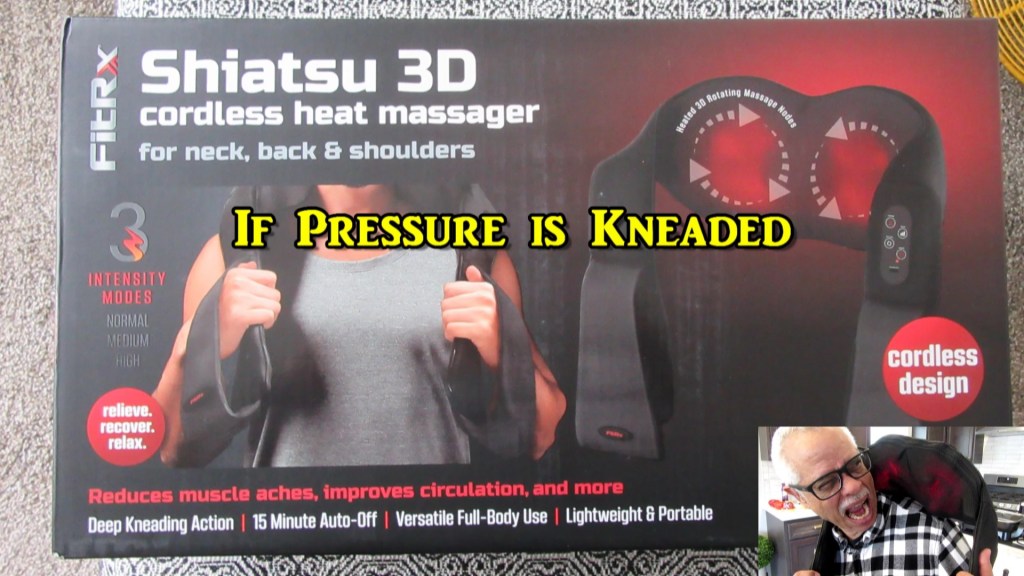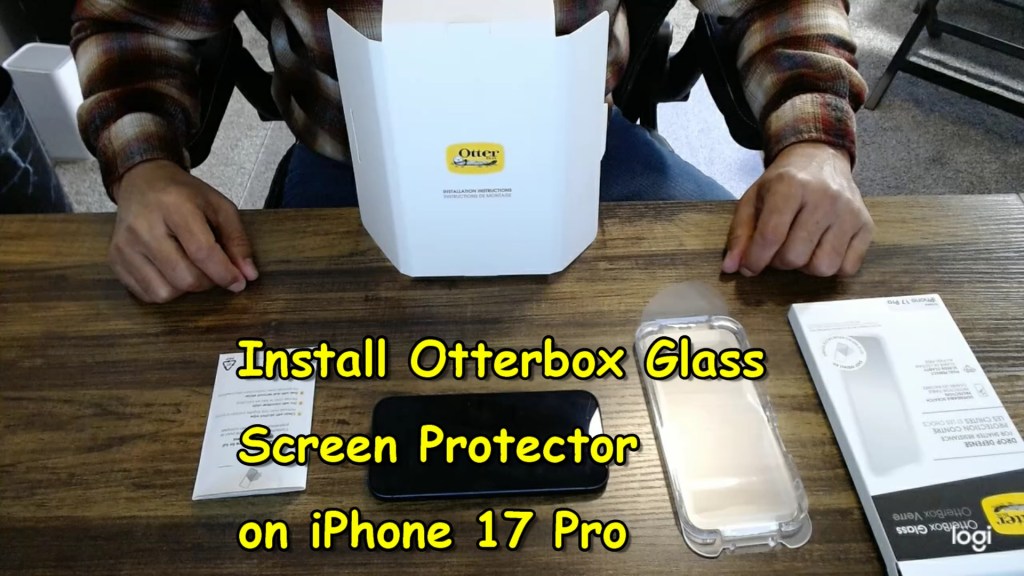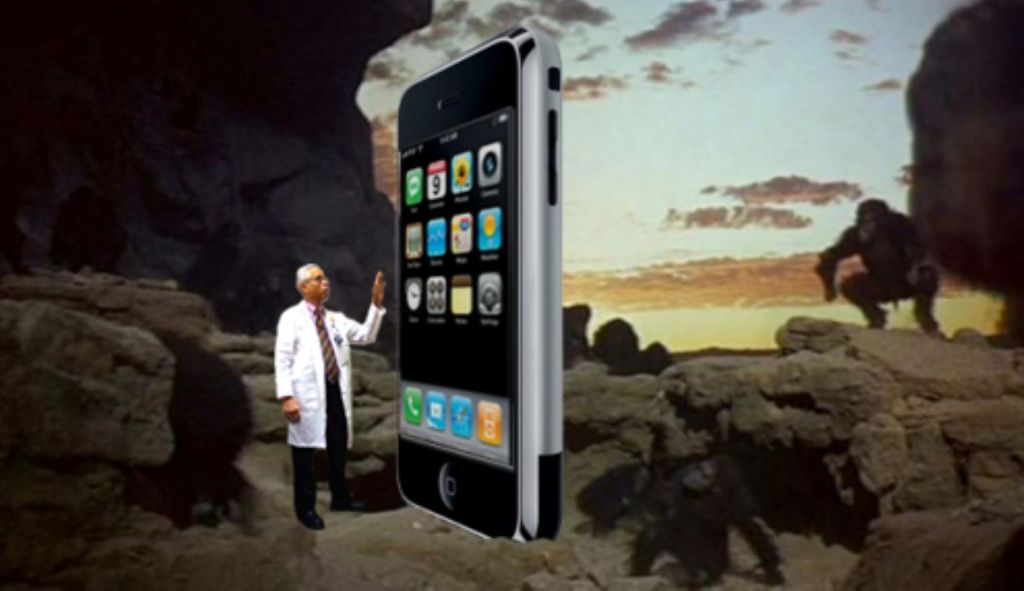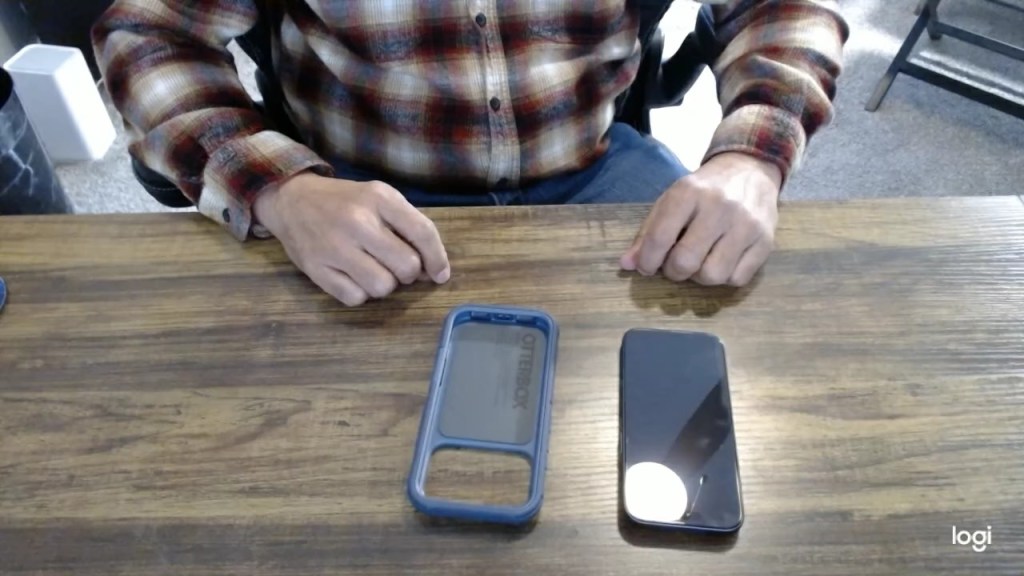
I did something for the first time today, which was to install the iPhone 17 Pro OtterBox Glass screen protector (that’s a mouthful). I remember putting the screen protector on my old iPhone many years ago and it wasn’t anything fancy. There was no device to help you line things up and apply the screen protector. You put it on by hand and prayed that you could eventually scrape out all the bubbles—if you were lucky enough to get it on straight.
The main reason I made a YouTube video about how to install the screen protector was because I couldn’t find a YouTube video about this particular brand. It turns out all the applicator devices are different and installing them is slightly different for each brand.
Sena ordered the case, screen protector, and holster from OtterBox, which is where I got the original case and holster for my old iPhone. I had to replace the case after the battery swelled up and cracked it five years ago. This reminds me of an old Men in Black 3 quote in which a young Agent K holds a very large mobile phone up to his ear (this film is about time travel and the action is in 1969). Agent J says to him “That’s a bigass phone; don’t hold that up to your head!).
Anyway, I decided to make a video of me installing the OtterBox Glass screen protector. I plan to make a YouTube video of installing the case as well—but that’ll be another day.
Since we’ve gotten new smartphones, we’ve been working on getting up to speed on how to use them. More often they seem to be using us.
In fact, Sena is pretty bummed about how much fiddling around with a smartphone you have to do. She used a little flip phone for years and this is a big upgrade (she would say “downgrade”) for her.
Zuckerberg wants to replace smartphones with Artificial Intelligence (AI) glasses. Sena tells me Bill Gates has been talking about replacing them with electronic tattoos.
That reminds me of a 1997 X-Files episode I don’t remember seeing called “Never Again.” Some guy gets a tattoo on his arm of a girl with the words “Never Again” under it. It starts talking to him and making him do crazy things, like buying mobile phones priced around $1,000, which is about what they cost back in 1997. Smartphones cost about the same these days.
Is that how electronic tattoos would work? Or would they just send mind control messages telling you to buy more of the same stocks in Bill Gates’ portfolio?
There are a plethora of new ads and promotional messages that we’ve never seen before:
Buy new armpit removal tool for half-price!
Upgrade to AI-assisted fruitcake recipe idea generating protocol!
Install planet construction and combustion instructions now!
I’m thinking we’ll Never Again purchase new smartphones.
Well, we finally got new phones after several years. I think we bought the old ones from Fred Flintstone. I probably should have got a new phone after the battery swelled up in it so big it was starting to split the case. That was over 5 years ago. I have an iPhone 17 Pro now.
Sena’s always had a flip phone. She got one that still folds up, but it’s a lot nicer. It’s a Galaxy Z Flip7.
I think these phones have a feature that allows you to call extraterrestrials to order pizza. Don’t ask for extra cheese.
I remember we got along OK without portable phones at all for years until a big snowstorm made the streets impassable and I decided I had to sleep in my chair in my office at the hospital. We had only one car. I tried to call Sena to warn her not to drive in the snowstorm, but she’d already left to come pick me up. She got stuck on the way but managed to get unstuck and drove back home. I had no way to get a hold of her while she was out on the road.
We both got flip phones after that. I later got an iPhone triple zero, which ran OK most of the time on diesel. One of the residents talked me into buying one. It was a lesson in evolution. I guess we’re still evolving.
Today’s essay by Dr. Moffic was pretty interesting about the role of video gaming in health for men and women. Computer games were emphasized but it got me thinking about hands-on games that you might thing of as being more old-fashioned—like cribbage.
I wrote a post about cribbage already today, but there’s another angle on it that’s readily adaptable to considering its role in promoting mental health for both men and women.
That reminds me that until yesterday and today, I was on a major losing streak in cribbage with Sena. Cribbage wins and losses seem to occur in streaks and I was beginning to wonder if I’d lost my touch.
There’s a cribbage connection with the electronic gaming realm in that we also play the computer video cribbage game Cribbage Pro. There are three levels, Standard, Challenging, and Brutal (the toughest opponent). We always play Brutal, and often win. There’s a way to play internet cribbage on Cribbage Pro, but we don’t. I prefer playing live. I think the popular view of cribbage is that it’s an old guy’s game. I suspect people think it’s a card game old men play on their lunch hour at the factory.
Nothing could be further from the truth. It’s very popular with women and kids and my guess is that no matter what your gender preference is, there’s a greater diversity of cribbage players out there than anyone realizes.
Playing cribbage promotes and maintains brain health by requiring you to practice basic arithmetic by counting your scores and pegging. You lose a little of that in Cribbage Pro although you can turn on the feature allowing manual counting of scores.
And the American Cribbage Congress (ACC) accommodates internet cribbage tournaments. It’s very popular and competitive. By the way, expanding on my other post today about how to verify your luck in getting a 29 hand in cribbage, you can easily prove it on Cribbage Pro by taking a screen shot of it!
Computer games are fine, but I like to manually shuffle the cards for cribbage. Sena likes to use the shuffling machine—which is very loud but gets the job done. I’ve not yet found a way to “accidentally” lose the shuffling machine (Can’t imagine where it went; must have grown legs and walked downtown!).
We always help each other count our scores. The one time we tried muggins rule, which involves penalizing each other for missing scores by taking them from each other, we just couldn’t seem to get it straight. And it wasn’t as much fun.
There are local cribbage clubs that you could get involved in although they might be hard to find. The nearest one to us is several hours away.
I used to play computer games years ago (although not Nintendo), but nowadays I feel more like Agent K in Men in Black II as he’s trying to quickly learn how to steer a spacecraft using what looks like a PlayStation 2 controller (I used to have one of those).
after K turns on the auto pilot during the chase…
Agent K: It is not automatic pilot.
Agent J: He doesn’t work when we’re in hyperspeed.
Agent K: I could really use a steering wheel!
Agent J: We don’t have no damn steering wheel! This is what we got! [turns off auto pilot] Didn’t your mother ever give you a Gameboy?
Sena told me about the Walmart avocado self-checkout flap that was reported in the news yesterday. He was having trouble with the self-checkout routine and the register showed he owed $1,300 dollars. I read the New York Post story about it, although the news agency actually got it from a Reddit social media web page.
According to the story, a Walmart employee reported that the customer accidentally overcharged himself for avocados at the self-checkout station. He punched in 999 avocados instead of the 9 he wanted. The customer got excited and he called the police using the 911 line, accusing Walmart of trying to rob him. Store employees and police tried to calm him down but he had to be handcuffed and taken into custody for trespassing because he refused to leave unless Walmart compensated him for his mistake.
I’m not sure how much of the story to believe based on the source, but I’ve used self-checkout a few times at Walmart and I’ve always found the employees to be very helpful when I had a minor problem. Usually, somebody has been immediately available, probably because it’s pretty obvious when I’m puzzling over something, often because I’m not sure how to ring up produce that either has to be weighed or beamed up to extraterrestrials who take charge of stuff like that.
Admittedly, I don’t grocery shop often enough to get the steps down pat, but I can always count on a store employee being available to help me out of a jam. I’ve never been overcharged or hassled. I’ve never called the cops on myself.
Actually, what I really need is more practice arranging the grocery items so that I can bag them and return them to the cart so that I don’t accidentally double scan them or leave them on the counter. I’m a terrible bagger. I use way more bags than necessary. I lost a cucumber once (and it was even bagged) and I still can’t tell how that happened.
The easy part is scanning the items, except when it comes to produce which either needs to be weighed or keyed in by searching for the kind of tomatoes I got (sliced vs deformed or whatever). I once tied up the tomatoes in a plastic bag with a knot so tight I looked silly trying to untie it so I could weigh them. I must look comically inept because somebody always comes to my rescue right away. I don’t know how they keep from laughing.
There are alternate ways of dealing with those situations which don’t entail making 911 calls. You could swear off avocados.
I always find Dr. Moffic’s articles in Psychiatric Times thought-provoking and his latest essay, “Enhancement Psychiatry” is fascinating, especially the part about Artificial Intelligence (AI). I liked the link to the video of Dr. John Luo’s take on AI in psychiatry. That was fascinating.
I have my own concerns about AI and dabbled with “talking” to it a couple of times. I still try to avoid it when I’m searching the web but it seems to creep in no matter how hard I try. I can’t unsee it now.
I think of AI enhancing psychiatry in terms of whether it can cut down on hassles like “pajama time” like taking our work home with us to finish clinic notes and the like. When AI is packaged as a scribe only, I’m a little more comfortable with that although I would get nervous if it listened to a conversation between me and a patient.
That’s because AI gets a lot of things wrong as a scribe. In that sense, it’s a lot like other software I’ve used as an aid to creating clinic notes. I made fun of it a couple of years ago in a blog post “The Dragon Breathes Fire Again.”
I get even more nervous when I read the news stories about AI making delusions and blithely blurting misinformation. It can lie, cheat, and hustle you although a lot of it is discovered in digital experimental environments called “sandboxes” which we hope can keep the mayhem contained.
That made me very eager to learn a little more about Yoshua Bengio’s LawZero and his plan to create the AI Scientist to counter what seems to be a developing career criminal type of AI in the wild west of computer wizardry. The LawZero thing was an idea by Isaac Asimov who wrote the book, “I, Robot,” which inspired the film of the same title in 2004.
However, as I read it, I had an emotional reaction akin to suspicion. Bengio sounds almost too good to be true. A broader web search turned up a 2009 essay by a guy I’ve never heard of named Peter W. Singer. It’s titled “Isaac Asimov’s Laws of Robotics Are Wrong.” I tried to pin down who he is by searching the web and the AI helper was noticeably absent. I couldn’t find out much about him that explained the level of energy in what he wrote.
Singer’s essay was published on the Brookings Institution website and I couldn’t really tell what political side of the fence that organization is on—not that I’m planning to take sides. His aim was to debunk the Laws of Robotics and I got about the same feeling from his essay as I got from Bengio’s.
Maybe I need a little more education about this whole AI enhancement issue. I wonder whether Bengio and Singer could hold a public debate about it? Maybe they would need a kind of sandbox for the event?
Sena got a Mister Chef pizza oven the other week and it works pretty slick. I’ve cooked a couple of frozen pizzas on it and it’s great for a guy like me—the guy the neighbors alert the fire department about when they get the first whiff of smoke. Some people have no sense of adventure. Hey, if I can operate it, anyone can.
This morning, Sena cooked a ham omelet in about 15 minutes. I guess it just felt like an hour to me because I was hungry.
It’s pretty simple. There’s only one knob. It doesn’t correspond to any specific temperature although the instructions call it a “Temperature knob”. You can pretty much crank it to any number although lower numbers mean you have to wait longer for your food.
MisterChef countertop pizza cookerMisterChef closeupMisterChef even closerMisterChef temp controlMisterChef omelet
You just plug it in, turn a temperature knob and wait for the green light to come on, which evidently doesn’t exactly mean you can toss food in it. You have to wait for the red light to come on next. Then you toss the food on the ceramic surface—uh, that’s the bottom surface, not the top, which is the lid. Things just fall down if you put food up there—something to do with gravity.
It comes with a little instruction manual. In one place it says you can cook frozen pizza in 15-20 minutes, but then in the cooking time guidance it says it takes 9 minutes. I can tell you; 9 minutes doesn’t melt most of the ice. It also gives you the weight in grams of various foods. I’m not sure how useful it is—we’ve never weighed our frozen pizzas.
Pay attention to the warning about steam release when you open the lid. I guess I have about 4 or 5 outpatient visits to the burn clinic to go—then the skin grafts should hold.
We think the manufacturer must have got wind of me using the Mister Chef because they included a small robot extraterrestrial (ET) assistant to make sure I didn’t do anything rash. It got really nervous when I used it. It tried to calm down the smoke detectors, but I don’t think they could hear it. That’s ok, because I can’t hear the smoke detectors. That happens when you get old.
MisterChef omelet and robot ET assistant (usually not included unless there’s a public safety risk)
The robot ET quit a few days later, something about union benefits not covering incompetent cooks. Wise guy. Anyway, have fun with the Mister Chef and remember what Red Green says; “If the women don’t find you handsome, they should at least find you handy.”
Today we used the automated card shuffler Sena ordered. I couldn’t find a company name or anything else from the box about where it’s made. We know it’s loud, but it does the job.
We’re not sure why it’s so noisy. It sounds like a bunch of pots and pans falling out of the cupboard during a tornado.
It was our first time using it and, while it felt like it was faster, it probably wasn’t according to my stopwatch. It took 22 minutes for us to play a cribbage game and manual shuffling took 25 minutes the other day (Big Time Bigfoot Cribbage Game). On the other hand, I think it randomizes the cards better than we do manually.
We kept starting to shuffle manually just because we’re so accustomed to doing it. It actually isn’t hard to set the cards into the feeder on top of the machine. In fact, you don’t have to be fussy about squaring up the deck before placing it in the shuffler. It’ll also shuffle two decks at once. It came with a charging cord so you don’t need batteries.
I don’t know if the American Cribbage Congress (ACC) allows automatic card shufflers in tournaments. I’ve never entered a tournament, but in photos the players are packed in cheek by jowl. And if you had one as noisy as ours for thousands of players, the din might be loud enough to set off alarms.
Lately, I’ve been anticipating my eventual immortalization as a sculptured stone bust on Mt. Rushmore. Hopefully, this will be fairly soon because I’m not getting any younger.
Among my many inventions is the internet. Don’t believe Al Gore, although he has persuaded others about his role in the development of what I argue should properly be called the world wide web. I’ve invented a lot of other things which I’ll tell you more about just as soon as I make them up.
Before I forget it, I want to tell you what I just noticed last night while I watching one of my favorite X-Files episodes, “War of the Coprophages.” I guess I never noticed that the cockroach invasion was about Artificial Intelligence (AI). It was the scientist, Dr. Ivanov, who mentioned it first and I just missed it the first few hundred times I saw the show.
Dr. Ivanov clearly thought that anybody who thought extraterrestrials would be green and have big eyes was probably crazy. Traveling across galaxies through wormholes and whatnot would tear humanoid organisms apart. The practical approach would be to send AI robots instead. You could see Mulder cringe at that idea. The little robot that kept edging closer to Mulder made him nervous and when he asked Dr. Ivanov why it did that, his reply was “Because it likes you.”
That doesn’t exactly fit with Ivanov’s other idea about extraterrestrials, which is that they would focus on important tasks like getting enough food, procreating, etc. without getting all emotional about them. Ironic that Dr. Ivanov made an AI robot that gets a crush on a sesame seed munching UFO hunter like Mulder.
However, the AI robots in the show are cockroaches which love to eat dung. In other words, they’re full of crap.
Moving right along, although I didn’t invent it, there’s a card game called schnapsen that Sena and I are trying to relearn. It’s kind of a break from cribbage. It’s a trick taking game with just a 20-card deck. We play the version that doesn’t allow you to look at your cards to see how many points you have so you can tell when you can close the deck or go out, meaning you have the 66 points to win. You have to remember how many points you’ve won in tricks. I think it’s a good way to keep your memory sharp.
Let’s see; I’ve lost every game so far, but that doesn’t mean I won’t end up with my bust on Mt. Rushmore.
I ran across another interesting article in the JAMA Network about Artificial Intelligence (AI) with respect to health care organization managing messages from patients to doctors and nurse. The shorthand for this in the article is “in-basket burden.” Health care workers respond to a large number of patients’ questions and it can lead to burnout. Some organizations are trying to test AI by letting it make draft replies to patients. The results of the quality improvement study were published in a paper:
English E, Laughlin J, Sippel J, DeCamp M, Lin C. Utility of Artificial Intelligence–Generative Draft Replies to Patient Messages. JAMA Netw Open. 2024;7(10):e2438573. doi:10.1001/jamanetworkopen.2024.38573
One of the fascinating things about this is the trouble we have naming the problems with misinformation that AI has. We tend to use a couple of terms interchangeably: hallucinations and confabulation. Whatever you call it, the problem interferes with communication between health care workers and patients.
Dr. English describes the interference as a “whack-a-mole” issue, meaning every time they think they got the hallucination/confabulation problem licked, the AI comes up with another case of miscommunication.
Just for fun, I did a web search trying to find out whether “hallucination” or “confabulation” fit the AI behavior best. Computer experts tend to use the term “hallucination” and neuropsychologists seem to prefer “confabulation.” I think this community chat site gives a pretty even-handed discussion of the distinction. I prefer the term “confabulation.”
Anyway, there are other substantive issues with how using AI drafts for patient messaging affects communication. I think it’s interesting that patients tend to think AI is more empathetic than medical practitioners. As Dr. English puts it: “This GPT is nicer than most of us,” and “And ChatGPT, or any LLM, isn’t busy. It doesn’t get bored. It doesn’t get tired.” The way that’s worded made me think of a scene from a movie:
OK, so I’m kidding—a little. I think it’s important to move carefully down the path of idealizing AI. I think back to the recent news article about humans teaching AI how to lie and scheme. I remember that I searched the web with the question “Can AI lie?” and getting a reply from Gemini because I have no choice on whether or not it gives me its two cents. I’m paraphrasing but it said essentially, “Yes, AI can lie and we’re getting better with practice.”
I like Dr. English’s last statement, in which she warns us that AI can be a fun tool which clinicians need to have a healthy skepticism about. It may say things you might be tempted to gloss over or even ignore, like: